Capacity Development to achieve national health programme results
Overview
UNDP works with governments and partners to support the implementation and management of health programmes in challenging operating contexts. It delivers this support through a range of partnership modalities according to the country context and existing national capacities, most notably through its long-standing partnership with the Global Fund to Fight AIDS, Tuberculosis and Malaria (The Global Fund). Through its diverse experiences as interim Principal Recipient of the Global Fund grants for HIV, tuberculosis, malaria and health systems strengthening, operating in challenging contexts in particular, UNDP has developed tools and systems for programme management, designed to ensure transparency, accountability, cost-effectiveness and value for money. It is through this process that UNDP has achieved a consistently strong grant performance, despite operating in challenging operating environments.
While working with national partners and the Global Fund to improve the management, implementation and oversight of the Global Fund grants, UNDP simultaneously develops national capacity, with the aim of transferring the Principal Recipient role to national governments over time. The capacity development and programme transition tools and processes that UNDP employs as part of grant management in its role as interim Principal Recipient, in support of government and civil society implementing partners. This programmatic role is complemented by technical assistance at the national level to strengthen systems for health, in areas such as public financial management, health information management systems and national strategy development, which are detailed in the page on Strengthening National Systems for Health Section.
UNDP’s approach
Working closely with ministries of health, the World Health Organization (WHO) and other technical partners, UNDP supports programme management through activities to
assess the best models for service delivery based on national plans, stakeholder dialogue, gap analyses and needs assessments
support the design of relevant programmes that balance rigorous programme management frameworks to deliver high-quality results set out in a plan with sufficient flexibility for continued renewal of focus and adaptation to change
promote strong national ownership that is inclusive of all stakeholders at all stages of the process
ensure the existence of appropriate management and governance structures
ensure that enough health workers are trained and motivated to meet programme delivery needs
collect and analyse relevant reliable data to inform decision-making
guarantee essential medicines and other health technologies are safe, effective and affordable
budget and monitor expenditure
manage and support other implementing partners
relate programme achievements back to national health strategies and plans, to ensure the optimal use of available country resources
coordinate national efforts with global developments in public health, affecting interventions, priorities and partnership opportunities at the country level.
Embedding sustainability into programme management arrangements in Cuba
In Cuba, UNDP prioritized the creation of a programme management unit within the Ministry of Health early in the grant. This included the establishment and capacity development of a multisectoral team to provide technical assistance, comprising national institutions for HIV and civil society organizations. These national governance structures gradually assumed full ownership of all grant activities over time, having established the necessary capacities and institutional mechanisms with UNDP’s support.
UNDP offers particular expertise in supporting national partners to acquire the required legal status for large-scale health programmes, establish clear organizational leadership, accountability and responsibilities, promote effective human resource practices, and achieve strong planning and monitoring processes aligned with national strategies. This enables planning and implementation processes to produce national health programmes that are prioritized, costed and evidence-based and utilize good-quality data. UNDP also prioritizes the integration of human rights, gender equality and environmental sustainability principles throughout the programming process, from the design of interventions to their implementation and monitoring.
Guidance
For more detailed guidance on UNDP’s programme management process at every stage of the grant life cycle, UNDP has developed a web-based UNDP-Global Fund Health Implementation Guidance Manual. While drawn from UNDP’s experiences implementing the Global Fund to Fight AIDS, Tuberculosis and Malaria (The Global Fund) grants, the end-to-end programme management approach and processes to support risk-informed implementation may be adapted to other large-scale health programmes as well, such as those funded by Gavi, the Vaccine Alliance. As described in the guidance manual, key functional areas covered by UNDP’s programme management role include support for legal frameworks, procurement and supply chain management, financial management, monitoring and evaluation, subrecipient management, risk management, audit and investigations, and human resources.
Strengthening the capacity of implementing partners
Purpose
Implementing partners of health programmes require support and oversight to execute, manage and monitor their assigned roles effectively. Capacity development in managing, monitoring and verifying the activities of implementing partners is crucial, particularly to ensure the sustainability of the health programme, as the majority of implementing partners tend to be national entities. National implementing partners often provide crucial knowledge and access to hard-to-reach beneficiaries and key populations. However, they may have capacity gaps or may have limited experience in working at scale, and therefore may require significant support to implement their assigned role effectively.
UNDP’s Approach
UNDP focuses on building capacity to select, assess and provide oversight for implementing partners to minimize risk and ensure a sustainable and integrated national response, including by:
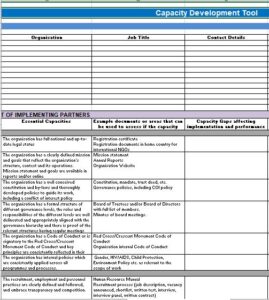
supporting the development of standard operating procedures to select, contract, manage, monitor and provide oversight to implementing partners;
providing technical support to orientation workshops;
providing capacity assessment and plan development tools.
Global Fund-specific arrangements
In the context of the Global Fund to Fight AIDS, Tuberculosis and Malaria (The Global Fund) programmes, “implementing partners” refer to sub-recipients (SRs), which may be civil society organizations, government entities or other United Nations agencies that UNDP provides oversight and assistance to for the implementation of programme activities. Further to the processes outlined on this page, UNDP has processes in place to conduct the selection, capacity assessment, capacity development and monitoring processes for SRs, in line with the Global Fund guidelines. More guidance on UNDP’s process for SR management can be found in the UNDP-Global Fund Health Implementation Guidance Manual.
UNDP’s capacity development activities for the Global Fund-funded health programmes are conceived and conducted in close coordination with country coordinating mechanisms (CCMs). CCMs play a crucial role in driving local ownership and participatory decision-making throughout the grant life cycle. More information on UNDP’s work with CCMs and other operative parties can be found in the guidance manual here.
Guidance
Actions to support the capacity development of implementing partners should be integrated into all phases of their engagement, from the selection process to monitoring and oversight. Some considerations include:
Selection: the selection process for implementing partners should outline the minimum criteria required to ensure transparency (such as the ability to carry out specific project activities and financial management and reporting).
Contracting: template contracts should be developed outlining what happens if implementing partners are not performing as required, and what support will be given to them. Before signing the contract, the nominated partner should have a detailed work plan and budget attached to the contract.
Capacity assessment:Capacity assessment: the capacity of all implementing partners should be assessed before a contract is signed and before any funds are disbursed to the new partner. If the implementing partner does not possess the required capacity to carry out the planned activities, then a capacity development plan should be developed and a budget set. The results of the capacity assessment should be compiled in a report for review to assess progress later.
Implementation and ongoing capacity development:there should be an induction workshop for implementing partners, to outline the requirements and processes for financial and programmatic reporting, and to provide partners with reporting forms and templates and details of any supporting documentation required. The capacity development activities should be implemented as soon as possible at the beginning of implementation, but ongoing mentoring may carry on during the life cycle of the programme.
Oversight of implementing partners:there should be a documented programme for each year outlining all oversight visits to verify the financial and programmatic data reported. There should be standard operating procedures with supporting templates for monitoring the programme implementation, and for reviewing financial and programmatic reports for completeness and technical soundness. Oversight mechanisms should include processes for problem identification and mitigation, as well as actions to solve any issues identified.
The risk management of implementing partners is a continual process — risks should be assessed and plans should be carefully documented, with responsibilities for follow-up properly assigned and monitored. For example, one way of managing risk is to give implementing partners that have been assessed as having weak financial management capacity smaller instalments of funds more frequently to carry out specific activities.
Suggested capacity development indicators
Documented policies and procedures for selection of implementing partners in place
Up-to-date implementation of partners’ agreement forms and contracts
Number of implementing partners that have had a capacity assessment conducted
Processes and procedures for defining capacity development plans and providing capacity development support
Documented policies and procedures for managing and coordinating implementing partners
Frequency of implementing partners’ plan reviews and updates
Ability to capture and integrate implementing partners’ reports into management reporting
Number of internal and external audits of implementing partners conducted
AUTHOR:AIDS AllianceLANGUAGE:EnglishFILE FORMAT:Web Link
Capacity Development planning for national AIDS coordinating bodies
Purpose
The objective of capacity development planning with a national coordinating body, such as national AIDS commissions (NACs), is to design and implement a process to strengthen capacities in national coordination, communication, and monitoring and evaluation. The intended results are greater national ownership; resilient, accountable and transparent systems; and effective and efficient approaches for the monitoring and evaluation of national strategies by national entities.
National coordinating bodies capacities
The capacities required by NACs to effectively and efficiently act as the custodians of national strategic plans (NSPs) as part of a coordinated multisectoral approach include:
Coordination: coordination among national and local government, civil society organizations, key populations and the private sector is central to the achievement of NSPs through a multisectoral approach. Coordination activities include the ability to carry out joint stakeholder planning, advocacy activities, sector meetings, mentoring and joint review visits.
Communication: communication strategies and campaigns aligned to NSPs that have clear target audiences at local, regional and national levels, and relevant messages for identified key populations, are crucial to the response. NACs also need to have effective communication skills to negotiate with, motivate and represent the various sectors involved in HIV/AIDS.
Legal framework: the national legal framework can hinder the full implementation of NSPs. NACs should have the capacity to carry out legal environmental assessments and to work with government to create an enabling environment for the implementation of the approach, in consultation with civil society organizations and key populations.
Policy engagement: NACs need to work in collaboration with other key partners, including technical working groups, to review national policies and update these in line with current international best practice. Policy focus should include gender, human rights, discrimination and stigma, and support to people living with HIV and key populations.
Resource mobilization: resource mobilization at international, national and provincial levels ensures the financial sustainability of NSPs. NACs need the ability to cost national plans, monitor all donor funding within the country and identify gaps and overlaps to maximize resources.
Monitoring and evaluation: monitoring and evaluation (M&E) of the national strategy using one harmonized M&E framework is key to national responses. NACs need to be able to map all activities being implemented within the country and to source and analyse data from all implementing sectors. National strategic plans should be supported by a national M&E plan. NACs need capacity to update and harmonize the M&E plan and should have national M&E guidelines, a database to collect verified data from all sectors, systems for analysing the data and processes for evaluating the national strategy.
Risk management: risk management is key to identifying the risks that may hinder full achievement of NSPs. NACs should possess the capacity to assess the environment and identify both programmatic and financial risks and ways to mitigate these.
Governance: good governance includes being responsible and accountable as a national coordinating body to the other sectors within the country and developing robust, resilient and sustainable systems, with effective oversight.
Financial management: although most NACs do not usually directly implement health activities, they do manage funds. As such, they need strong financial management and systems aimed at mitigating risk and ensuring that they are accountable to country stakeholders.
Human resources: NACs need skilled human resources to reflect the roles that they play in coordination, communication and law, rights and policy engagement. Staff performance needs to be monitored through staff performance systems, and staff need clear roles and responsibilities.
Programme management: capacity in programme management includes the ability to facilitate national and sectoral work planning, developing the capacity of civil society organizations or other groups working in the country, partner selection and contracting, and monitoring and reporting.
Procurement: NACs need the capacity to carry out procurement for non-health products and to select and contract technical assistance. There is a need for procurement policies, procedures, oversight and procurement plans.
UNDP’s Approach
UNDP supports national AIDS coordinating bodies to establish and implement capacity development plans to provide a framework to:
ensure a clear vision and structure to coordinate, monitor and evaluate the national strategy
coordinate and represent all the key sectors operating within the country
strengthen policies and guidelines to meet the country’s needs, in line with the national strategy
develop good-quality products and services to respond to the needs of stakeholders and key populations.
Tools
UNDP has developed and tested the Capacity Assessment and Planning Tool for NACs, which can be amended to suit the country context as required. UNDP provides guidance and support to participatory capacity-planning processes, which lead to a more country-led capacity development work plan. Strong coordination is key to an efficient and effective response and is required for the successful implementation of national strategies. Capacity development plans for national coordinating bodes should identify coordination challenges, both internally and at national and district levels, and should also identify the sectors working within the response, mapping these and monitoring and evaluating all partners and their roles.
Civil society groups in many countries have experienced a changing environment in terms of HIV and health care over the last few years, which has resulted in more centralized implementation by national ministries of health, stronger and different treatment approaches to HIV and other disease programmes, and a subsequent reduction in funding for civil society groups.
There is a need for civil society to review and redefine its role, both in response to HIV and to other emerging health priorities. For example, as people living with HIV live longer on treatment, they are more likely to develop a non-communicable disease such as cancer.
As governments provide the majority of treatment, civil society groups need to assess what their role is in supporting health programme implementation, such as adherence to treatment, supporting marginalized and key populations to enable access to both prevention and treatment, and advocating for policy change to reach universal health coverage (UHC) and ensure rights-based service delivery. There is a need to define and clarify civil society organizations’ new role in supporting the achievement of the goals of the Global AIDS Strategy 2021–2026, expand their role in the move to a more coordinated health and HIV approach, focus on the achievement of UHC, and develop the capacity of networks of civil society groups to strengthen their voice and advocacy role. There is also a need to assess the overall structure of civil society, asking if groups should consolidate or work more in networks to increase their power to advocate and consolidate operational costs.
UNDP’s approach
UNDP, in collaboration with the Joint United Nations Programme on HIV/AIDS (UNAIDS) and other United Nations agencies, supports civil society organizations (CSOs) to define their strategic direction within national HIV, tuberculosis and malaria responses and address capacity gaps that hinder their objectives. UNDP can, additionally, support countries to map the landscape of registered civil society and community-based organizations engaged in HIV/AIDS and other health responses in a country and support the development of cohesive networks. This might include activities to:
formulate a strategic direction by supporting the establishment of a civil society organization (CSO) strategic priority action plan or charter
bring visibility to registered and validated CSOs by developing an open-source website and database of HIV and health-related CSOs in a country
support dissemination of information on how CSOs can support the move to more comprehensive health programming, integrating HIV within the broader health agenda
Tools and examples
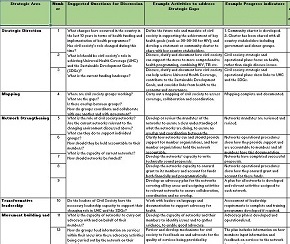
UNDP has developed and tested a tool to support civil society in carrying out in-depth discussions on what the role of civil society organizations has been and what changes have taken place in the health landscape. It offers guidance for discussion on how civil society organizations can assess what their new role should be, how this new role can be operationalized and what skills they need to carry out this role.
The tool includes:
a set of questions to guide discussions
example activities to support changes in strategic direction possible indicators to measure progress
a template to budget for these activities.
For additional resources on UNDP’s work to empower civil society organizations in national disease responses with public funding, visit the “Social contracting for effective service delivery under domestically funded health programmes” page.
Empowering civil society organizations in Cuba to support the transition from a donor- to a domestic-funded HIV response
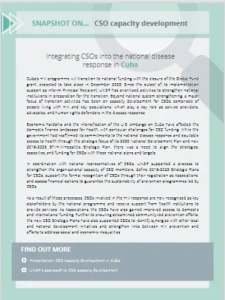
Cuba’s HIV programme was expected to transition to national funding with the closure of the Global Fund to Fight AIDS, Tuberculosis and Malaria (The Global Fund) grant in December 2020. Since the outset of its implementation of support as interim Principal Recipient of the HIV grant, UNDP has prioritized activities to strengthen national institutions in preparation for the eventual transition to government. A major focus of transition activities has been on capacity development for civil society organizations (CSOs) comprising people living with HIV and key populations. CSOs play a key role as service providers, advocates and human rights defenders in the disease response. There was a need in particular to align the strategies, capacities and funding for CSOs with existing national plans and targets in relation to HIV.
In coordination with national representatives of CSOs, UNDP supported a process to strengthen the organizational capacity of CSO members, define the 2019–2023 strategic plans for CSOs, facilitate the formal recognition of CSOs through their registration as associations and assess financial options to guarantee the sustainability of prevention programmes led by CSOs. As a result of these processes, CSOs involved in the HIV response are now recognized as key stakeholders by the national programme and receive support from health institutions to provide services. The CSO strategic plans have also supported CSOs to identify synergies with other local and national development initiatives and strengthen links between HIV prevention and efforts to address social and economic inequalities. While Cuba was eventually declared eligible again for another Global Fund allocation, and is not transitioning to domestic funding yet, the work completed to strengthen CSOs will help put Cuba in a good position to do so when the time comes.
Case study: strengthening civil society coordination for enhanced engagement in the HIV response in Zimbabwe
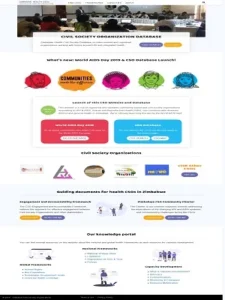
The evolution of the HIV epidemic and centralization of the response in Zimbabwe over the past decade has meant reduced funding availability for HIV and AIDS service community-based and civil society organizations (CSOs). As part of a comprehensive nationally owned capacity development strategy for 2018–2020 to strengthen systems for health, UNDP, the Joint United Nations Programme on HIV/AIDS (UNAIDS) and the United Nations joint team in Zimbabwe facilitated consultations with HIV-related CSOs in the country to clarify their roles in supporting the achievement of the 90–90–90 targets and gain an understanding of the capacities needed to expand their engagement. A major focus included the need to strengthen coordination across organizations as a means of enhancing their collective impact. Based on a CSO strategic priority action plan developed with the engagement of CSOs, a number of activities were prioritized to improve governance structures for the coordination of CSOs and to enhance their relevance and sustainability in contributing to the HIV response.
Key outcomes included the establishment of the CSO Community Charter launched in February 2019, the accompanying CSO Engagement and Accountability Framework, and training for 180 CSO members on these documents. UNDP also led a mapping exercise of all CSOs working in the health and HIV sectors in 2019, which resulted in the creation of a public database of 150 CSOs. The CSOs selected the Zimbabwe AIDS Network (ZAN) to serve as their umbrella organization, to be guided by a set of standard operating procedures currently under development. These efforts have contributed to greater coordination of CSOs under a unified framework, with a strategic direction for their role in the HIV and health response and a strong basis for resource mobilization efforts.
Case study: working with community groups to reach pregnant women with HIV in Angola
In partnership with the National Institute to Fight HIV/AIDS in Angola and the Global Fund to Fight AIDS, Tuberculosis and Malaria (The Global Fund), UNDP works with local networks and community groups to help reach more pregnant women living with HIV, with the overall goal of ensuring that all babies are born free of HIV. UNDP has worked with partners to support the development of the national plan for eliminating mother-to-child transmission of HIV, entitled Born Free to Shine, which is headed by Angola’s First Lady, Ana Dias Lourenço. Read more
Overview: Capacity Development planning process for health programmes
Whether in its role as an implementing partner managing large-scale HIV, TB, and malaria programmes funded by the Global Fund or as a technical assistance partner for health systems strengthening interventions, UNDP prioritizes the capacity development of national entities and systems for health. Leveraging its global experience, UNDP has established a systematic approach to capacity development based on a model of end-to-end support tailored to the country context and needs of partners. Its framework for capacity development starts with a participatory multi-stakeholder process to scope the priorities and conduct a comprehensive capacity assessment that informs the development of capacity development plan.
UNDP then works closely with national stakeholders, making tools and guidance available, to support the implementation and monitoring and evaluation of the capacity development plan.
Purpose
Capacity development interventions should be based on a comprehensive understanding of how a system is currently working, what areas need support and how to prioritize investments according to the cross-cutting building blocks for resilient health systems. These could include developing and implementing health information systems, training staff in analysing data, developing policies and procedures for strong financial management, and improving the supply and distribution of key health products.
A valuable mechanism for applying a holistic and systematic approach to strengthen systems for health and the capacity of key stakeholders is the establishment of a nationally owned capacity development plan. In the context of its support to health programmes funded by the Global Fund to Fight AIDS, Tuberculosis and Malaria (The Global Fund) and the emphasis on enabling transition of grants to national entities when circumstances permit, UNDP works closely with governments and/or civil society organizations to develop costed capacity development and transition plans. These plans help partners to prioritize, implement and monitor capacity development investments and can serve as a tool to advocate for additional resources in key areas.
Whether in its role as an implementing partner managing large-scale HIV, tuberculosis and malaria programmes funded by the Global Fund to Fight AIDS, Tuberculosis and Malaria (The Global Fund) or as a technical assistance partner for strengthening systems for health, UNDP prioritizes the capacity development of national entities and systems for health. Leveraging its global experience, UNDP has established a systematic approach to capacity development based on a model of end-to-end support tailored to the country context and the needs of partners. Its framework for capacity development starts with a participatory multi-stakeholder process to establish priorities and conduct a comprehensive capacity assessment that informs the development of the capacity development plan. UNDP then works closely with national stakeholders, making tools and guidance available, to support the implementation and monitoring and evaluation of the capacity development plan.
This section offers tools and guidance for each stage of the capacity development process, whether in the context of overall health systems strengthening, civil society groups or specific programme areas. While developed through UNDP’s experiences of facilitating capacity development primarily in its role as interim Principal Recipient (PR) of programmes funded by the Global Fund, the process and tools can be adapted for different programme or policy objectives.
Success factors
From working with multiple countries carrying out capacity development processes, UNDP has identified common factors that are key to successful capacity development. These include:
national support and ownership of the capacity development plan
an objective assessment process to reach a common understanding of needs and recommendations.
adapting the capacity development approach to the specific context and circumstances of the country and organizations involved.
clarity of responsibilities, including who is responsible for implementing and evaluating the capacity development plan.
planning and budgeting for capacity development: capacity development plans and budgets, which should be developed done as part of the initial programme development to support the implementation of health programmes.
integration of capacity development plans with existing national plans and strategies, rather than seeing them as separate programmes.
involving donors and stakeholders at the planning stage, to ensure coordination of various capacity development initiatives and cost sharing.
resource mobilization, including a clear plan of all resources required in terms of both money and technical support
regularly reviewing and updating of the capacity development plan to monitor progress and make necessary changes.
ongoing and transparent communications and collaboration with all country stakeholders regarding the plan and its progress.
Nationally owned, multi-donor capacity development planning in Chad
UNDP supports capacity development planning in Chad to build resilient and sustainable system for health and transition the management of Global Fund grants to national entities. Historically, different partners working on HIV, tuberculosis, and malaria led to separate capacity development efforts. Since 2021, the MoHP and UNDP have been co-Principal Recipients of the Global Fund malaria grant. Under this model, the partners are allocated responsibilities based on their strengths, while PMU capacity is further strengthened. The aim is to fully transition the Principal Recipient role in the future.
With UNDP support, Chad’s Ministry of Health and Prevention (MoHP) created a Programme Management Unit (PMU) to coordinate capacity development and development assistance efforts nationally. Drawing on technical assistance from partners, UNDP contributed resources to develop, implement and monitor a comprehensive multi-donor capacity building plan, which promotes shared responsibility and accountability for outcomes. UNDP helped convene United Nations agencies, bilateral and multilateral partners and international non-governmental organizations to harmonize activities and investments.
Coordinating partners enabled the Government of Chad to finance three health system components: a health information system, procurement and supply management and human resources. Chad’s health information system, the Technical Assistance System (DAT), has been spearheaded by Expertise France. The DAT supports the autonomous daily management of external grant activities and capacity development plan implementation through an Expertise Channel (technical), Projects Channel (financing catalytic initiatives) and Accelerator Channel (innovating in the fight against pandemics).
Under procurement and supply management, Against Malaria Foundation has partnered with UNDP to purchase 6.8 million long-lasting insecticide treated bed nets (LLINs) in 2023. The bed nets were delivered across seven provinces with the highest malaria burden in Chad. As a funding partner, the Global Fund funded all other costs besides the LLINs, such as transport and distribution. The Global Fund and the national government also raised funds to cover other provinces, ten and two provinces, respectively, to cover 19 provinces and 18.9 million people with 11.6 million LLINs in total.
Human resource support included UNDP coaching four national counterparts, French technical assistance funding for four international experts within the PMU and a progressive transfer of responsibilities for grant management. In 2018, the PMU became Sub-recipient of the Global Fund malaria grant, for which UNDP has been interim Principal Recipient since 2008. In January 2019, the MoHP became Principal Recipient of the Global Fund’s HIV, tuberculosis and health system strengthening grant, with technical assistance from the French 5% Initiative.
Scoping and design of the Capacity Development planning process
Purpose
Successful and sustainable capacity development can only occur when there is commitment from individuals who invest in the process from the design stage onwards. Engaging stakeholders to build consensus from the time of designing the capacity development process is vital to ensure that all country partners are kept informed, consulted and engaged as necessary. Each organization will have a different role and view of the capacity development effort. UNDP works with organizations to bring country stakeholders together, along with tools to outline the scope and process for the capacity development.
Define scope and design the capacity development approach
Just as programmes should be designed with the aim of achieving national goals and objectives to ensure a coordinated approach and the best use of all available funds, capacity development processes should seek to ensure alignment with national health strategies and disease-specific strategic plans.
UNDP’s approach
UNDP is able to bring together a wide variety of groups working in the health sector, from civil society organizations to government and donor groups. UNDP facilitates workshops and consultation meetings for groups to engage in country dialogue to ensure the views of all country stakeholders, from direct implementers to policymakers, are reflected. UNDP develops tools to suit the needs of all groups and provides examples of successful capacity development activities in different countries. The scoping and design stage entails a joint process to:
Analyse stakeholders: identify all stakeholders and their perspectives, levels of involvement, preferred methods of communication, and readiness for capacity development. In particular, attention should be given to key affected populations (KAPs) and how they can engage with the process.
Review institutional arrangements: clarify the institutional structure and arrangements for implementing health programmes, with lines of accountability, oversight roles and staff roles and responsibilities.
Define the capacity development team and roles: identify organizations and individuals to oversee, manage and support the capacity assessment and planning process and, if possible at this stage, also the implementation. This is particularly important if more than one
Plan and manage communications: ensure appropriate communications with the identified stakeholders, including through scheduling and conducting launches, meetings, workshops, newsletters, surveys, and electronic communications (websites, knowledge sharing systems, emails).
Guidance
The following points should be considered when scoping and designing the process.
methods should be appropriate for the context. The most appropriate communications methods are dependent on the country, culture, organization(s), context and situation. For example, in some scenarios, a workshop may be more appropriate than a questionnaire given to individuals. Other alternatives include one-on-one discussions or small focus groups.
there is a need for ongoing communications and engagement. Stakeholder engagement and consensus building should be conducted throughout the capacity assessment, planning, and implementation cycle, helping to ensure sustainable and coordinated capacity development.
country ownership and partnership is critical. It is important that the organization(s) that are the focus of capacity strengthening are in charge of and committed to the capacity development programme. Sufficient time and effort should be invested in developing a strong partnership between UNDP and these organizations to ensure that objectives, roles and expectations are articulated, explored and clarified.
it is helpful to identify agents of change. These are organizations, groups, or individuals that drive change by taking on roles to drive the capacity development process.
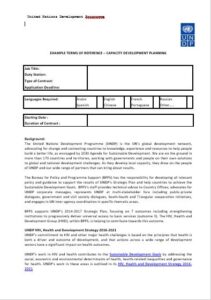
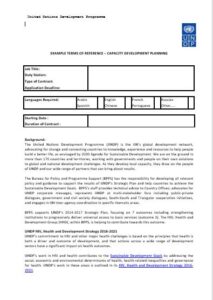
Example document and template for writing terms of reference for capacity development and transition planning
AUTHOR:UNDPLANGUAGE:EnglishFILE FORMAT:DOCX
Conducting the capacity assessment
Purpose
Successful and sustainable capacity development can only occur when there is commitment from individuals who invest in the process from the design stage onwards. Engaging stakeholders to build consensus from the time of designing the capacity development process is vital to ensure that all country partners are kept informed, consulted and engaged as necessary. Each organization will have a different role and view of the capacity development effort. UNDP works with organizations to bring country stakeholders together, along with tools to outline the scope and process for the capacity development.
In the context of programmes funded by the Global Fund to Fight AIDS, Tuberculosis and Malaria (The Global Fund), note that the capacity assessment process described here is not intended to replace the Principal Recipient assessment performed by the Global Fund. The Global Fund assessment identifies capacity gaps from the viewpoint of risk to itself, while this assessment identifies capacity needs from the viewpoint of defining plans for improvement.
UNDP’s approach
UNDP helps to convene and facilitate the stakeholders of a health programme to:
Plan the assessment: identify how the assessment will be conducted, including whether it will be conducted with or without support from an external facilitator; the type of information-gathering method used, such as group meetings, workshops and one-on-one assessment meetings; and which organizations will be involved.
Confirm the scope of capacities to be assessed: review and update the specific skills and capacities to be assessed within each focus area. Depending on the country context, focus areas might include programme management, health information systems, procurement and supply chain management, financial management, and legal and policy environments.
Review existing documentary evidence: review and capture existing documentary evidence of current capacity from previous assessments, strategy documents and audit reports.
Conduct the assessment: capture strengths, needs and recommendations for each capacity.
Verify the assessment: review and confirm initial findings from further discussions with relevant partners and stakeholders.
Draft an assessment report if required: to consolidate the assessment results and develop draft conclusions.
Tools and guidance
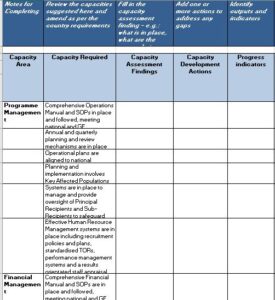
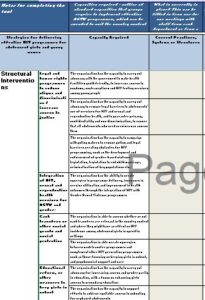
UNDP has developed a set of capacity assessment tools that are tailored to the needs of ministries of health, large organizations such as international non-governmental organizations or networks, and local civil society organization (CSO) implementing partners. UNDP has also supported capacity assessment processes tailored to specific programme components, such as interventions for adolescent girls and young women and key populations.
Key considerations for conducting an effective capacity assessment can be found here.
This comprehensive tool is designed for HIV, TB and Malaria with the main purpose to strengthen the systems and procedures of national entities to manage national programmes.
The tool is designed for assessing the capacity of potential PRs and to detail activities that need to take place before transition to a new Global Fund PR can fully...
This rapid tool is designed for HIV, TB and malaria with the main purpose to strengthen the systems and procedures of national entities to manage national programmes.
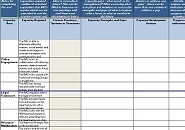
This tool is to support the capacity assessment and development of CSOs, covering programme management, monitoring and evaluation, financial management and procurement.
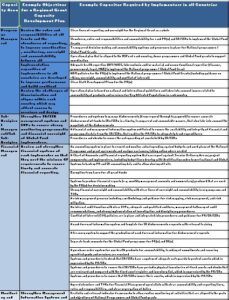
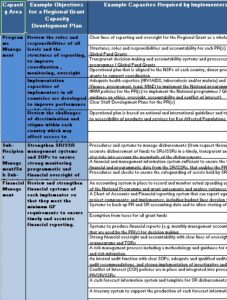
The plan outlines and prioritizes capacity development objectives, interventions and output indicators designed to enhance implementers’ capacity in multiple countries.
These tools & guidelines provide a shared approach to assess the strengths and weaknesses of a national health strategy or plan. JANS can support the assessment of what is required...
AUTHOR:UHC 2030LANGUAGE:EnglishFILE FORMAT:Web Link
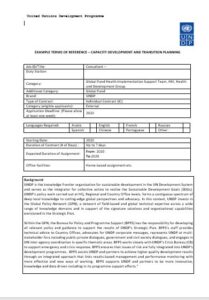
Example document and template for writing terms of reference for capacity development and transition planning
AUTHOR:UNDPLANGUAGE:EnglishFILE FORMAT:DOCX
Drafting the Capacity Development plan
Purpose
Successful and sustainable capacity development can only occur when there is commitment from individuals who invest in the process from the design stage onwards. Engaging stakeholders to build consensus from the time of designing the capacity development process is vital to ensure that all country partners are kept informed, consulted and engaged as necessary. Each organization will have a different role and view of the capacity development effort. UNDP works with organizations to bring country stakeholders together, along with tools to outline the scope and process for the capacity development.
Once the needs of a programme and all relevant stakeholders are identified through the capacity assessment, UNDP supports the identification of capacity development activities and the development of baselines and targets to form the basis of the capacity development plan.
Identify interventions: the activities should be described in detail, noting the capacity strengths and weaknesses that have led to the proposed activity.
Define capacity development indicators: each capacity development activity should have a clear indicator to measure progress. Indicators should be relevant and feasible to measure.
Outline capacity development objectives: the plan should outline the overall objectives of groups of activities. For example, activities such as developing financial policies and procedures and training staff to effectively implement these procedures would contribute to the overall objective of strengthening financial management capacities and reducing risk. Similarly, investing in renovating storage facilities at health clinics and designing and implementing an electronic logistics management information system would contribute to the objectives of improving the supply of health products and reducing wastage.
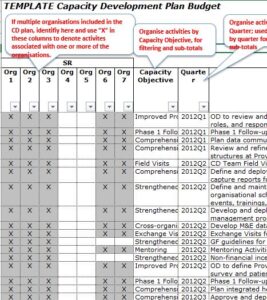
Develop an estimated budget: Once the activities are agreed, the budget should be developed using standard costing.
Tools and guidance
UNDP has developed templates for a wide variety of capacity development plans, including for civil society organizations (CSOs), national AIDS councils, ministries of health and programmes targeting specific key populations working in HIV, which can be found below.
The following points should be considered when completing the capacity development plan:
Define appropriate indicators: defining indicators to measure changes in capacity is difficult, but they are key to measuring success. The number of indicators should be as few as possible, easily measurable, and SMART (specific, measurable, achievable, realistic and time-bound), and should consider both qualitative and quantitative progress where possible.
Identify short-term objectives: to build confidence and experience and to demonstrate results and value, it is important to schedule and plan for some short-term objectives in the capacity development plan (typically within one year). These objectives can help to guide follow-on interventions.
Aim to set long-term objectives: capacity development is a process of change, often involving multiple activities. There is a need for capacity development to be more explicitly woven into national programme management processes. In the long-term, clear objectives and milestones should be embedded into national health programmes.
Coordinate with existing strategies and plans: capacity development plans should not stand alone but should be integrated into existing national strategies and plans.
Capacity development planning with Global Fund support
The Global Fund will invest in interventions that support national strategic plans and promote alignment with programme activities. The capacity development plan can include interventions to strengthen the development of disease-specific national strategic plans and the establishment of strong links with national health strategies. Where possible, planning for a programme transition to a national entity should be done at the same time as capacity development planning, to define the desired capacity in each area, and to set measurable milestones for the transfer of responsibilities.
Interventions eligible for the Global Fund support include:
Activities that contribute to planning, developing and reviewing national health sector strategies, health systems-related strategies and sub-strategies (e.g., HRH or procurement and supply chain systems);
Developing and supporting mechanisms to supervise, monitor and report on the implementation of health sector and disease-specific laws and policies;
Activities that contribute to financing of these plans;
Activities at the local, district, regional and national levels aimed at integrated planning, programming, budgeting and financings;
HRH-related costs, such as capacity-building for policymakers.
Suggested capacity development indicators include: Existence of an up-to-date national health strategy, linked to national needs and priorities; Evidence of mid-term strategy review and updates, and final evaluation; Strategy has a supporting operational plan and is fully costed.
This comprehensive tool is designed for HIV, TB and Malaria with the main purpose to strengthen the systems and procedures of national entities to manage national programmes.
The tool is designed for assessing the capacity of potential PRs and to detail activities that need to take place before transition to a new Global Fund PR can fully...
This tool is to support the capacity assessment and development of CSOs, covering programme management, monitoring and evaluation, financial management and procurement.
The plan outlines and prioritizes capacity development objectives, interventions and output indicators designed to enhance implementers’ capacity in multiple countries.
These tools & guidelines provide a shared approach to assess the strengths and weaknesses of a national health strategy or plan. JANS can support the assessment of what is required...
AUTHOR:UHC 2030LANGUAGE:EnglishFILE FORMAT:Web Link
Example document and template for writing terms of reference for capacity development and transition planning
AUTHOR:UNDPLANGUAGE:EnglishFILE FORMAT:DOCX
Stakeholder review and finalizing the plan
Purpose
Successful and sustainable capacity development can only occur when there is commitment from individuals who invest in the process from the design stage onwards. Engaging stakeholders to build consensus from the time of designing the capacity development process is vital to ensure that all country partners are kept informed, consulted and engaged as necessary. Each organization will have a different role and view of the capacity development effort. UNDP works with organizations to bring country stakeholders together, along with tools to outline the scope and process for the capacity development.
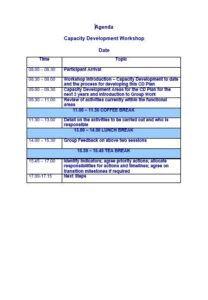
UNDP facilitates review workshops, bringing together all relevant groups, and provides template agendas to help guide the discussions. It supports the stakeholders in particular through the following actions:
Assessment verification: the assessment results and the proposed activities should be verified with appropriate stakeholders and partners.
Prioritize and schedule interventions and finalize the budget: it is important at this stage to prioritize capacity development objectives and activities, given that the available resources may not cover the full plan and that certain activities may be more crucial than others to the achievement of national strategic goals. Following the verification and the prioritization, the budget may need to be revised. Funds for capacity development management activities should be included in the overall budget. This should cover all coordination/management costs, monitoring and evaluation processes, and costs associated with the capacity development of staff.
Draft the capacity development plan report: it may be helpful at this stage to document the elements of the plan, to share with in-country partners and other donors.
Sign-off from national leaders: capacity development is nationally owned and the final approval for the plan should lie with the organization(s) being strengthened. The final approval to proceed should be obtained by the senior management of the organization(s) involved.
Launch the plan: it may be useful to hold a launch of the plan to ensure all relevant stakeholders are aware of the final focus and activities. This also contributes to the buy-in and coordination of the plan. If funds are still required (both financial and human resources) this may be an opportunity to approach donors.
Tools and guidance
Example templates for stakeholder review workshops and capacity development plan budgets are available in the key resources section below.
The following points should be considered when carrying out the stakeholder review and finalizing the capacity development plan.
A plan is only of use if it is implemented. An important consideration of the stakeholder review is to ensure ongoing ownership and responsibility, to move the plan from the assessment and planning stage to the implementation stage. Implementation will only take place if a majority of stakeholders feel ownership towards the plan’s activities and objectives.
Supporters and resisters should be considered. In defining a plan of change for any organization, there will be supporters and adversaries; the objective should be to engage both parties in a joint effort to agree on prioritized activities.
Realistic schedules and timelines should be defined. Consideration should be given to the time required to review by all country stakeholders. In addition, obtaining funding for the plan may also take time. This can delay implementation by six months to a year after the completion of a capacity development plan.
Donors may be able to offer in-kind resources as well as financial ones. Some donors may be able to offer in-kind support instead of money; this could include providing consultants or technical experts to carry out training or mentoring, or computer hardware or software packages to improve systems.
Cross-organizational activities can help reduce costs. If multiple organizations are included within the plan, consider identifying cross-organizational activities. Often a capacity need is required by several different implementers. Sharing activities across organizations may help to reduce overall costs; for example, only one set of training tools will be required for multiple training sessions.
Monitoring the implementation of the Capacity Development plan
Purpose
Successful and sustainable capacity development can only occur when there is commitment from individuals who invest in the process from the design stage onwards. Engaging stakeholders to build consensus from the time of designing the capacity development process is vital to ensure that all country partners are kept informed, consulted and engaged as necessary. Each organization will have a different role and view of the capacity development effort. UNDP works with organizations to bring country stakeholders together, along with tools to outline the scope and process for the capacity development.
Following the launch of a capacity development plan, UNDP supports the ministry of health and other stakeholders to:
Prepare for implementation: confirm the implementation arrangements, including who will monitor the day-to-day activities, how information will be shared about results, and management roles and responsibilities.
Confirm the capacity development oversight arrangements: identify who will oversee the implementation on a quarterly or semi-annual basis.
Implement the capacity development plan and conduct regular monitoring: manage inputs and resources to implement activities and ensure regular monitoring and reporting to management and the oversight group
Adapt the plan and alter course if necessary: adjust the programme as required during implementation to better achieve results.
Evaluations of both service delivery and plans to strengthen the health system should feed back to the stakeholders involved in the programme design and implementation and to the national strategic plan to assess the programme’s contribution to national goals.
Tools and guidance
UNDP has supported the implementation of capacity development plans in countries as diverse as Zimbabwe, Afghanistan, Sudan and Zambia, working in close partnership with national entities. Based on this experience, UNDP has developed a guide to monitoring and evaluating capacity development which brings together lessons learnt and offers ideas on best practices.
The following points should be considered during implementation.
Capacity development needs can change over time. Capacity development interventions and schedules may need to be adapted, redefined and updated at many points during implementation, on account of changing needs of individuals and organizations within a changing environment. Therefore, the regular monitoring of indicators is important and the changing of plans is likely.
There should be flexibility in the management of capacity development. Because capacity development is complex, and it can be difficult to measure changes in capacity, it does not necessarily fit well within the typical project management method of measuring numbers relative to budget. The primary need is for management to critically review both quantitative and qualitative progress and assess the changes in capacity as well as any new needs that have emerged.
Strong communication on implementationis key. To improve effective communications during implementation between the various country stakeholders, a web-based knowledge sharing system can be considered to organize activity schedules, provide updates on deliverables and store reports.
Existing stakeholder bodies should be leveraged for oversight processes. In the context of the Global Fund to Fight AIDS, Tuberculosis and Malaria (The Global Fund) programmes, Country Coordinating Mechanisms (CCM) can be one of the most effective mechanisms for the oversight of implementation of capacity development plans because of their focus on national ownership and because they consist of representatives from all key sectors and constituencies within countries. Creating a culture of dialogue among the different CCM members could result in more effective and efficient delivery of capacity development measures and should promote the sharing of good practices.
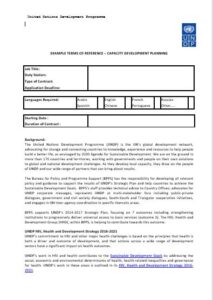
Example document and template for writing terms of reference for functional review.
AUTHOR:UNDPLANGUAGE:EnglishFILE FORMAT:DOCX
Evaluating the Capacity Development plan
Purpose
Successful and sustainable capacity development can only occur when there is commitment from individuals who invest in the process from the design stage onwards. Engaging stakeholders to build consensus from the time of designing the capacity development process is vital to ensure that all country partners are kept informed, consulted and engaged as necessary. Each organization will have a different role and view of the capacity development effort. UNDP works with organizations to bring country stakeholders together, along with tools to outline the scope and process for the capacity development.
UNDP carries out both informal reviews and formal evaluations of capacity development plans and supports processes to inform learning and next steps, such as planning for follow-on.
Prepare for evaluation: confirm the scope and timing of the evaluation, organize documentation, and select the evaluation team.
Manage the evaluation: brief the evaluation team, review inception reports, and review evaluation draft reports.
Leverage evaluation results: present and disseminate the evaluation results, share lessons learned and ensure the findings are used in future planning.
Tools and guidance
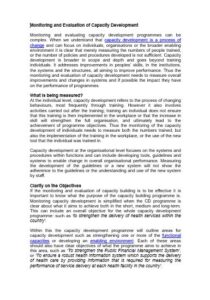
The sample terms of references below outline standard duties and responsibilities for a consultant to conduct a capacity development plan evaluation. Additional guidance and good practices can be found in the document “Monitoring and Evaluation of Capacity Development”.
The following points should be considered when evaluating a capacity development intervention.
Use existing data and information. Evaluations should use information available from a variety of sources, such as reports from other donors on their support to programmes organizations.
Integrate capacity development evaluations. Conducting evaluations of capacity development initiatives are no different to carrying out any other evaluation. Therefore, where possible, capacity development evaluations should be integrated with programme evaluations.
Template for implementing the terms of reference for evaluation of capacity development plans.
AUTHOR:UNDPLANGUAGE:EnglishFILE FORMAT:DOCX
Transitioning programmes to government
Transitioning to national entities
External donors have historically contributed a significant amount of financing for health programmes in low- and middle-income countries. However, as countries grow economically, donors expect countries to transition away progressively and sustainably from external financing and towards domestically funded health programmes.
Capacity development is given top priority in all countries where UNDP acts as interim Principal Recipient of the Global Fund to Fight AIDS, Tuberculosis and Malaria (The Global Fund) grants for HIV, tuberculosis and malaria programmes or as a channel for other donor funding to reach the implementation level, onwards to both government and civil society entities. The aim of its technical assistance is to transition the management and implementation of these programmes to national entities once capacity in the national organization is strong. A well-planned and well-managed transition process helps to avoid disruptions to service delivery and ensure the long-term sustainability and efficiency of vital health programmes.
In countries preparing for the transition from donor- to domestically funded programmes, early and extensive planning may be needed to mobilize domestic financing to cover costs previously funded by donors, such as HIV treatment and prevention services targeted towards key populations. To leverage additional domestic financing, there is a need to support domestic advocacy for increased health spending and to assess what alternative innovative financing mechanisms can be developed to reduce dependence on donors.
As more countries transition out of external financial support for health programmes, it is also important to consider the potential impact of the transition on continuity and access to services for the most vulnerable and marginalized populations. Particularly for the delivery of HIV services, the transition may have a negative impact on key populations that experience higher rates of HIV infection, such as men who have sex with men, people who inject drugs and transgender people, and those who face stigma and discrimination that may prevent them from accessing services under government-funded responses.
The pages in this section provide guidance and tools pertaining to UNDP’s approach to transition planning in the context of the Global Fund to Fight AIDS, Tuberculosis and Malaria (The Global Fund) and other health programmes, as well as broader support to build the enabling environment for sustainable and equitable health outcomes following a transition. This includes, in particular, technical assistance to help countries strengthen the availability and efficiency of domestic financing for health and support to establish mechanisms for the public funding of civil society organizations, or social contracting, most notably for community-based HIV service delivery to key populations.
Country example of phased transition
Following UNDP’s handover of the Principal Recipient (PR) role to government In Belarus, it was agreed that it would take some time to develop the necessary capacity in the area of procurement and supply chain management (PSM). As such, UNDP would continue to carry out all procurement during the first year of the new arrangements. Phase 1 of the transition focused on capacity development and start-up activities for the new PR, including in recruiting staff, managing and reporting on Global Fund funds, carrying out monitoring and evaluation, and developing operations manuals. Phase 2 focused on developing the new PR’s capacity to carry out PSM and ensured continued support from UNDP to the new PR, along with the guarantee during the transition phase that there would be no interruption in the supply of essential drugs.
Transition plans for the Global Fund and other health programmes
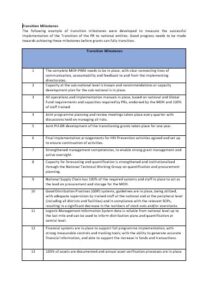
Transition planning should ideally be conducted at the beginning of a grant with the identification of a future national organization to assume management of the grant, at the same time as capacity development planning. In this way, selected capacity development planning milestones become transition “triggers” for certain functions. When planning a programme transition process, the first step is to consider what the transition options are and what criteria will be used to evaluate the options. Based on this information, a programme transition strategy can be developed to guide the process. A detailed programme transition plan outlines all activities that are required to transition the grant management role from UNDP to one or more national entities, with a clear timeline for implementation.
UNDP’s approach
When serving as interim Principal Recipient of a Global Fund to Fight AIDS, Tuberculosis and Malaria (The Global Fund) programme, UNDP works in partnership with country stakeholders from the start of the grant to establish the necessary capacities, systems and processes to enable the sustainable transition of programmes to national entities. It leverages existing tools and frameworks to help governments establish transition plans, with measurable milestones and concrete timelines, to ensure a tailored and gradual approach to the transition.
UNDP provides ongoing technical assistance beyond any handover to continue to develop the capacity of national entities. In many countries, UNDP does this through an advisory role, including through health coordinating mechanisms such as the Global Fund Country Coordinating Mechanisms or directly to implementing partners. UNDP also provides substantial health procurement support to national governments, including strengthening supply chains to ensure uninterrupted access to quality-assured medicines, continuing to procure health products after the transition to other functions.
UNDP places particular emphasis on supporting national entities to sustain HIV and other essential services for key and vulnerable populations and promote gender equity in disease responses. To this end, it helps to conduct transition readiness assessments that examine the legal and policy environments influencing access to health services, including structures that empower civil society organizations (CSO), which are often crucial to the success of health programmes in countries where key populations are disproportionately affected by the three diseases and are criminalized or marginalized. Strengthening the capacity of civil society implementing partners while donors are still present can help to ensure that CSOs are prepared to deliver services adequately and to advocate for their sustained financing after the exit of external financing. Visit the “Social contracting” page for more details on strengthening public funding for CSO service delivery. The “Human rights and legal environment” page offers guidance on UNDP’s work to strengthen legal and policy environments for key populations and other vulnerable groups, whether in the context of a programme transition or through technical assistance to national partners.
In addition, UNDP supports countries in planning and transitioning from donor support to domestically funded health programmes by analysing domestic funding options and revenue generation strategies and supporting investment cases to strengthen advocacy for health financing. See the “Sustainable financing” page for more information.
Tools and guidance
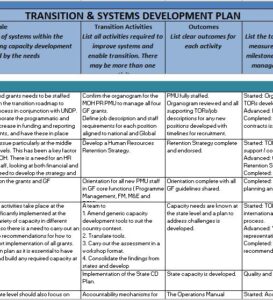
UNDP has designed a range of tools, guidance and templates to support transition processes for the Global Fund grants, which have been tested in a number of countries and can be adapted for the country context. This includes a comprehensive framework and tools for the development of a programme transition plan or strategy, as available in the key resources below. The objective of a transition plan is to design a staggered process to allow for grant management responsibilities to move from UNDP to the national entities, developing capacity where required during this time.
As part of its transition planning approach, UNDP helps partners to 1) establish management arrangements, including, where relevant, by setting up programme management units within ministries of health; 2) identify milestone indicators, transition schedules and risk mitigation measures; 3) develop budget estimates; and 4) generate consensus and approval among key stakeholders.
Some key points to consider in designing and implementing a transition plan include the following:
Where possible, planning for transition should be done at the same time as capacity development planning, to define the desired capacity in each area and to set measurable milestones for the transfer of responsibilities. This may not always be possible, and, if not, a schedule for developing a transition plan should be included in the capacity development plan. Implementation of the transition plan can start when the capacity is strengthened.
While a capacity development plan is owned by the national entity, a transition plan is jointly owned and managed by both the national entity and UNDP. Both organizations have important responsibilities to ensure a successful and sustainable handover of the grant management role. There are linkages between the capacity development plan and a transition plan, in that some transition activities may not be completed until capacity is strengthened.
The completion of a transition is sometimes dependent on capacity being developed and, following this, agreement from the donor that the national entity now has the required capacity to manage the grant. As with all capacity development, the focus should be on the development of national systems as opposed to stand-alone systems to manage a single grant.
A programme transition or transfer plan should also include a risk assessment, identifying possible risks associated with moving responsibility for essential health services from one grant manager to another and finding strategies to deal with these risks. The management of these risks should be monitored and controlled by the group overseeing the implementation of the capacity development.
Social contracting for effective service delivery under domestically-funded health programmes
Purpose
Communities and civil society organizations (CSOs) have been instrumental in driving the global HIV response from its earliest days. Community-based organizations have spearheaded advocacy efforts to expand access to prevention, treatment, care and support services for all in need, regardless of location and socioeconomic status. Governments, multilateral organizations and donors have come to recognize the vital role of CSOs and communities, not only in advocating for HIV services, but also in providing the services themselves, reaching those who may otherwise be left behind. Drawing on lessons learned from the HIV response, CSOs also play a significant service delivery role in tuberculosis and malaria responses.
The sustainability of critical services provided by CSOs depends on CSOs accessing diversified funding sources. “Social contracting” has been shown to be an efficient and cost-effective way to formally reinforce the link between CSOs and government, and to channel funding to CSOs to provide services that can strengthen national disease responses and health systems. While there is no universally adopted definition of social contracting, it is broadly understood as CSOs (which include and serve key populations) receiving domestic funding to deliver health prevention, treatment, care and support services.
The COVID-19 pandemic has further illustrated the critical role that CSOs can play in advocacy for and delivery of health services to vulnerable communities. Allocating public finances to civil society service delivery in the COVID-19 response is instrumental in leaving no one behind and building forward better.
UNDP’s Approach
UNDP identifies non-governmental organizations (NGOs) as key players in the transition process towards domestic financing of national HIV responses. UNDP carries out analyses of legal frameworks, related to the social contracting of NGOs as providers of health-related services, particularly those related to HIV, and makes recommendations to countries on legal frameworks and the current practice of social contracting between governments and NGOs. UNDP works with national stakeholders to ensure that NGOs are explicitly recognized as partners and service providers in public health legislation and policies. UNDP also engages with partners to advance this goal through convening consultations and developing or contributing to guidance materials.
Global consultations on social contracting
In 2017, UNDP, the Global Fund to Fight AIDS, Tuberculosis and Malaria (The Global Fund) and the Open Society Foundation partnered in convening a global consultation about social contracting. Input from participants included perspectives on existing approaches, as well as reflections from donors and technical partners about their experiences to date. Legal, policy and structural barriers to social contracting were analysed and the meeting reviewed opportunities for mitigating them. The findings of the global consultation were documented in the SHIFT social contracting report which features nine models of healthcare service delivery through social contracting from various parts of the world.
IIn December 2019, UNDP, the Global Fund and the Joint United Nations Programme on HIV/AIDS (UNAIDS) convened the global consultation “Public financing of service provision by civil society organizations in national responses to HIV, TB and malaria”. The consultation brought together 80 delegates from 34 countries to: (1) provide a forum for demonstrating the value of social contracting to expand services for key and vulnerable populations; and (2) initiate and catalyse dialogue among countries at different stages of developing social contracting mechanisms to share good practices, lessons learned and practical strategies to improve these mechanisms. The detailed insights from each of the thematic discussions are included in the consultation report, which will soon be made available here.
Tools and guidance
UNDP has developed an NGO guidance note, which aims to help international organizations, government, non-governmental organizations (NGOs) and other stakeholders to develop fact sheets and to use the facts and recommended actions to set up or improve NGO social contracting mechanisms. A step-by-step guide is provided, allowing not only easy use, but also a standardization .
In 2019, UNDP published a collection of case studies which features experiences from eight middle-income countries that are at various stages of developing social contracting mechanisms to support their responses to HIV. The case studies examine contextual factors such as health systems, human rights, governance systems, disease epidemiology and response, space for civil society overall and experience in social contracting.
A key message to country stakeholders, donors and technical partners from the eight case studies is that it is essential to start work on social contracting early, with meaningful community engagement, investing in enabling laws and policies, contextualizing and preparing customized solutions (testing and improving them) and, ultimately, integrating solutions into public health responses. Examples from countries with developed social contracting mechanisms convincingly demonstrate that these mechanisms can be effective and sustainable solutions for community-led service delivery.
The Sustainability, Transition and Co-financing guidance note by the Global Fund to Fight AIDS, Tuberculosis and Malaria (The Global Fund) is intended to support countries to strengthen sustainability, increase domestic financing and enhance preparations for the transition from the Global Fund support as they develop funding requests, implement the Global Fund grants and manage national HIV, tuberculosis and malaria programmes. To support country-level dialogue on the development of activities to support social contracting mechanisms, a specific annex dedicated to public financing of civil society service provision is now included in this guidance.
As part of its technical assistance to countries, UNDP supports evidence generation and advocacy to promote stakeholder buy-in, national leadership and increased investments in NGO social contracting for HIV prevention and other health services for key populations. As one approach to support advocacy for investments in social contracting, UNDP has adapted its existing social return on investment (SROI) methodology to determine the social returns of governments’ use of social contracting for health services. It piloted the SROI methodology with a focus on HIV activities funded by social contracting in three countries in Eastern Europe and Central Asia in 2020, with the results showing significant social returns. Building on this pilot, UNDP is developing a global guidance note to support stakeholders in other regions to apply the SROI methodology for HIV-related services delivered through social contracting to key and marginalized populations. SROI analyses can be used as part of lobbying activities to emphasize the benefits brought about by social contracting, increase domestic funding for it and inform decision-making to channel funds into NGO activities that yield the greatest social impact, with a focus on reaching the most marginalized groups.
Sustainable health financing
Financing is a core element of health systems and a key enabling factor in the ability of countries to achieve universal health coverage. As part of its focus on promoting resilient and sustainable systems for health, UNDP works with partners to support investment strategies, national policies and regulatory frameworks to strengthen financing and public financial management for health.
Despite significant increases in domestic financing to address HIV and other health challenges in the last few years, many countries remain heavily dependent on external funding sources. As countries work to achieve the ambitious targets set by the 2030 Agenda for Sustainable Development, the sustainability of financing for health has gained increasing attention as a priority issue for sustainable development. Transforming health systems to achieve the SDG 3 targets is estimated to require an additional US$371 billion per year by 2030, for 67 low- and middle-income countries (LMICs), which make up 95 percent of the total population in LMICs.
The design and implementation of health financing policies influence the extent to which health systems can deliver quality health services, equitable utilization of resources, and financial protection for vulnerable populations. While domestic resource mobilization is one key dimension of sustainable financing, economic growth does not guarantee increased national budget allocations for health, nor do increased health budgets ensure that available resources for health reach the populations who need them most.
Strengthening financing for health calls for a holistic focus that prioritizes improvements to the efficiency and strategic use of existing resources as much as efforts to generate revenue, both domestic and international, in alignment with national development strategies. This includes the integration of health into national budgets for development, innovative financing and co-financing approaches, understanding and addressing co-morbidities, strengthened governance, and ensuring appropriate focus on key populations and synergies with other development objectives.
Context
Strong economic growth over the past two decades has resulted in more countries transitioning from low- to middle-income status. Amid broader trends of declining official development assistance (ODA) flows, external aid for health peaked in 2014 but has remained stagnant since 2015. Although government health spending grew between 2000 and 2018, with global spending on health reaching $8.3 trillion in 2018, it was slower than in recent years.
Prior to the COVID-19 pandemic, strained national budgets and reduced external support limited government capacities to expand health services towards the achievement of universal coverage, particularly in low-income countries. Global HIV/AIDS spending has remained flat for years, after peaking in 2013, compounding challenges for countries previously dependent on development assistance for their disease response (UNAIDS, Resources and financing, 2021).
The economic shocks triggered by the COVID-19 pandemic, coupled with the devastating impact on health systems, have exacerbated previous health financing vulnerabilities. The global gross domestic product loss due to the COVID-19 pandemic in 2020 was estimated to be approximately $4 trillion. Deep economic contractions in donor countries threaten the external financing flows to lower income countries, for which aid makes up nearly 30 per cent of health spending on average. The growing needs for health services amid the health crisis combined with a more fiscally constrained environment threaten to reverse progress on universal health coverage and widen existing health inequities (WHO,Global Health Expenditure Report, 2020).
The multiple channels through which health financing can align with and contribute to SDG implementation is reflected in the measures that countries have prioritized in the Addis Ababa Action Agenda, the global framework for financing sustainable development.
The Agenda highlights, for example, opportunities for health financing strategies to:
Support the mobilization and effective use of domestic public resources: leveraging tobacco taxes as an additional revenue source and means of reducing health care costs; increasing public expenditure to ensure universal health coverage; and scaling investments in NCDs;
Unlock private investment from domestic and international sources: private investments must protect health standards and be aligned with public health goals;
Scale international public finance: more countries need to work towards innovative sources and mechanisms of additional financing, based on models combining public and private resources. Public-private partnerships for health like Gavi and the Global Fund make a significant contribution to financing the SDGs based on this model;
Tap into international trade as an engine for development: trade agreements like the WTO Trade, Intellectual Property Rights and Access to Medicines (TRIPS) agreement can be leveraged to facilitate improved access to affordable essential medicines for developing countries.
What does sustainable health financing entail?
The design and implementation of health financing policies influence the extent to which health systems can deliver high-quality health services, equitable utilization of resources, and financial protection for vulnerable populations. While domestic resource mobilization is one key dimension of sustainable financing, economic growth does not guarantee increased national budget allocations for health, nor do increased health budgets ensure that available resources for health reach the populations who need them most.
Strengthening financing for health calls for a holistic focus that prioritizes improvements to the efficiency and strategic use of existing resources as much as efforts to generate revenue, both domestic and international, in alignment with national development strategies. This includes the integration of health into national budgets for development, innovative financing and co-financing approaches, understanding and addressing co-morbidities, strengthened governance, and ensuring the appropriate focus on key populations and synergies with other development objectives.
Beyond ensuring there are sufficient resources to support the full functioning of the health system, sustainable health financing also refers to the efficacy of such funding in protecting the population from financial risks in accessing the health services they require. A key role for sustainable health financing is thus to support health systems to achieve universal health coverage by reducing health inequities and minimizing financial hardship on the poor.
As defined by the World Health Organization (WHO), health financing consists of a range of functions, including revenue raising, pooling and purchasing, as well as policies relating to service benefits to which some or all of the population are entitled. The entry points to improving the sustainability and impact of health financing are numerous, necessitating a combination of approaches at both the policy and programme levels. They entail considerations for, inter alia, budgeting frameworks, the design of benefit packages for health, social protection and health insurance frameworks, including community-based health insurance and free health care policies, resource-tracking and revenue-raising, fiscal space for health and public health taxes.
Among the key cross-cutting areas for improved health financing is that of public financial management (PFM). A strong PFM system – the institutions, policies and processes that govern the use of public funds – can ensure higher and more predictable budget allocations, reduced fragmentation in revenue streams and funding flows, timely budget execution and better financial accountability and transparency.
Given that public funds are the cornerstone of sustainable health financing in most countries, WHO underscores the central role for systems as a key enabling factor to achieve universal health coverage. A strong PFM system – the institutions, policies and processes that govern the use of public funds – can ensure higher and more predictable budget allocations, reduced fragmentation in revenue streams and funding flows, timely budget execution, and better financial accountability and transparency.
UNDP’s approach
Among the action areas which UNDP focuses its policy and programme support for health and development, as outlined in its HIV and Health Annual Report 2020-2021, sustainable health financing is a priority area through which UNDP promotes effective and inclusive governance for health. This cross-cutting policy focus complements and reinforces UNDP’s support to national partners in implementing large-scale health programmes in challenging operating environments, as part of UNDP provides technical assistance and capacity building to strengthen frameworks and processes for financial management.
UNDP service offerings for sustainable health financing include policy and programme support on:
improving efficiencies, including allocative efficiencies, for HIV and health;
innovative approaches to sustainable HIV and health financing, including developing investment strategies and national investment cases using a rights-based approach and leveraging other activities such as social contracting of civil society organisations to increase domestic financing for health.
UNDP also engages in global and regional processes and partnerships that contribute to sustainable health financing. In the Joint United Nations Programme on HIV/AIDS (UNAIDS) Division of Labour, UNDP is co-convener with the World Bank for the “Investment and Efficiency” thematic area.
Beyond HIV and health, UNDP plays a lead role in promoting financing solutions for sustainable development, as part of its mandate to support SDG implementation. UNDP provides knowledge leadership to contribute to the evidence base on sustainable financing and help countries identify and implement catalytic approaches. The online platform ‘Finance Sector Hub’ discusses UNDP’s tools and broader support to sustainable SDG financing.
Tools and approaches
UNDP, together with partners, supports sustainable health financing through a diversity of approaches, including those to generate revenue, avoid future expenditures, deliver better, and realign expenditures. Its aim is to enhance the sustainability and impact of health financing systems. Within its focus on promoting the mobilization and effective use of domestic public resources, UNDP provides support to countries by modelling optimized investment approaches, promoting affordable access to medicines and advising on transition processes related to domestic financing of national disease programmes .
Modelling optimized investment approaches
Working in close partnership with key partners, including the World Health Organization (WHO), other United Nations agencies, the World Bank, the Global Fund to Fight AIDS, Tuberculosis and Malaria (The Global Fund) and the STRIVE Research Consortium of the London School of Hygiene and Tropical Medicine, UNDP develops investment cases and conducts modelling to help countries identify the most effective investment strategies and efficient use of technical and financial resources.
This includes:
Promoting cross-sectoral co-financing approaches to increase the allocative efficiencies of investments in health and development: UNDP helps to identify investment opportunities in high-value interventions that deliver benefits across multiple development targets simultaneously, with benefiting sectors pooling their resources to finance these opportunities jointly.
The declaration of the third high-level meeting of the General Assembly on the prevention and control of non-communicable diseases: the Addis Ababa Action Agenda notes the enormous burden that non-communicable diseases (NCDs) place on both developing and developed countries. Increased investments in preventing NCDs, for example through excise taxes on health-harming products, can reduce public and private health-care costs while raising revenue and delivering wider societal benefits, such as reduced poverty and increased productive capacities.
Advancing multisectoral action for tobacco control, including for raised tobacco excise taxes as part of the World Health Organization (WHO) Framework Convention on Tobacco Control investment cases: these cases provide evidence of the return on investment for countries of raising tobacco taxes to reduce tobacco consumption and the related social and economic costs. They also assess the revenue-generating potential of these taxes and provide recommendations on the efficient allocation of that revenue to domestic health budgets and pro-poor investments.
Promoting affordable access to medicines
Ensuring affordable and fair pricing of medicines through effective health financing mechanisms is a key enabling factor for achieving universal health access. UNDP helps countries to review policy options and approaches to the pricing of essential medicines, including through the development of a price comparison tool as part of its work under the Access and Delivery Partnership.
UNDP supports governments to purchase good-quality medicines at the best price through its health procurement support. In Ukraine and Kazakhstan, for example, UNDP support on pricing negotiations helped the governments to achieve breakthrough price reductions in cost of treatment for hepatitis C, a significant step towards increasing access to medicines. Through the review of legal and regulatory frameworks related to the procurement of antiretroviral medicines, UNDP also helps to optimize efficiencies and ensure access for populations at higher risk of HIV infection.
Trade policy represents another pathway through which countries can reduce the cost of medicines to better meet the goal of universal access. UNDP provides advisory services to countries related to the World Trade Organization (WTO) Agreement on Trade Related Aspects of International Property Rights (TRIPS), which includes a number of flexibilities that can be used to reduce the prices of essential medicines.
Advising on the transition processes related to domestic financing of national disease programmes
As more countries assume middle-income status and transition away from externally funded health programmes, particularly for HIV, it is critical that they develop sustainable financing strategies using domestic resources, taking into account the need to scale up service coverage, as well as service quality and efficiency. An important strategy for many countries is social contracting of non-governmental organizations (NGOs) as providers of HIV-related and other health services, which can help to facilitate effective service delivery and efficient use of domestic resources. UNDP helps countries to tap into this mechanism by analysing legal frameworks and providing policy recommendations to governments on social contracting. UNDP also provides thought leadership and support to countries and partners on better understanding and addressing co-morbidities to increase allocative efficiencies.
While increased availability and strategic use of domestic public resources are critical to financing universal health coverage, even with projected increases in domestic health spending, a US$20-US$54 billion annual funding gap would remain. UNDP’s support to identify innovative financing for health therefore includes a focus on helping countries unlock private capital and tap into international financial assistance, complementary to domestic public resources. This includes:
Supporting the development and operationalization of social impact bonds to leverage private capital for health: UNDP is conducting a feasibility study in Zambia to inform the first ever tobacco-control social impact bond. The study will use a results-based model to examine the social, financial and environmental benefit to countries of their transitioning away from tobacco cultivation toward alternative crops/livelihoods for farmers who want to transition.
Tapping into financing opportunities at the nexus of health and environment: UNDP is currently conducting a feasibility study in Namibia, for example for its Solar for Health initiative, with the aim of increasing private sector investment.
Beyond HIV and health, UNDP plays a lead role in promoting financing solutions for sustainable development, including through knowledge-sharing. The online platform “Finance Sector Hub” discusses UNDP’s tools and broader support to sustainable SDG financing.
Capacity Development for Health
https://beta-cd4health.org
Generated on December 15, 2025 at 8:06 PM