Purpose
Successful and sustainable capacity development can only occur when there is commitment from individuals who invest in the process from the design stage onwards. Engaging stakeholders to build consensus from the time of designing the capacity development process is vital to ensure that all country partners are kept informed, consulted and engaged as necessary. Each organization will have a different role and view of the capacity development effort. UNDP works with organizations to bring country stakeholders together, along with tools to outline the scope and process for the capacity development.
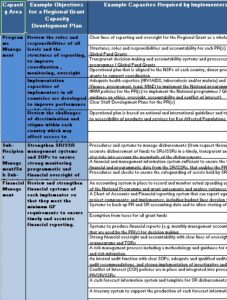
Develop a comprehensive capacity development plan
UNDP’s approach
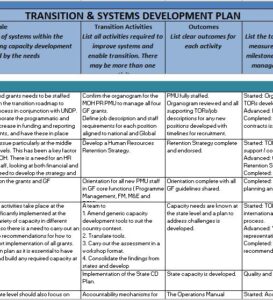
Once the needs of a programme and all relevant stakeholders are identified through the capacity assessment, UNDP supports the identification of capacity development activities and the development of baselines and targets to form the basis of the capacity development plan.
- Identify interventions: the activities should be described in detail, noting the capacity strengths and weaknesses that have led to the proposed activity.
- Define capacity development indicators: each capacity development activity should have a clear indicator to measure progress. Indicators should be relevant and feasible to measure.
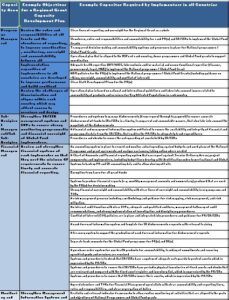
- Outline capacity development objectives: the plan should outline the overall objectives of groups of activities. For example, activities such as developing financial policies and procedures and training staff to effectively implement these procedures would contribute to the overall objective of strengthening financial management capacities and reducing risk. Similarly, investing in renovating storage facilities at health clinics and designing and implementing an electronic logistics management information system would contribute to the objectives of improving the supply of health products and reducing wastage.
- Develop an estimated budget: Once the activities are agreed, the budget should be developed using standard costing.
Tools and guidance
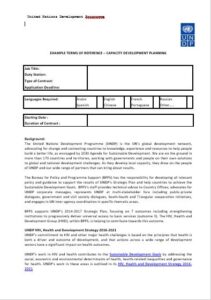
UNDP has developed templates for a wide variety of capacity development plans, including for civil society organizations (CSOs), national AIDS councils, ministries of health and programmes targeting specific key populations working in HIV, which can be found below.
The following points should be considered when completing the capacity development plan:
- Define appropriate indicators: defining indicators to measure changes in capacity is difficult, but they are key to measuring success. The number of indicators should be as few as possible, easily measurable, and SMART (specific, measurable, achievable, realistic and time-bound), and should consider both qualitative and quantitative progress where possible.
- Identify short-term objectives: to build confidence and experience and to demonstrate results and value, it is important to schedule and plan for some short-term objectives in the capacity development plan (typically within one year). These objectives can help to guide follow-on interventions.
- Aim to set long-term objectives: capacity development is a process of change, often involving multiple activities. There is a need for capacity development to be more explicitly woven into national programme management processes. In the long-term, clear objectives and milestones should be embedded into national health programmes.
- Coordinate with existing strategies and plans: capacity development plans should not stand alone but should be integrated into existing national strategies and plans.
Capacity development planning with Global Fund support
The Global Fund will invest in interventions that support national strategic plans and promote alignment with programme activities. The capacity development plan can include interventions to strengthen the development of disease-specific national strategic plans and the establishment of strong links with national health strategies. Where possible, planning for a programme transition to a national entity should be done at the same time as capacity development planning, to define the desired capacity in each area, and to set measurable milestones for the transfer of responsibilities.
Interventions eligible for the Global Fund support include:
- Activities that contribute to planning, developing and reviewing national health sector strategies, health systems-related strategies and sub-strategies (e.g., HRH or procurement and supply chain systems);
- Developing and supporting mechanisms to supervise, monitor and report on the implementation of health sector and disease-specific laws and policies;
- Activities that contribute to financing of these plans;
- Activities at the local, district, regional and national levels aimed at integrated planning, programming, budgeting and financings;
- HRH-related costs, such as capacity-building for policymakers.
Suggested capacity development indicators include: Existence of an up-to-date national health strategy, linked to national needs and priorities; Evidence of mid-term strategy review and updates, and final evaluation; Strategy has a supporting operational plan and is fully costed.