UNDP's commitment to addressing HIV and other major health and development challenges is based on the principles that health is a driver for and an indicator and outcome of development.
As outlined in the UNDP Strategic Plan 2022-2025, UNDP’s support to countries aims to eradicate poverty in all its forms and dimensions, accelerating structural transformation for sustainable development and supporting governments to build resilience to shocks and crises.
UNDP defines capacity development as the process through which individuals, organizations and societies obtain, strengthen and maintain the capabilities to set and achieve their own development objectives over time.
Strong partnerships are the cornerstone of UNDP's work to strengthen systems for health. In its support to countries UNDP works closely with other United Nations entities, development organizations, civil society organizations, the private sector, academia and key populations to develop resilient and sustainable systems for health.
The effectiveness of UNDP's model of health programme support, with its emphasis on end-to-end capacity development, is evident in the results of its long-standing partnership with the Global Fund to Fight AIDS, Tuberculosis and Malaria (the Global Fund).
Whether in its role as an implementing partner managing large-scale HIV, TB, and malaria programmes funded by the Global Fund or as a technical assistance
Investments in resilient and sustainable systems for health lay the foundation for the effective and equitable delivery of HIV, tuberculosis (TB) and malaria.
Human rights barriers include stigma and discrimination, punitive laws, policies and practices, violence, harassment, gender, and social and economic inequalities.
People most affected by HIV, tuberculosis (TB) and malaria are often the same people who are marginalised and have limited or no access to health care.
Gender equality is essential to achieving health and well-being for all, accelerate progress towards the health-related Sustainable Development Goal (SDG) targets and ensuring that no one is left behind.
Health facilities need power. Clinics, maternity wards, operating rooms, medical warehouses, and laboratories rely on electricity to power the lights, refrigerate vaccines, and operate life-saving medical devices. An inability to carry out these essential services puts lives at risk. All too often, particularly in remote areas, health facilities face significant power shortages. A World Health Organization(WHO) review revealed that 25 per cent of health facilities in sub-Saharan Africa had no access to electricity, while only 28 per cent of health facilities and 34 per cent of hospitals had what could be called “reliable” access to electricity (without prolonged interruptions in the past week).
In 2017, UNDP spearheaded the Solar for Health (S4H) initiative as a means of connecting two vital sectors – energy and health – to help countries advance universal health coverage while protecting the environment. Through the initiative, UNDP supports countries to install solar photovoltaic systems at health centers and storage facilities located in poor and hard-to-reach areas.
This helps to ensure constant and cost-effective access to electricity for uninterrupted health services, while also mitigating the impact of climate change and advancing multiple Sustainable Development Goals (SDGs). Broader development benefits of solar energy can also include the creation of green jobs and the development of local manufacturing and markets for solar power. By training women as solar technicians to install and maintain solar panels, the initiative also helps countries advance SDG 5 on gender equality and women’s empowerment.
S4H builds on the much larger investment and knowledge generated by UNDP’s robust energy portfolio focused on expanding access to clean energy, including the promotion of renewable energy and energy efficiency, in more than 82 countries. The lack of access to clean energy has significant and wide-ranging impacts on people’s health across the world. UNDP focuses on three key pillars of the health-energy nexus: electrification of rural health centres, clean cooking, and enabling cities to switch to sustainable transport. These have been further elaborated under the Energy for Health work areas.
UNDP’s approach
To date, and largely funded through the Global Fund to fight AIDS, Tuberculosis and Malaria (Global Fund), as well as Innovation Norway and the European Union humanitarian fund, UNDP has supported the solar electrification of some 1,000+ health centres and storage facilities in 15 countries (Zimbabwe, Sudan, Zambia, South Sudan, Namibia, Liberia, Libya, Malawi, Yemen, Angola, Nepal, Uganda, Chad, Lebanon and Eswatini). UNDP has also supported research on the ground to assess which innovative finance mechanisms can help scale these activities in Malawi, Zimbabwe, Liberia, Namibia and Zambia..
The objectives of S4H are to promote high-quality health services; contribute to climate-resilient health systems; and reduce health sector carbon emissions. Key elements of UNDP’s support to countries through S4H include:
supply of solar equipment and support for installation
maintenance, technology transfer, and institutional capacity development
solar energy promotion and awareness raising
regulatory and policy framework setting for solar energy provision
understanding of the climate change – energy – health interlinks
developing innovative finance mechanisms
UNDP continues to build on the lessons and results from implementation of S4H in these countries to help others conceive, plan and implement solar energy photovoltaic systems based on the needs arising from unreliable or unavailable electricity to health system facilities. The energy needs of the health sector are often exponential. Thus, S4H is designed to ensure flexibility, meaning that it can be initiated with relatively small contributions and scaled up as funding becomes available and additional needs are identified.
In addition, as part of national COVID-19 vaccine readiness and deployment plans led by the World Health Organization (WHO) and the United Nations Children’s Fund (UNICEF), UNDP is working with government and United Nations partners to scale reliable energy solutions for vaccination across the COVID-19 cold chain. This includes building on S4H experiences to deploy solar technologies to support the transport and last mile distribution of vaccines and green the underlying infrastructure for vaccination.
Resources and examples
Additional details on the objectives and support that UNDP provides to countries under Solar for Health (S4H) can be found in this Information Note.
Sustainable financing for S4H
In 2019-2020, UNDP commissioned KOIS and Diff-er to conduct a feasibility study to design a sustainable financing mechanism to accelerate the Solar for Health (S4H) programme in prioritized countries, and to provide UNDP and the local governments with information to determine further financing and implementation options of the proposed S4H financing model. The study looked at a demand-side analysis, supply-side analysis, and the design of the S4H financing structure in five countries: Namibia, Liberia, Malawi, Zimbabwe, and Zambia.
Insights from the S4H feasibility study are available in the documents below:
Through the S4H initiative, solar power systems are facilitating strong, reliable and resilient health services, even in some of the most challenging contexts.
In Yemen, 72 Health facilities, powered by solar, are providing vaccines and other medicines, schools are able to continue, and small businesses can run late into the night.
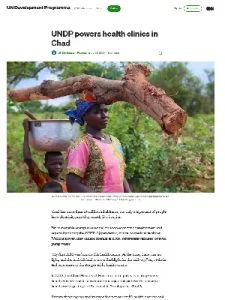
In Chad, in 2020 solar power systems were installed in 150 health facilities with a focus on pre- and antenatal care for women, childbirth and medication storage, and also to help them respond adequately to public health issues such as malaria, and now, COVID-19.
Supporting HIV clinics in Zimbabwe
Starting in 2017, with the financial support of the Global Fund to Fight AIDS, Tuberculosis and Malaria (Global Fund), UNDP installed solar photovoltaic systems in 1044 health facilities across Zimbabwe. Installation at an additional 19 health facilities is ongoing. Before the Solar for Health (S4H) project, many health facilities in Zimbabwe had access to electricity for only four hours a day. With solar installations in place, they now have power 24/7 and patients are receiving the care they need, when they need it. As a consequence, S4H has enhanced access to good-quality health services, notably for children aged under five years (e.g., for vaccinations) and pregnant mothers who attend the health facilities for delivery. In addition, the solar energy generated is used to maintain the cold chain and ensures that the quality of medicines and laboratory reagents remains constant. Solar panels will also facilitate water pumping and water purification – a pivotal achievement in a country in which water-borne diseases are the major killers of children.
In Zambia, UNDP has been working in close partnership with Medical Stores Limited (MSL), an autonomous government agency mandated to receive, store and distribute pharmaceutical health products across the country. MSL has faced regular power interruptions in the past, affecting the effective running of warehouses, including the refrigeration of medicines and vaccines. With funding received from the Norwegian Emergency Preparedness System (NOREPS) and the Global Fund to Fight AIDS, Tuberculosis and Malaria (Global Fund), UNDP has supported the MSL to install a solar powered energy system, combined with an energy efficient temperature control system, covering its 7,000 m2 national medical warehouse space. With the solar panels in place, MSL can ensure the effective running of its operations, even when there is no power from the national hydro-powered grid. This is vital to providing good-quality health services to the Zambian population, as interruptions in power supply had previously led to delays in the processing of requests from health facilities across the country. Furthermore, the solar power system has also ensured cold chain pharmaceutical items remain stored at the required temperatures.