Purpose
Pharmaceutical waste management is regarded to be an integral part of supply chain management and the product life cycle, as a result of the use and/or expiry of health products. Inadequate and inappropriate handling of health-care waste can have serious public and global health consequences and a significant impact on the environment. Governments can better protect public and planetary health by reducing the volume and toxicity of the wastes produced and by implementing a range of environmentally and socially sound waste management and disposal options. Solutions exist to develop and popularise technologies, products and concepts that will help drive countries to a zero waste, low-carbon, toxics-free, circular economy.
Pharmaceutical waste includes expired, unused, spilt and contaminated pharmaceutical products, prescribed and proprietary drugs, vaccines and sera that are no longer required, and, due to their chemical or biological nature, need to be disposed of carefully. The category also includes discarded items heavily contaminated during the handling of pharmaceuticals, such as bottles, vials and boxes containing pharmaceutical residues, gloves, masks and connecting tubing.“
Source: World Health Organization, 2014. Safe Management of Wastes from Health-care Activities, 2nd edition.
While there is currently no international convention that directly covers medical waste management, several environmental conventions have important implications for health-care waste. These include 1) the Basel Convention, which aims to protect human health and the environment against the adverse effects from the generation, management, transboundary movement and disposal of hazardous and other wastes; 2) the Stockholm Convention, a global treaty to protect human health and the environment from highly dangerous, long-lasting chemicals; 3) the Rotterdam Convention, which promotes shared responsibilities and cooperation among parties in international trade of certain hazardous chemicals to protect human health and the environment from potential harm; and 4) the Minamata Convention, which addresses measures to reduce the human environmental impact of mercury. Countries’ legislation and regulations for health care waste should be aligned with these conventions to ensure compliance with international environmental and health standards. The UNDP Health Care Without Harm questionnaire (2017) is available to support health procurement stakeholders’ compliance with environmental conventions.
UNDP’s approach
As part of support from the Global Fund to Fight AIDS, Tuberculosis and Malaria (Global Fund), UNDP helped to conduct rapid assessments of national set-ups for managing health-care waste, with a view to understand the environmental impacts and safety concerns, in Belarus, Bosnia and Herzegovina, Kyrgyzstan, Tajikistan, Uzbekistan and Zimbabwe. These assessments resulted in the development of the Healthcare Waste Management Toolkit Package for practitioners and policy makers.
The assessments also recommended the development of national strategies for waste management, to strengthen and improve existing systems to coordinate the financial sustainability of routine and new activities for waste management. Some of the assessments led to the development of country-level guidelines, tools and infrastructural projects to improve health-waste management.
In Zimbabwe, UNDP provided infrastructural support to the country’s health procurement and supply chain management system which included the installation of two pharmaceutical-grade incinerators at the central and regional levels to facilitate the disposal of pharmaceutical waste. Prior to this, it helped to put in place equipment, standard operating procedures and training of staff related to the deconditioning and disposal/recycling of plastic and cardboard packaging. On the normative side, UNDP provided technical assistance to the Ministry of Health and Child Care to develop the Pharmaceutical Waste Management Plan for Pharmaceuticals and Health Products.
UNDP has also provided support for the installation of incinerators for pharmaceutical waste in Afghanistan, Chad, São Tomé and Principe, Sudan, and Zambia, and for training on their use.
In Eastern Europe and Central Asia, where UNDP supports several governments with the procurement of medicines, UNDP’s technical assistance includes support to assess and provide lessons on waste management practices at the dispensation level.
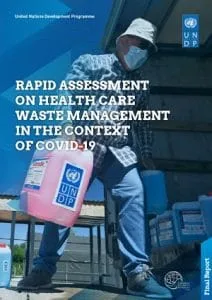
In 2020, amid the COVID-19 pandemic, UNDP commissioned Engineers Without Borders to conduct a rapid assessment of the prevailing health care-waste systems and legal frameworks, to inform the development of a generic strategy to improve health-care waste management in consultation with relevant stakeholders across the globe. As part of inter-agency support to COVID-19 vaccine readiness and deployment plans, UNDP is working with the World Health Organization and the United Nations Children’s Fund (UNICEF) to help countries scale environmentally and socially sustainable disposal of immunization waste.
Upstream reduction of health product waste
UNDP undertakes two main axes of work to reduce waste production upstream. One is to strengthen areas of the procurement and supply chain cycle, such as quantification, inventory control, logistics management information systems,, and procurement and distribution planning in supported countries. Building capacity in procurement and supply chain management helps reduce overstocking and product expiry, which result in the waste of financial resources and an increased need for pharmaceutical waste management.
UNDP also engages with antiretroviral manufacturers to optimize medicine packaging and reduce resulting waste. This practice, which has been piloted in a few countries, will be incrementally applied to other categories of medicines for which UNDP pools demand and procures on behalf of supported countries. The optimization of packaging to reduce upstream waste, requires coordination with manufacturers and national regulatory authorities to comply with international and national standards for medicine labelling. With increased experience and lessons learned, UNDP’s piloted approach for optimizing medicine packaging could be adapted and replicated by national procurement systems.
Tools and guidance
UNDP has developed the Health-care Waste Management Toolkit, based on several rapid country assessments of health-care waste management set-ups in 2015, to support the Global Fund to Fight AIDS, Tuberculosis and Malaria (Global Fund), UNDP and other practitioners and policymakers. The toolkit consists of:
Part A – Rational for Environmental Safeguard Policies
Part B – Waste Stream Concept Development
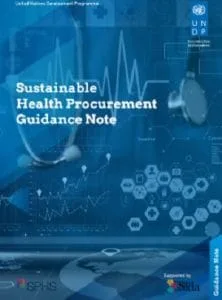
The UNDP/SPHS Sustainable Procurement Guidance Note (2020) is a useful resource for integrating sustainability strategies in health procurement processes. It details steps of the sustainable health procurement approach, creation of an action plan and integration of the action plan into procurement planning, solicitation design, contract management and responsible supplier engagement.
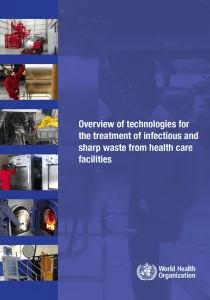
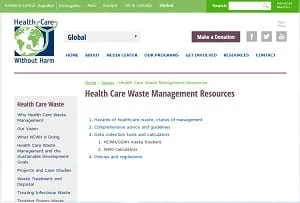
UNDP’s partner Health Care Without Harm offers a range of health-care waste management resources, including guidelines and assessment tools, on its website. Additional guidance, including from the Global Fund and the World Health Organization (WHO), are available below.