UNDP's commitment to addressing HIV and other major health and development challenges is based on the principles that health is a driver for and an indicator and outcome of development.
As outlined in the UNDP Strategic Plan 2022-2025, UNDP’s support to countries aims to eradicate poverty in all its forms and dimensions, accelerating structural transformation for sustainable development and supporting governments to build resilience to shocks and crises.
UNDP defines capacity development as the process through which individuals, organizations and societies obtain, strengthen and maintain the capabilities to set and achieve their own development objectives over time.
Strong partnerships are the cornerstone of UNDP's work to strengthen systems for health. In its support to countries UNDP works closely with other United Nations entities, development organizations, civil society organizations, the private sector, academia and key populations to develop resilient and sustainable systems for health.
The effectiveness of UNDP's model of health programme support, with its emphasis on end-to-end capacity development, is evident in the results of its long-standing partnership with the Global Fund to Fight AIDS, Tuberculosis and Malaria (the Global Fund).
Whether in its role as an implementing partner managing large-scale HIV, TB, and malaria programmes funded by the Global Fund or as a technical assistance
Investments in resilient and sustainable systems for health lay the foundation for the effective and equitable delivery of HIV, tuberculosis (TB) and malaria.
Human rights barriers include stigma and discrimination, punitive laws, policies and practices, violence, harassment, gender, and social and economic inequalities.
People most affected by HIV, tuberculosis (TB) and malaria are often the same people who are marginalised and have limited or no access to health care.
Gender equality is essential to achieving health and well-being for all, accelerate progress towards the health-related Sustainable Development Goal (SDG) targets and ensuring that no one is left behind.
Harnessing technological innovation and green solutions for the health system infrastructure
Purpose
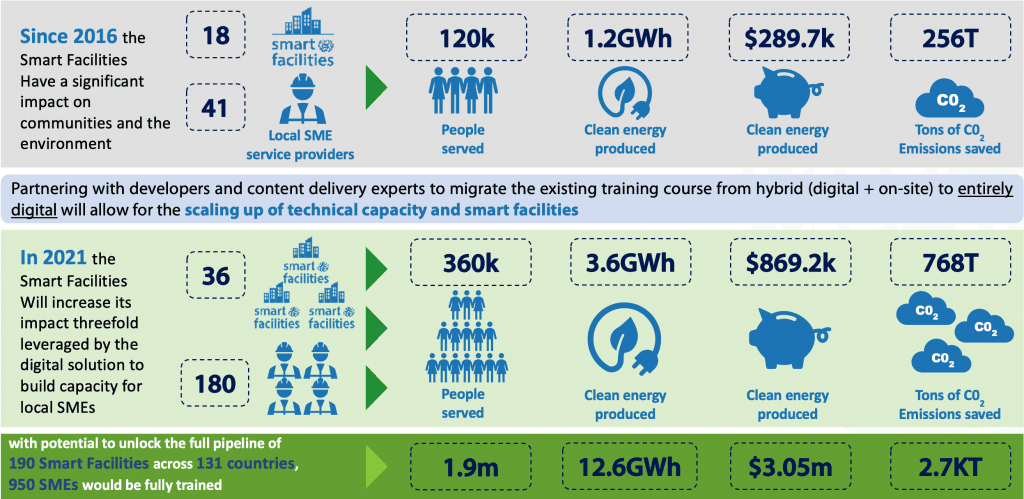
Inspired by the concept of smart cities, UNDP launched “Smart Facilities” in 2016 as an initiative to integrate technological innovation and renewable energy solutions into physical infrastructure. Smart Facilities applies solutions across four interdependent technology pillars to infrastructure such as office buildings, namely 1) energy and mobility; 2) big data and the internet of things; 3) information and communications technology (ICT), business intelligence and artificial intelligence; and 4) security.
Solutions that Smart Facilities provide
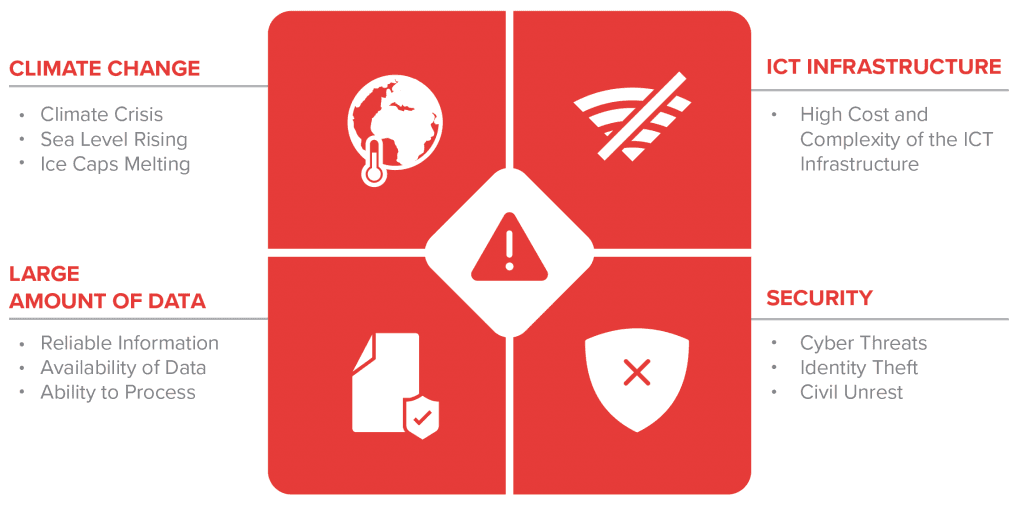
Issues that Smart Facilities seek to address
Building on lessons learned from operationalizing Smart Facilities within United Nations premises, UNDP is now working with governments, the private sector and other partners to apply the model to public sector infrastructure in a range of sectors, including health. Harnessing the power of smart technologies with the growing global need to be more energy efficient presents a key opportunity to contribute to the global decarbonization objectives of the 2030 Agenda.
The Smart Facilities model likewise offers a means to strengthen local economies. The initiative leverages local small and medium-sized enterprises for long-term sustainability of Smart Facilities and builds their technical capacities in the process. It aims to build a pipeline of local capacity to shape green, digital, new technology-driven infrastructure solutions, including a focus on youth apprenticeship.
UNDP’s approach
The implementation of Smart Facilities consists of a seven-step process that has been refined over the years:
This process ensures a comprehensive assessment of the site, a well-refined process for identifying local partners, a thorough technical review, a detailed installation plan and capacity building process, and continued monitoring and reporting to identify further business opportunities.
As part of its support to COVID-19 national vaccine deployment plans, UNDP offers a number of Smart Facility solutions to strengthen vaccine distribution efforts. These solutions cut across all stages of the cold chain to complement and reinforce existing components of vaccine storage, tracking, energy sources, monitoring, and security in both mobile and stationary infrastructure. They include, for example, vehicle grid integration, satellite communications, renewable energy, logistics management information system (LMIS) mobile applications for tracking and Internet of Things (IoT) sensors for temperature monitoring.
Smart Facilities for Health are based on a user-centered approach to design and capacity development, grounded in a recognition that innovation and digital solutions require co-creation and user ownership to be relevant and lasting. This includes a diverse community of engineers, local private sector service providers, facility managers, healthcare providers and patients.
By relying on partnerships with local small and medium-sizes enterprises, these Smart Facilities help to transform short-term vertical responses to acute crises into long-term solutions to buttress and extend health systems, including enabling digital health solutions and reaching underserved communities well into the future. As such, investment in local technical capacity lays the foundation for a new fourth Green Industrial Revolution.
UNDP continues to explore opportunities to scale Smart Facilities for health for COVID-19 response efforts and beyond.
With a focus on providing essential solutions for fixed infrastructure throughout health systems, such as health facilities, medical warehouses and laboratory and diagnostic settings, the Smart Facilities entail the application of interconnected renewable energy, internet connectivity, IoT and physical and cybersecurity elements. UNDP particularly seeks to leverage smart infrastructure solutions to build on its existing support to build more resilient and sustainable systems for health, including through its partnership with Global Fund to Fight AIDS, Tuberculosis and Malaria (Global Fund). Plans for Smart Facilities for health supported by the Global Fund are underway in Afghanistan, Djibouti, Guinea-Bissau, and South Sudan.