UNDP's commitment to addressing HIV and other major health and development challenges is based on the principles that health is a driver for and an indicator and outcome of development.
As outlined in the UNDP Strategic Plan 2022-2025, UNDP’s support to countries aims to eradicate poverty in all its forms and dimensions, accelerating structural transformation for sustainable development and supporting governments to build resilience to shocks and crises.
UNDP defines capacity development as the process through which individuals, organizations and societies obtain, strengthen and maintain the capabilities to set and achieve their own development objectives over time.
Strong partnerships are the cornerstone of UNDP's work to strengthen systems for health. In its support to countries UNDP works closely with other United Nations entities, development organizations, civil society organizations, the private sector, academia and key populations to develop resilient and sustainable systems for health.
The effectiveness of UNDP's model of health programme support, with its emphasis on end-to-end capacity development, is evident in the results of its long-standing partnership with the Global Fund to Fight AIDS, Tuberculosis and Malaria (the Global Fund).
Whether in its role as an implementing partner managing large-scale HIV, TB, and malaria programmes funded by the Global Fund or as a technical assistance
Investments in resilient and sustainable systems for health lay the foundation for the effective and equitable delivery of HIV, tuberculosis (TB) and malaria.
Human rights barriers include stigma and discrimination, punitive laws, policies and practices, violence, harassment, gender, and social and economic inequalities.
People most affected by HIV, tuberculosis (TB) and malaria are often the same people who are marginalised and have limited or no access to health care.
Gender equality is essential to achieving health and well-being for all, accelerate progress towards the health-related Sustainable Development Goal (SDG) targets and ensuring that no one is left behind.
Digital technologies and improved health data provide promising opportunities for innovation and acceleration of progress towards the health-related SDGs and for building more resilient systems for health. But 3.5 billion people still lack access to the internet and the opportunities it provides, highlighting the importance of programming, policy and legal frameworks that facilitate equitable access, protect privacy, reduce disinformation and narrow the digital divide.
The achievement of universal health coverage of quality, accessible and affordable health services is primarily dependent on well-functioning and robust health systems of a country. In recent years, outbreaks of Ebola and the Covid-19 pandemic have exposed and stressed weaknesses and gaps in health systems thereby increasing inequities in health and development worldwide.
Each country needs accurate and reliable data to plan and deliver quality health services, from primary care in rural communities to addressing health crises and pandemics. Ministries of Health rely on data to plan, monitor and implement timely health interventions; inform decision-making; and collaborate across sectors and regions to better serve communities.
Digital transformation provides concrete opportunities to tackle health system challenges, with a potential to enhance availability, accuracy and timeliness of data, and the coverage and quality of health services, including those at the last mile, to help achieve the SDG-3 goals and targets. Digital health interventions may be used, for example, to enhance the capacity of health workers and give them more immediate access to clinical protocols, and allow more people to access medical services through telemedicine consultations. Digitized medical-commodity supply chains can optimise pipelines and procurement, leading to increased availability of medicines and vaccines, reducing waste and corruption risks, and yielding significant cost savings overall. Inexpensive, widely available digital platforms and social media can enhance outreach to key and vulnerable populations in contexts where widespread stigma and discrimination, violence and harassment, punitive laws, policies and practices, and criminalization of behaviours puts them at heightened risks and undermine their access to services.
The approach
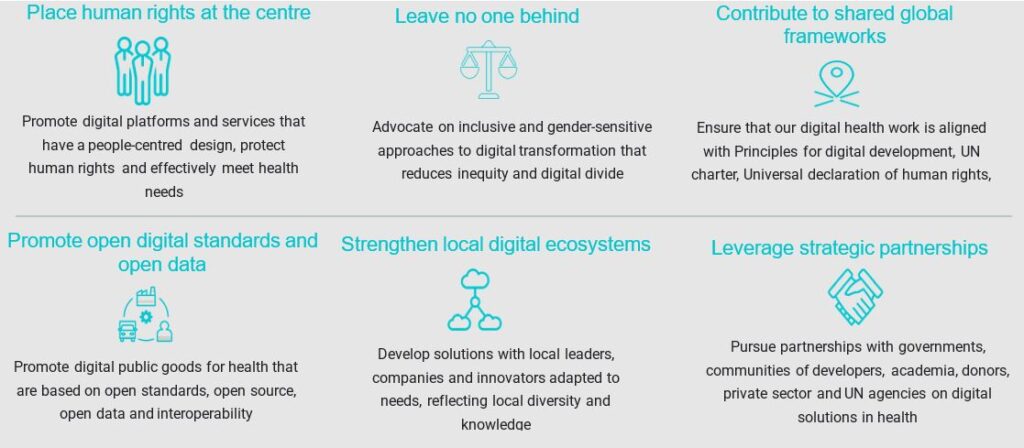
UNDP support to countries in building inclusive, ethical and sustainable digital societies is guided by its Strategic Plan 2022 – 2025 and Digital Strategy 2022 – 2025, which reiterate its commitment to support digital transitions using a rights-based approach. Central to UNDP’s mission are inclusion and the protection of human rights. In its pursuit of digital development, UNDP continues to advocate for and implement ‘intentionally inclusive’ methodologies that prioritize people-centered design.
As digital technology rapidly evolves, UNDP’s approach to digital remains rooted in clear principles based on experience and international frameworks that put people and planet first. UNDP advocates for open digital standards to unlock scale, reusability and interoperability. Leveraging digital public goods can unlock transformative solutions and digital infrastructures to enable a more equitable and transparent future, with a strong emphasis on protecting rights and preventing misuse.
UNDP’s HIV and Health Strategy 2022-25 seeks to work towards reducing inequalities (to leave no one behind) by increasing access to services (to reduce digital divide and improve health outcomes). As part of our digital health initiatives, we support governments and partners to develop, scale and implement digital health policies and programmes to reduce inequalities and exclusion that affect health and drive epidemics, promote effective and inclusive governance and build resilient systems for health.
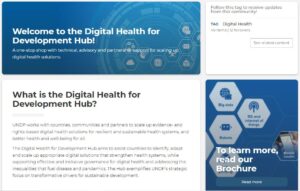
In line with these efforts, the UNDP Digital Health for Development Hub is a one-stop shop with technical, advisory and partnership support for scaling up digital health solutions. aims to assist countries to identify, adapt and scale up appropriate digital solutions that strengthen health systems, while supporting effective and inclusive governance for digital health and addressing the inequalities that fuel disease and pandemics. The Hub exemplifies UNDP’s strategic focus on transformative drivers for sustainable development.
UNDP Offer on Digital Health is aligned with principles of its Digital Strategy
In recent years, UNDP has successfully introduced and scaled up digital health innovations in countries around the world. UNDP supports the implementation of digital health initiatives across 62 countries, focusing on COVID vaccine delivery, medical supply chains, HIV, TB, maternal and child health as well as communicable and non-communicable disease service delivery.
The Global Dashboard for Vaccine Equity, launched by UNDP, WHO and the University of Oxford in 2021 combines the latest data on the global roll-out of COVID-19 vaccines with relevant socio-economic information, and provides actionable insights for policymakers to better understand the importance of vaccine equity for socioeconomic recovery.
In Ghana, UNDP is working with the Food and Drugs Authority with the roll-out of the Med Safety mobile app to monitor drug safety designed to encourage reporting of harmful side effects of health products, including medicines and vaccines, by consumers, patients and health care professionals. In Burundi, Chad, Djibouti and Guinea-Bissau, the UNDP-Global Fund partnership in collaboration with governments have rolled out and scaled mobile technology to digitize HIV, tuberculosis and malaria data to map, track, prevent and treat health outbreaks in real-time. The national tuberculosis programme in Moldova, in partnership with UNDP, is scaling up a mobile application which allows tuberculosis patients to video record themselves taking medicines at a time of the day and location convenient for them.
In Colombia, the prep-Colombia.org platform is used for initial screening, setting up medical appointments, keeping records of follow-up appointments and sharing the results of laboratory tests. It also allows doctors to generate different metrics such as level of acceptance, initial continuation, prevalence of toxicity and HIV status. All this is combined with training on combination prevention strategies reaching more than 20,300 people. This innovative approach has made it possible to guarantee the continuous provision of services, obtain good adherence to treatment, and support individuals despite the challenges posed by the COVID-19 pandemic.
Joan Alfaro, a 22-year-old Colombian social leader. Photo: Francisco Villa
In India, UNDP has supported the government to develop and implement a digital platform called CoWIN that currently underpins one of the largest and more successful COVID vaccination program in the world. The system, which has over one billion beneficiaries registered, is designed to provide much flexibility and ‘ease-of-use’ to the users. For example, text resizing options have been included in CoWIN webpages to benefit people with visual challenges. People with disabilities or those who are unable to self-register (for any reason) can go directly to the immunization facilities and they are registered on-spot and provided vaccination accordingly. In rural areas, there are over 250,000 government common service centres across the country that help citizens to register on CoWIN (people with disabilities, people without any internet connection, etc). As a result, vaccination coverage in rural and hard-to-reach areas is higher than the national average.
Challenges and risks of data and digital health programmes
While the potential of data and digital transformation for health is widely recognized, the ‘digital divide’ across and within countries, particularly for the poor and most marginalized, threatens to reinforce exclusion. Data privacy protection is crucial in a world where more health data is being generated – and potentially commodified – every day. Already, millions of existing digital identities are vulnerable to fraud and public exposure of personal information because they are stored in unsecured systems. In addition, billions of people do not have a digital identity and are not represented in the electronic data systems used to augment service delivery and monitor and collect data. Currently, the ownership and use of many forms of data are governed only by default norms and rules, and many jurisdictions at many levels are working to ensure that advances in innovation are accompanied by data policies that protect users.
Various tools can help address the challenges and risks associated with the adoption of data and digital health solutions. This includes the health technology assessment (HTA), a multi-disciplinary process that evaluates the value of health technology at different points in its lifecycle, including the technology’s properties, effects and impacts. It aims to inform policymakers and influence decision-making in health care, with a focus on how best to allocate funding for health programmes and technologies. Components of an HTA include validation of technical aspects (i.e., accuracy of the product or system), clinical considerations (i.e. contribution towards improving or maintaining a specific health condition) and systems compatibility (i.e. connection and/or integration into health service provision and health systems, including medical records). HTAs can be applied to different types of interventions, such as piloting tests, medicines, vaccines, procedures and programmes.
Major challenges that implementation of data and digital transformation solutions need to tackle include:
Governance and policy – Many countries do not have any well-defined policies and strategic framework on digital health or more broadly on digital technologies and data management. There is an urgent need for countries to build an enabling legal environment and have guidelines on citizen data protection, open standards, interoperability of digital systems, AI, standards on electronic health records and laws on data privacy.
Regulating digital space – This is a major governance challenge as most of the innovations in the digital sector are taking place in the private sector while government regulatory systems are lagging behind in catching up on the latest trends. According to a survey done by the Global Digital Health Platform on existing digital policy frameworks, only a very small percentage of developers took approval from regulators prior to designing digital health tools.
Digital ecosystems are fragmented – Most of the technology development takes place in silos in the public and private sectors which often precludes the emergence good quality low-cost tools for healthcare. Most of the digital tools do not progress beyond the pilot phase in the absence of an integrated and well-coordinated digital health ecosystem that underpins national health policies. There is unequal levels of availability, affordability and access to digital tools and technologies, particularly in LMICs, leading to a digital divide.
Weak supporting infrastructure – In several parts of the world, e-health infrastructure is weak and unable to support the scale of digital health. Most of this infrastructure is not interoperable or connected, particularly the health information systems. Low internet penetration and speeds are critical limitations impacting people from benefitting despite increasing availability of smartphones.
Digital health technologies have impacted privacy in various ways. More people have access to patient information, including medical caregivers, researchers, and administrators in the health care system and, in many cases, employers and government agencies outside it. Patient information is more accessible because it is increasingly stored in digital form and so it can be transmitted more easily than in paper form. Patient information is held for very long periods of time, and the longer it remains in existence, the greater the opportunities for abuse. Privacy concerns are enhanced by the fact that the collected medical records provide a storehouse of information that can be used in a variety of ways other than those intended when the information was first collected. These records can also be used for the marketing of particular drugs, or for the denial of medical health insurance coverage.
Examples of risks associated with increased collection and digitalization of health data include:
Data breaches, violations in privacy and confidentiality for groups that are subject to punitive or criminal laws – leading to unjust detention, violence or death in some cases
‘Function creep’ – use of data beyond the initially intended use
Artificial Intelligence reproducing and amplifying racial or other bias – when an algorithm is trained on biased data, it is likely to reinforce patterns from the dominant category of the data it was trained with. Vulnerable groups have a long history of being absent or misrepresented in existing datasets
Misinformation spread through social media
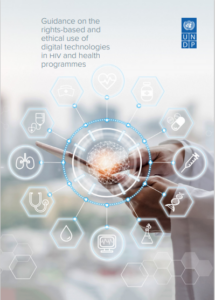
To address those risks and concerns when designing, implementing and monitoring digital health and data solutions, UNDP has issued ‘Guidance on the rights-based and ethical use of digital technologies in HIV and health programmes.’ The Guidance outlines key ethical, technical and human rights considerations for countries adopting digital technologies for HIV and health. It also presents a practical checklist and recommendations for governments, private sector companies and donor agencies to support countries in their decision-making on the adoption of digital technologies in HIV and health programmes.