UNDP Logo
Global
Capacity Development
for Health

Environmental sustainability

Capacity Development for Health | Generated on December 15, 2025

Table of Contents

Strengthening systems for the health of people and planet

Overview

Climate change is the greatest health threat of the 21st century, with environmental factors accounting for a quarter of the global burden of disease (The Lancet 2018; World Health Organization 2016). At the same time, the health sector is a major contributor to the global climate crisis and environmental degradation. If the global health sector were a country, it would be the fifth largest emitter of greenhouse gases in the world (Health Care Without Harm 2020). These multi-directional linkages between health and planet underscore the need for integrated action that simultaneously safeguards human health and the natural environment, a focus called for by the trans-disciplinary field of ‘planetary health.’

With its large policy and programmatic portfolios on health, environment, climate change mitigation and adaptation, governance, and other connected areas, UNDP is uniquely placed to support multi-sectoral policies and programmes on planetary health to respond to the complex and growing health burden caused by climate change, pollution, environmental degradation and threats to biodiversity, in partnership with the Global Fund to Fight AIDS, Tuberculosis and Malaria (Global Fund), the World Health Organization (WHO), the United Nations Environment Programme (UNEP), Global Environment Facility (GEF) and others.

UNDP’s approach

UNDP’s framing on planetary health is operationalized through two primary areas:

  1. supporting multi-sectoral policies to respond to the growing burden of environmental threats including pollution and climate change, with a particular focus on the most vulnerable.
  2. building resilience in the health sector, including through integration of measures for sustainability in health programmes.

UNDP’s approach to environmental sustainability in the health sector is aligned with the priorities of key partners, including the Global Fund to Fight AIDS, Tuberculosis and Malaria (Global Fund), Gavi, the Vaccine Alliance (Gavi) and the World Health Organization (WHO). The Global Fund encourages partner countries to develop and strengthen comprehensive, sustainable, climate-smart procurement, supply and waste management systems that support the avoidance, reduction and management of health-care waste, including health-care waste that is generated under Global Fund grants (GF RSSH Information). Gavi is committed to scaling up its investments in proven interventions for climate-resilient health systems, including by helping countries to reduce their footprint related to health care, as underlined in its 2021–2025 Strategy.

UNDP works closely with WHO, particularly drawing on its expertise in building climate-resilient health systems and helping countries to track national progress in protecting health from climate change. This includes joint efforts to integrate health into the implementation of nationally determined contributions to the Paris Agreement. It likewise partners with civil society organizations, research institutes and foundations to expand research and multi-stakeholder participation, including youth, in movements linking health and climate. UNDP also helps to connect investments and expertise from environmental funding mechanisms such as the Global Environment Facility and Green Climate Fund with those of health-specific financing partners.

Along with the World Bank and the United Nations Department of Economic and Social Affairs (DESA), UNDP is a co-convener of the WHO-led Health and Energy Platform of Action, which mobilizes political commitment, support and resources to ensure universal access to clean and sustainable energy to protect health.

Resources and examples

Building resilience and reducing negative environmental impact through health programmes

Scaling renewable energy in the health sector

UNDP has supported 14 countries to increase access to high-quality health services through the installation of solar energy photovoltaic systems in some 1,150 health centres and storage facilities, primarily through its Solar for Health Initiative (S4H). Solar power systems are facilitating more reliable and sustainable health services, while mitigating the impact of climate change and reducing energy costs, even in some of the most challenging contexts. In many countries, UNDP’s S4H interventions are funded by the Global Fund to Fight AIDS, Tuberculosis, and Malaria (Global Fund) as part of joint efforts to build more resilient health systems. UNDP is also developing a new business model to maintain financial sustainability of the S4H initiative in the project countries. Learn more.

Greening health sector procurement

UNDP hosts the Inter-agency Task Team on Sustainable Procurement in the Health Sector, which aims to contribute to greener health systems and reduce greenhouse gases. It has influenced members’ procurement practices and developed tools to monitor performance of suppliers and manufacturers. In partnership with Health Care Without Harm, UNDP is also working with 10 countries through a Sustainable Health in Procurement Project (SHiPP) (2018-2021), supported by the Government of Sweden, to strengthen sustainability in health sector policies and practices. UNDP brings these approaches and expertise to its capacity development activities in countries where it is an interim Principal Recipient of Global Fund programmes or providing technical assistance to ministries of health to support the procurement of medicines and other health products.

Health-care waste management

Proper waste management reduces both environmental damage and health risk factors. UNDP’s capacity development to governments and partners for procurement and supply chain management includes support to strengthen processes and infrastructure, including installation of incinerators, for the management of pharmaceutical and other health care waste. In 2020 amidst the COVID-19 crisis, UNDP and Engineers Without Borders supported numerous countries to conduct rapid assessments of health-care waste systems and related legal and policy frameworks. This was done in close collaboration with national and local government ministries, environmental management agencies, healthcare facilities, civil society organizations and organizations from the private sector. The results are being used to develop national roadmaps and support broader programming, in line with grants from the Global Fund to Fight AIDS, Tuberculosis and Malaria (Global Fund) and sustainable health in procurement programmes. Read more here.

Resilient and sustainable COVID-19 response

To support equity, resilience and sustainability in the COVID-19 response and recovery, UNDP is working with governments, and the United Nations, and other partners under the framework on national deployment and vaccination plans to minimize the environmental and climate impacts of COVID-19 vaccination. Learn more here.

Technical assistance to support multi-sectoral policies

Embedding climate change adaptation strategies into health systems

Through a five-year project “Building Resilience of Health Systems in Pacific Island Least Developed Countries to Climate Change” (2021-2026), UNDP is providing technical assistance to the Ministries of Health in Kiribati, Tuvalu, Vanuatu and the Solomon Islands to strengthen the capacity of national health systems and institutions, and sub-level stakeholders, to manage long-term climate-sensitive health risks. The project is co-funded by the Global Environment Facility, the World Health Organization (WHO), and the respective Ministries of Health. Details of key project activities and outcomes are available on the project website. UNDP implements a similar regional project in Asia (Bangladesh, Cambodia, Lao People’s Democratic Republic, Myanmar, Nepal and Timor-Leste) to integrate climate risks into health sector planning, improve surveillance and early warning systems and integrate health into the national adaptation planning processes.

Addressing pollution as an environmental determinant of noncommunicable diseases

Through a three-year project “Advancing Health and Environmental Sustainability Through Action on Pollution” (2020-2023), UNDP and the European Commission support three governments – India, Mongolia and Ethiopia – to address pollution as a key environmental determinant of non-communicable diseases (NCDs), and as part of broader efforts to respond to environmental degradation and the changing climate. The objectives of the project are to: 1) develop and pilot a methodology to calculate NCD-related health costs of inaction on air pollution, and the return on investment in selected cost-effective and nationally-prioritised interventions (investment case); 2) enhance governance structures and coordination mechanisms across relevant ministries to enable joint analysis, planning and financing to target main sources of pollution; 3) advance effective laws, policies, standards and regulations around pollution and health through conducting legal environment assessments, and build capacities for oversight and enforcement where gaps exist, and 4) facilitate a global scale-up of action on pollution and health through dissemination of the methods, approaches, and lessons learnt.

Linking health and environment in impact assessments

UNDP has supported a number of countries in Africa to integrate HIV and key health- and gender-related priorities into national assessments of environmental impact, to inform development policy planning.

Scaling impact on health, climate, and environment through co-financing

UNDP supports the application of co-financing methodologies in countries’ implementation of the Sustainable Development Goals (SDGs). As part of its policy support, UNDP helps governments to prioritize high-value interventions that deliver impact across multiple SDGs, including health and environment, to combine financing streams from multiple ministries and better leverage existing resources. “Integrated policies that capture triple wins for health, growth and climate could reduce by 40 percent the required total investment to achieve the Sustainable Development Goals and the Paris Agreement, ” says– Yannick Glemarec, Executive Director, Green Climate Fund.
Key Resources

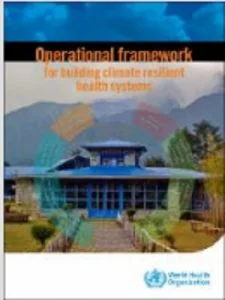
Operational Framework for Building Climate Resilient Health Systems

World Health OrganizationThis framework provides guidance on how the health sector and its operational basis in health systems can systematically and effectively address the challenges increasingly presented by climate variability...
AUTHOR: World Health Organization LANGUAGE: English FILE FORMAT: Web Link

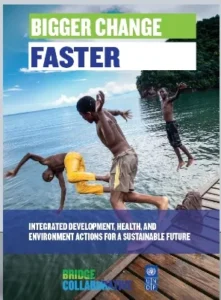
Bigger Change Faster: Integrated Development, Health, and Environment Actions for a Sustainable Future

United Nations Development Programme, Bridge Collaborative.This joint report by UNDP and Bridge Collaborative highlights opportunities to accelerate multi-sectoral solutions in 1) clean air and energy; 2) global food system for...
AUTHOR: UNDP LANGUAGE: English FILE FORMAT: PDF

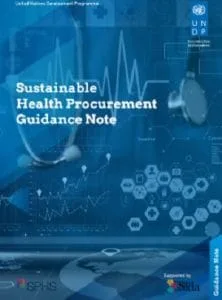
Sustainable Health Procurement Guidance Note

United Nations Development Programme, SPHS, SidaThe main goal of this guidance note is to facilitate the implementation of sustainable procurement of health-care commodities and services by providing criteria that may...
AUTHOR: UNDP LANGUAGE: English FILE FORMAT: PDF

Issue Brief: Planetary Health

United Nations Development ProgrammeThis issue brief explores what is meant by planetary health, and how it can inform UNDP’s work at the nexus of environmental sustainability and climate change, disaster...
AUTHOR: UNDP LANGUAGE: English FILE FORMAT: PDF

UNDP’s approach to sustainable procurement for health products

In close collaboration with governments, United Nations agencies, international organizations, manufacturers, freight forwarders and partners, UNDP is adopting incremental measures and models in its health procurement practices to minimize environmental impact and to incorporate economic and social sustainability. Key partnerships and priority programme areas are outlined below.

UNDP sustainable procurement in the health sector programme

UNDP hosts the secretariat and participates in the United Nations Informal Interagency Task Team on Sustainable Procurement in the Health Sector (SPHS). The taskforce brings together seven United Nations agencies (UNDP, United Nations Environment Programme – UNEP, United Nations Children’s Fund – UNICEF, United Nations Population Fund – UNFPA, United Nations High Commissioner for Refugees – UNHCR, United Nations Office for Project Services – UNOPS, World Health Organization – WHO) and three multilateral health financing institutions (Gavi, the Vaccine Alliance – Gavi, Global Fund to Fight AIDS, Tuberculosis and Malaria – Global Fund, Unitaid). The annual cumulative purchasing power of the taskforce for health products is around $5 billion, which gives opportunities to influence and pilot business models for improving environmental, social and economic sustainability. With increased health spending during the pandemic, this figure has risen two-fold in the last 2 years.

UNDP’s Sustainable Health Procurement programme strives to promote sustainable production and consumption practices by ensuring products and services purchased have the lowest environmental impact and contribute towards positive social results. The UNDP approach to sustainable health procurement also leads towards considerable cost benefits and resource efficiencies in health procurement.

UNDP is committed to sustainable procurement as a gradual approach through working in partnership with manufacturers and other partners and by strategically leveraging the health procurement architecture as a market mechanism for change. This will foster a market transition towards more sustainable production, procurement and consumption practices for health products. Among many others, UNDP has organized five Global manufacturers fora in five different regions (Philippines 2018, Tanzania 2019, Saud Arabia 2020, Colombia 2021 and United Kingdom 2022). The Global manufacturers forum has become a popular event for policy makers, manufacturers, academia, CSOs and suppliers of health commodities and equipment to gather and share expectations, lessons and feedback.

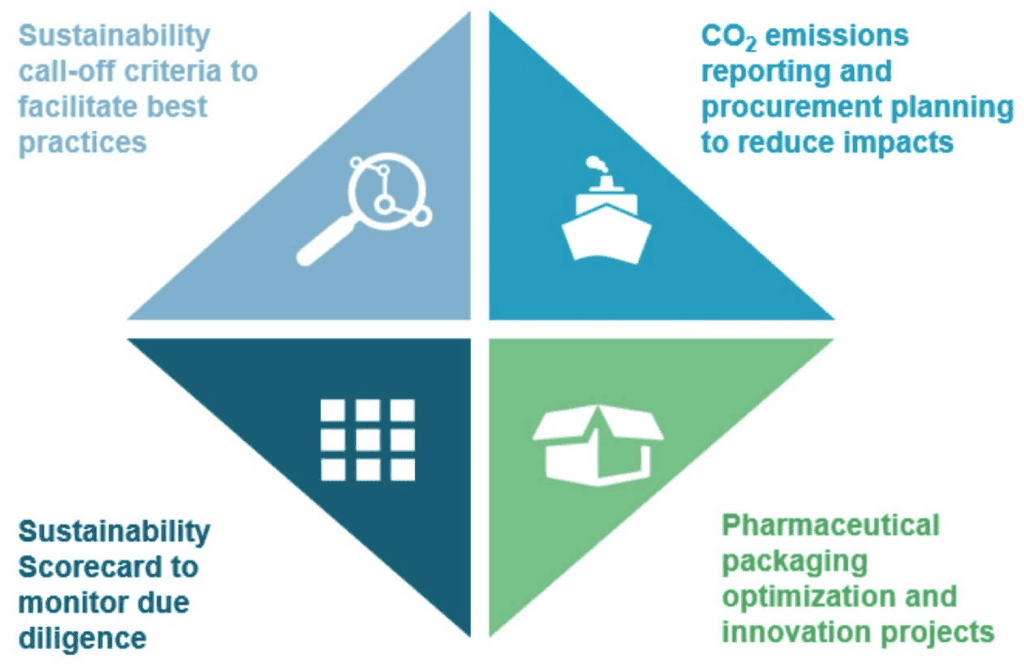
In 2020, UNDP launched the  Sustainable Health Procurement Guidance Note, as part of the Sustainable Health in Procurement Project, and has been developing different approaches to include sustainability in its health procurement practices. The main strategy comprise: optimizing medicines packaging; reducing CO2 emissions by optimizing health product procurement transport scenarios; and influencing suppliers in long-term agreements with UNDP to introduce sustainability in their business models through the monitoring and review of sustainability criteria. These sustainability approaches to procurement are carried out closely with national counterparts; the work at the country level serves as a basis for countries to start embedding sustainable practices in their own procurement activities.

Additionally, UNDP worked with Healthcare Without Harm to develop and launch the chemicals of concern to health and environment guidance document. This document includes a list of chemicals of concern to human health and the environment. The list is based on systematic evidence reviews from authoritative sources, which identify chemical and material hazards of concern that are carcinogenic, mutagenic, endocrine disrupting and reproductive hazards (health hazards) and bio- accumulative and persistent to the environment and/or listed in International Environ­mental instruments (Conventions)

Pharmaceutical packaging optimization

Rethinking the necessities of packaging helps to reduce waste, optimize shipments and save costs which can be reinvested in health activities and in strengthening national supply chains.

UNDP is engaged in packaging optimization of health products and further investigating areas for innovation of product  waste management. The packaging reduction project is conducted in partnership with manufacturers and freight forwarders to identify areas of opportunity, redesign packaging specifications and to calculate metrics to measure the impacts through capacity enhancement, reduced emissions and cost savings achieved.

UNDP has worked extensively with antiretroviral manufacturers and national regulatory authorities on packaging optimization to reduce product waste and increase cost-effectiveness. In 2016-2017, it piloted a Reduced Packaging Initiative piloted in Zimbabwe, South Sudan, and Equatorial Guinea. The new packaging resulted in a 55 per cent increase in shipping capacity per container and an additional reduction of 57 per cent of CO2 per unit for the Zimbabwe trade lane. Up to US$1.20 million in savings have been generated for 2.5 million packs delivered under the UNDP Reduced Packaging Initiative. Work is ongoing to extend this approach to other countries and to a wider range of antiretrovirals procured through UNDP. This entails substantive work with national regulatory authorities to ensure compliance with labelling requirements.

With increased experience and lessons learned on medicines packaging optimization, UNDP’s approach can be adapted and replicated by national procurement systems and by other players involved in health procurement.

CO2 emissions reporting and reduction

Monitoring, measuring, reporting health product transport’s CO2 footprints and rethinking procurement planning and transport help reduce environmental impact and gain cost efficiencies.

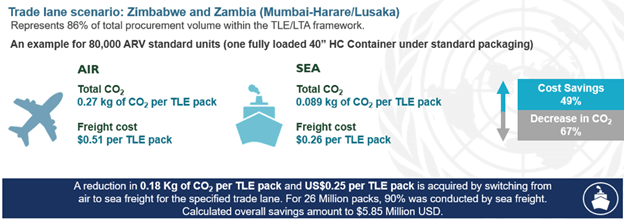
UNDP is committed to reducing its CO2  footprint, including the CO2 footprint of health procurement to reduce the impact of climate change. Since 2015, UNDP has been collecting CO2 data as part of long-term agreements with specified antiretrovirals first line suppliers to measure, monitor and reduce CO2 impacts in partnership with freight forwarders. All collected data is captured as business intelligence analytics and visualized through a dashboard that is monitored on a quarterly basis. The UNDP procurement planning capacity engagement and data provided by UNDP country offices is also used to switch to more efficient freight options that provide reduced emissions per shipment, resulting in significant CO2 reductions and freight cost savings.

Environmental and social sustainability scorecard initiative and call-off criteria for tendering

Leveraging its global health procurement architecture, UNDP’s environmental and social sustainability initiative incrementally builds a dialogue and a demand for sustainable pharmaceutical production and procurement.

UNDP is committed to working in partnership with manufacturers to meet demand for better social and environmental due diligence in pharmaceutical manufacturing and procurement. The UNDP environmental and social sustainability scorecard initiative leverages the UNDP health procurement architecture within its signed long-term agreements and contract management process. By strategically selecting health products of high volumes, this approach encourages manufacturers to follow sustainability manufacturing criteria under the UNDP Sustainable Health Procurement Programme, as part of the ongoing procurement contracts.

UNDP has designed an environmental and social sustainability scorecard  initiative, which, as specified within the suppliers’ contract, requires manufacturers to provide comprehensive information, data and supporting documentation about manufacturing facilities.

The information is compiled in a UNDP sustainability scorecard and is regularly reviewed to identify opportunities to include environmental sustainability within pharmaceutical manufacturing facilities and processes. Through the collection of relevant data on suppliers’ environmental practices, it is possible to establish and monitor the baseline of adopted environmental criteria. A continuous two-way dialogue is opened with manufacturers to discuss challenges and potential for improvements in pharmaceuticals manufacturing, therefore setting incremental industry best practices.

Sustainable Health in Procurement Project (SHiPP)

UNDP together with Health Care Without Harm (HCWH) implemented the Sustainable Health in Procurement Project (SHiPP). The first phase of the project addressed the intersection between health, human rights and the environment in 10 countries (Argentina, Brazil, China, India, Moldova, South Africa, Tanzania, Ukraine, Vietnam and Zambia). SHiPP was designed to promote procurement practices that consider environmental and social impacts, as well as cost-efficiency and affordability when defining how processes can be sustainable, and to mainstream gender and human rights including anti-corruption, transparency and accountability.

Through the SHiPP, countries have adopted new standards and guidelines to promote sustainability in the health sector. For instance, Brazil has developed a plan to ban mercury medical devices; India has established guidelines and criteria for Bio-Medical Waste and Infection Control Management; and South Africa approved an acquisition plan for biogases and air quality monitoring.

Impact Stories that Inspire

SHiPP amplifies the voices of incredible and extraordinary women and men passionate about introducing health sector practices that improve their working conditions, the lives of their communities and help protect the environment.

Nearly 60 million health workers worldwide deliver care and services to patients either directly as doctors and nurses or indirectly as aides, helpers, laboratory technicians and medical waste handlers. These individuals are our most valuable resource for health, and many of them are now leading the way to a more sustainable future by taking care of people in their communities and the environment.

In this unique collection of stories, you will hear directly from inspiring individuals who work in the eld and push the limits of their societies and systems to move health care to a more sustainable development trajectory.

You will read a story about two Zambian women who challenged societal stereotypes and prejudices by training to become autoclave operators. These women contribute to safer waste management practices in a job traditionally perceived as a male domain.

You will hear from a nurse in Brazil whose charisma and leadership were catalytic to the adoption of new, environmentally friendly cleaning products. Initially reluctant to make those changes, the Minas Gerais state has found that the introduction of more sustainable products has dramatically improved their citizens’ health.

You also will read about an Indonesian team that cultivated a small-scale organic farm during the COVID-19 together with the support of rehabilitating mental health patients and the local community.

Impact Stories that Inspire features voices from all over the world. Stories show that no matter our role in society, we all have a vital part in creating a better, safer, and more resilient world.

Key Resources

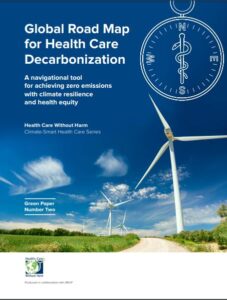
Global Road Map for Health Care Decarbonization

Health Care Without Harm This is the second in a series of research and policy papers that Health Care Without Harm and Arup have produced together to identify a set...
AUTHOR: Health Care Without Harm LANGUAGE: English FILE FORMAT: Web Link

Report: Third Saving Lives Sustainably: Sustainable Production in the Health Sector

Global Forum, , Health Care Without Harm, United Nations Development Programme
AUTHOR: aving Lives Sustainably | Health Care Without Harm | UNDP LANGUAGE: English FILE FORMAT: Web Link

Sustainable Procurement in the Health Sector (SPHS) Annual Report 2021

AUTHOR: Saving Lives Sustainably | SPHS LANGUAGE: English FILE FORMAT: Web Link

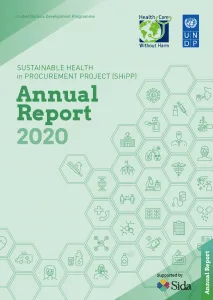
SHiPP Annual Report 2021

Health Care Without Harm, UNDP
AUTHOR: Health Care Without Harm | UNDP LANGUAGE: English FILE FORMAT: Web Link

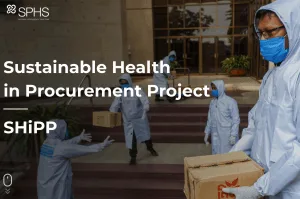
Sustainable Health in Procurement Project (SHiPP)

AUTHOR: UNDP LANGUAGE: English FILE FORMAT: Web Link

Innovation and Evolution: Responsible Procurement at the Global Fund

The Global Fund
AUTHOR: The Global Fund LANGUAGE: English FILE FORMAT: PDF

Healthcare Procurement and the Compliance with International Environmental Conventions on Chemicals: A UNDP Guide for Procurement Practitioners

United Nations Development Programme, Green Procurement Index Health UNDP has developed a guide for procurement practitioners to monitor and evaluate compliance with international conventions for environmental safeguarding.
AUTHOR: United Nations Development Programme, Green Procurement Index Health  LANGUAGE: English FILE FORMAT: Web Link

Environmental Questionnaire for UNDP Suppliers and Manufacturers of Healthcare Products

United Nations Development Programme, Health Care Without Harm, Green Procurement Index HealthAs part of the engagement on sustainable health procurement, UNDP has developed a questionnaire on environmental practices of suppliers....
AUTHOR: United Nations Development Programme, Health Care Without Harm, Green Procurement Index Health FILE FORMAT: PDF

Health-care waste management

Purpose

Pharmaceutical waste management is regarded to be an integral part of supply chain management and the product life cycle, as a result of the use and/or expiry of health products. Inadequate and inappropriate handling of health-care waste can have serious public and global health consequences and a significant impact on the environment. Governments can better protect public and planetary health by reducing the volume and toxicity of the wastes produced and by implementing a range of environmentally and socially sound waste management and disposal options. Solutions exist to develop and popularise technologies, products and concepts that will help drive countries to a zero waste, low-carbon, toxics-free, circular economy.

Pharmaceutical waste includes expired, unused, spilt and contaminated pharmaceutical products, prescribed and proprietary drugs, vaccines and sera that are no longer required, and, due to their chemical or biological nature, need to be disposed of carefully. The category also includes discarded items heavily contaminated during the handling of pharmaceuticals, such as bottles, vials and boxes containing pharmaceutical residues, gloves, masks and connecting tubing.

Source: World Health Organization, 2014. Safe Management of Wastes from Health-care Activities, 2nd edition.

While there is currently no international convention that directly covers medical waste management, several environmental conventions have important implications for health-care waste. These include 1) the Basel Convention, which aims to protect human health and the environment against the adverse effects from the generation, management, transboundary movement and disposal of hazardous and other wastes; 2) the Stockholm Convention, a global treaty to protect human health and the environment from highly dangerous, long-lasting chemicals; 3) the Rotterdam Convention, which promotes shared responsibilities and cooperation among parties in international trade of certain hazardous chemicals to protect human health and the environment from potential harm; and 4) the Minamata Convention, which addresses measures to reduce the human environmental impact of mercury. Countries’ legislation and regulations for health care waste should be aligned with these conventions to ensure compliance with international environmental and health standards. The UNDP Health Care Without Harm questionnaire (2017) is available to support health procurement stakeholders’ compliance with environmental conventions. 

UNDP’s approach

As part of support from the Global Fund to Fight AIDS, Tuberculosis and Malaria (Global Fund), UNDP helped to conduct rapid assessments of national set-ups for managing health-care waste, with a view to understand the  environmental impacts and safety concerns, in Belarus, Bosnia and Herzegovina, Kyrgyzstan, Tajikistan, Uzbekistan and Zimbabwe. These assessments resulted in the development of the Healthcare Waste Management Toolkit Package for practitioners and policy makers.

The assessments also recommended the development of national strategies for waste management, to strengthen and improve existing systems to coordinate the financial sustainability of routine and new activities for waste management. Some of the assessments led to the development of country-level guidelines, tools and infrastructural projects to improve health-waste management.

In Zimbabwe, UNDP provided infrastructural support to the country’s health procurement and supply chain management system which included the installation of two pharmaceutical-grade incinerators at the central and regional levels to facilitate the disposal of pharmaceutical waste. Prior to this, it helped to put in place equipment, standard operating procedures and training of staff related to the deconditioning and disposal/recycling of plastic and cardboard packaging. On the normative side, UNDP provided technical assistance to the Ministry of Health and Child Care to develop the Pharmaceutical Waste Management Plan for Pharmaceuticals and Health Products.

UNDP has also provided support for the installation of incinerators for pharmaceutical waste in Afghanistan, Chad, São Tomé and Principe, Sudan, and Zambia, and for training on their use.

In Eastern Europe and Central Asia, where UNDP supports several governments with the procurement of medicines, UNDP’s technical assistance includes support to assess and provide lessons on waste management practices at the dispensation level. 

In 2020, amid the COVID-19 pandemic, UNDP commissioned Engineers Without Borders to conduct a rapid assessment of the prevailing health care-waste systems and legal frameworks, to inform the development of a generic strategy to improve health-care waste management in consultation with relevant stakeholders across the globe. As part of inter-agency support to COVID-19 vaccine readiness and deployment plans, UNDP is working with the World Health Organization and the United Nations Children’s Fund (UNICEF) to help countries scale environmentally and socially sustainable disposal of immunization waste.

Upstream reduction of health product waste

UNDP undertakes two main axes of work to reduce waste production upstream. One is to strengthen areas of the procurement and supply chain cycle, such as quantification, inventory control, logistics management information systems,, and procurement and distribution planning in supported countries. Building capacity in procurement and supply chain management helps reduce overstocking and product expiry, which result in the waste of financial resources and an increased need for pharmaceutical waste management.

UNDP also engages with antiretroviral manufacturers to optimize medicine packaging and reduce resulting waste. This practice, which has been piloted in a few countries, will be incrementally applied to other categories of medicines for which UNDP pools demand and procures on behalf of supported countries. The optimization of packaging to reduce upstream waste, requires coordination with manufacturers and national regulatory authorities to comply with international and national standards for medicine labelling. With increased experience and lessons learned, UNDP’s piloted approach for optimizing medicine packaging could be adapted and replicated by national procurement systems.

Tools and guidance

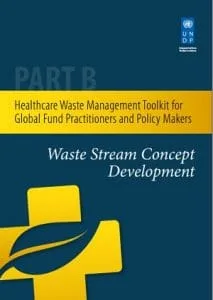
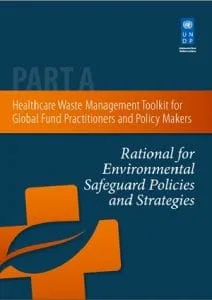
UNDP has developed the Health-care Waste Management Toolkit, based on several rapid country assessments of health-care waste management set-ups in 2015, to support the Global Fund to Fight AIDS, Tuberculosis and Malaria (Global Fund), UNDP and other practitioners and policymakers. The toolkit consists of:

Part A – Rational for Environmental Safeguard Policies
Part B – Waste Stream Concept Development

The UNDP/SPHS Sustainable Procurement Guidance Note (2020) is a useful resource for integrating sustainability strategies in health procurement processes. It details steps of the sustainable health procurement approach, creation of an action plan and integration of the action plan into procurement planning, solicitation design, contract management and responsible supplier engagement.

UNDP’s partner Health Care Without Harm offers a range of health-care waste management resources, including guidelines and assessment tools, on its website. Additional guidance, including from the Global Fund and the World Health Organization (WHO), are available below.

Key Resources

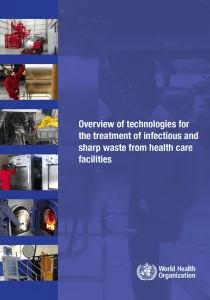
Overview of Technologies for the Treatment of Infectious and Sharp Waste from Health Care Facilities

World Health Organization
AUTHOR: World Health Organization LANGUAGE: English FILE FORMAT: Web Link

Health-care waste

AUTHOR: WHO LANGUAGE: English FILE FORMAT: Web Link

Health Care Waste Management

The Global Fund
AUTHOR: The Global Fund LANGUAGE: English FILE FORMAT: Web Link

Sustainable Health Procurement Guidance Note

United Nations Development Programme, SPHS, Sida
AUTHOR: UNDP LANGUAGE: English FILE FORMAT: PDF

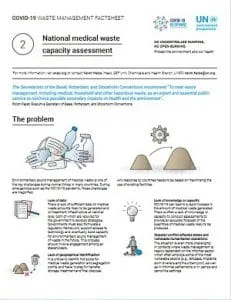
National Medical Waste Capacity Assessment: COVID-19 Waste Management Factsheet-UNEP

United Nations Development Programme
AUTHOR: UNDP LANGUAGE: English FILE FORMAT: PDF

Responding to COVID-19 – Evaluation Lessons on UNDP Support to Waste Management

United Nations Development Programme
AUTHOR: UNDP LANGUAGE: English FILE FORMAT: Web Link

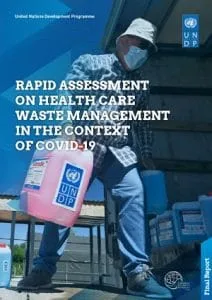
Rapid Assessment on Health Care Waste Management in the Context of COVID-19

United Nations Development Programme, Engineers Without Borders, USA
AUTHOR: UNDP LANGUAGE: English FILE FORMAT: PDF

Guidelines for Safe Disposal of Unwanted Pharmaceuticals In and After Emergencies

World Health Organization
AUTHOR: World Health Organization LANGUAGE: English FILE FORMAT: PDF

Safe Management of Wastes from Health-care Activities (2nd edition)

World Health Organization
AUTHOR: World Health Organization LANGUAGE: English FILE FORMAT: PDF

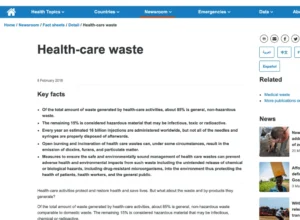
Health Care Waste Factsheet

World Health Organization
AUTHOR: World Health Organization LANGUAGE: English FILE FORMAT: Web Link

Solar for health

Overview

Health facilities need power. Clinics, maternity wards, operating rooms, medical warehouses, and laboratories rely on electricity to power the lights, refrigerate vaccines, and operate life-saving medical devices. An inability to carry out these essential services puts lives at risk. All too often, particularly in remote areas, health facilities face significant power shortages. A World Health Organization(WHO) review revealed that 25 per cent of health facilities in sub-Saharan Africa had no access to electricity, while only 28 per cent of health facilities and 34 per cent of hospitals had what could be called “reliable” access to electricity (without prolonged interruptions in the past week).

In 2017, UNDP spearheaded the Solar for Health (S4H) initiative as a means of connecting two vital sectors – energy and health – to help countries advance universal health coverage while protecting the environment. Through the initiative, UNDP supports countries to install solar photovoltaic systems at health centers and storage facilities located in poor and hard-to-reach areas.

This helps to ensure constant and cost-effective access to electricity for uninterrupted health services, while also mitigating the impact of climate change and advancing multiple Sustainable Development Goals (SDGs). Broader development benefits of solar energy can also include the creation of green jobs and the development of local manufacturing and markets for solar power. By training women as solar technicians to install and maintain solar panels, the initiative also helps countries advance SDG 5 on gender equality and women’s empowerment.

S4H builds on the much larger investment and knowledge generated by UNDP’s robust energy portfolio focused on expanding access to clean energy, including the promotion of renewable energy and energy efficiency, in more than 82 countries. The lack of access to clean energy has significant and wide-ranging impacts on people’s health across the world. UNDP focuses on three key pillars of the health-energy nexus: electrification of rural health centres, clean cooking, and enabling cities to switch to sustainable transport. These have been further elaborated under the Energy for Health work areas.

UNDP’s approach

To date, and largely funded through the Global Fund to fight AIDS, Tuberculosis and Malaria (Global Fund), as well as Innovation Norway and the European Union humanitarian fund, UNDP has supported the solar electrification of some 1,000+ health centres and storage facilities in 15 countries (Zimbabwe, Sudan, Zambia, South Sudan, Namibia, Liberia, Libya, Malawi, Yemen, Angola, Nepal, Uganda, Chad, Lebanon and Eswatini). UNDP has also supported research on the ground to assess which innovative finance mechanisms can help scale these activities in Malawi, Zimbabwe, Liberia, Namibia and Zambia..

The objectives of S4H are to promote high-quality health services; contribute to climate-resilient health systems; and reduce health sector carbon emissions. Key elements of UNDP’s support to countries through S4H include:

  • supply of solar equipment and support for installation
  • maintenance, technology transfer, and institutional capacity development
  • solar energy promotion and awareness raising
  • regulatory and policy framework setting for solar energy provision
  • understanding of the climate change – energy – health interlinks
  • developing innovative finance mechanisms

UNDP continues to build on the lessons and results from implementation of S4H in these countries to help others conceive, plan and implement solar energy photovoltaic systems based on the needs arising from unreliable or unavailable electricity to health system facilities. The energy needs of the health sector are often exponential. Thus, S4H is designed to ensure flexibility, meaning that it can be initiated with relatively small contributions and scaled up as funding becomes available and additional needs are identified.

In addition, as part of national COVID-19 vaccine readiness and deployment plans led by the World Health Organization (WHO) and the United Nations Children’s Fund (UNICEF), UNDP is working with government and United Nations partners to scale reliable energy solutions for vaccination across the COVID-19 cold chain. This includes building on S4H experiences to deploy solar technologies to support the transport and last mile distribution of vaccines and green the underlying infrastructure for vaccination.

Resources and examples

Additional details on the objectives and support that UNDP provides to countries under Solar for Health (S4H) can be found in this Information Note.

Sustainable financing for S4H

In 2019-2020, UNDP commissioned KOIS and Diff-er to conduct a feasibility study to design a sustainable financing mechanism to accelerate the Solar for Health (S4H) programme in prioritized countries, and to provide UNDP and the local governments with information to determine further financing and implementation options of the proposed S4H financing model. The study looked at a demand-side analysis, supply-side analysis, and the design of the S4H financing structure in five countries: Namibia, Liberia, Malawi, Zimbabwe, and Zambia.

Through the S4H initiative, solar power systems are facilitating strong, reliable and resilient health services, even in some of the most challenging contexts. 

  • In Yemen, 72 Health facilities, powered by solar, are providing vaccines and other medicines, schools are able to continue, and small businesses can run late into the night.
  • In Chad, in 2020 solar power systems were installed in 150 health facilities with a focus on pre- and antenatal care for women, childbirth and medication storage, and also to help them respond adequately to public health issues such as malaria, and now, COVID-19.
Supporting HIV clinics in Zimbabwe

Starting in 2017, with the financial support of the Global Fund to Fight AIDS, Tuberculosis and Malaria (Global Fund), UNDP installed solar photovoltaic systems in 1044 health facilities across Zimbabwe. Installation at an additional 19 health facilities is ongoing. Before the Solar for Health (S4H) project, many health facilities in Zimbabwe had access to electricity for only four hours a day. With solar installations in place, they now have power 24/7 and patients are receiving the care they need, when they need it. As a consequence, S4H has enhanced access to good-quality health services, notably for children aged under five years (e.g., for vaccinations) and pregnant mothers who attend the health facilities for delivery. In addition, the solar energy generated is used to maintain the cold chain and ensures that the quality of medicines and laboratory reagents remains constant. Solar panels will also facilitate water pumping and water purification – a pivotal achievement in a country in which water-borne diseases are the major killers of children.

Read more: United Nations Environment Programme (2021). Case study: S4H in Zimbabwe.

Effective warehousing in Zambia

In Zambia, UNDP has been working in close partnership with Medical Stores Limited (MSL), an autonomous government agency mandated to receive, store and distribute pharmaceutical health products across the country. MSL has faced regular power interruptions in the past,
affecting the effective running of warehouses, including the refrigeration of medicines and vaccines. With funding received from the Norwegian Emergency Preparedness System (NOREPS) and the Global Fund to Fight AIDS, Tuberculosis and Malaria (Global Fund), UNDP has supported the MSL to install a solar powered energy system, combined with an energy efficient temperature control system, covering its 7,000 m2 national medical warehouse space. With the solar panels in place, MSL can ensure the effective running of its operations, even when there is no power from the national hydro-powered grid. This is vital to providing good-quality health services to the Zambian population, as interruptions in power supply had previously led to delays in the processing of requests from health facilities across the country. Furthermore, the solar power system has also ensured cold chain pharmaceutical items remain stored at the required temperatures.

Read more

Key Resources

End-of-life e-Waste Guidelines for S4H

United Nations Development Programme
AUTHOR: UNDP LANGUAGE: English FILE FORMAT: PDF

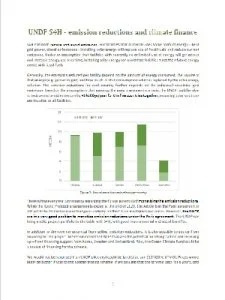
S4H Emission Reductions and Climate Finance

United Nations Development Programme
AUTHOR: UNDP LANGUAGE: English FILE FORMAT: PDF

S4H Innovative Financing Feasibility Study

United Nations Development Programme, KOIS Caring Finance, DIFFER
AUTHOR: UNDP LANGUAGE: English FILE FORMAT: PDF

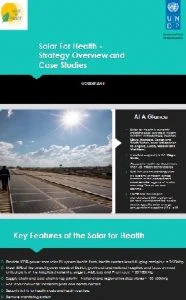
Solar for Health – Strategy and Case Studies

United Nations Development Programme, Presentation
AUTHOR: UNDP LANGUAGE: English FILE FORMAT: PDF

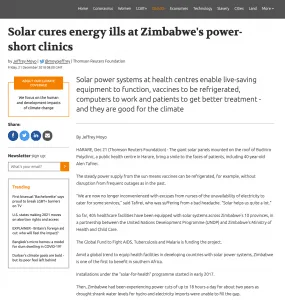
Solar Cures Energy Ills at Zimbabwe’s Power-short Clinics

Thomson Reuters Foundation, News
AUTHOR: UNDP LANGUAGE: English FILE FORMAT: Web Link

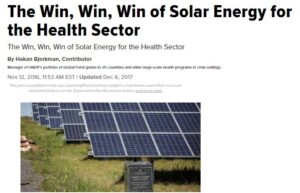
The Win, Win, Win of Solar Energy for the Health Sector

Huffington PostNews
AUTHOR: UNDP LANGUAGE: English FILE FORMAT: Web Link

Solar for Health: 5 Ways Solar Power Can Make Universal Healthcare a Reality

UNDP stories
AUTHOR: UNDP LANGUAGE: English FILE FORMAT: Web Link

Capacity Development for Health
https://beta-cd4health.org
Generated on December 15, 2025 at 8:02 PM