UNDP Logo
Global
Capacity Development
for Health

Financial management

Capacity Development for Health | Generated on December 13, 2025

Table of Contents

Financial management for sustainable health policies and programmes

Overview

Robust financial management systems and capacities are required to plan, direct and control financial resources so that the objectives of national health programmes can be effectively and efficiently achieved. In addition to managing the short-term cashflow needs, financial management includes budgeting, systems, procedures and controls to protect financial assets, and ensuring there is sufficient relevant and reliable information for good decision-making.

Financial management must be prioritized within the overall programme management responsibilities of an entity implementing a health programme, with close coordination between financial planning and budgeting, and between the planning and delivery of programmatic results. Likewise, systems for financial management and reporting of donor-funded health programmes must be integrated into national public financial management systems to ensure their sustainability.

UNDP takes a multifaceted approach to strengthen the financial building blocks of the health system that make it possible to deliver services of high quality. At the national level, UNDP works with governments to strengthen national public financial management systems for health and develop the capacities of national entities to sustainably manage and generate domestic and international health financing. This includes support to generate and evaluate accurate financial information, including from the private sector, to inform health policies and identify sustainable models to scale health services.

At the programmatic level, UNDP provides technical assistance to national institutions and civil society organizations to strengthen financial management capacities for effective implementation of large-scale health programmes, including those funded by the Global Fund to Fight AIDS, Tuberculosis and Malaria (Global Fund). UNDP provides end-to-end technical support for financial management to implementing entities on issues including planning, budgeting and forecasting, revenue generation, expenditure, monitoring and controls, reporting, and audit and assurance.

The pages in this section provide guidance and further details of UNDP’s support to governments and other health partners across each of these dimensions of financial management for national health systems and programmes, including HIV, tuberculosis and malaria programmes funded by the Global Fund. For further guidance on UNDP’s technical support to sustainable health financing, refer to the “Sustainable Finance” section. Additional tools and more detailed guidance on financial management processes for UNDP-managed Global Fund programmes can be found in the UNDP-Global Fund and Health Implementation Guidance Manual.

UNDP’s approach

UNDP provides end-to-end capacity development support to help government and civil society organizations (CSOs) manage all aspects of the financial management process in the implementation of large-scale health programmes. Financial management involves much more than accounting for income and expenditure. It includes all aspects of planning, organizing, directing and controlling financial activities.

Through its interconnected support to promote sustainable financing models and improve institutions, policies and processes that govern the use of public funds for health at the national level, alongside work to enhance financial management capacities and processes in the implementation of national disease programmes, UNDP’s capacity-building approach provides mutually reinforcing entry points to help countries progress towards universal health coverage. Strong financial management in programmes ensures that existing resources for health are efficiently used to maximize health outcomes, while enhanced public financial management and sustainable financing ensures that these outcomes can be scaled and sustained in the long term. Financial management involves much more than accounting for income and expenditure. It includes all aspects of planning, organizing, directing and controlling financial activities. UNDP therefore works in close partnership with health system actors to ensure accurate and timely financial data contribute to making critical and evidence-based decisions for health-related goals.

UNDP’s entry points for support include processes and capacities for financial management, financial data for accountability and decision-making and financial risk management.

1. Processes and capacities for financial management

As part of its financial capacity-building activities for government and civil society organization partners, including as interim Principal Recipient of grants from the Global Fund to Fight AIDS, Tuberculosis and Malaria (Global Fund) in countries facing challenging operating environments, UNDP does the following:

  • It takes into account existing assessments and findings for financial management: UNDP has developed comprehensive capacity assessment tools to help governments identify how closely existing financial management policies and procedures meet current and expected financial management needs. Using these tools helps to establish a baseline and a clear understanding of what financial management systems can achieve.
  • It supports selection of performance indicators and measurable milestones on financial management to support sustainable transitions of health programmes from donors to national entities and systems.
  • It supports the development and implementation of a capacity development plan to facilitate short, medium, and long-term interventions with a focus on building sustainable financial systems for health.
  • It provides technical assistance, mentoring and training on financial management for public health actors at all levels of the health system.
Mentoring to strengthen financial systems in Zambia

In 2016, the Ministry of Health in Zambia decentralized the implementation of HIV, tuberculosis and malaria programmes by appointing all 10 provincial health offices to directly implement programme activities in their respective catchment areas. Based on the new Ministry of Health financial management system, UNDP and the Ministry of Health conducted a joint assessment and designed the decentralized roll-out to support the financial system in all provinces. The support included the installation of enterprise resource planning software and risk management, training and development of procedures to ensure compliance with both financial and programmatic reporting. UNDP also worked with the Ministry of Health to introduce on-site mentorship to the provincial health offices. In 2018, UNDP partnered with Gavi, the Vaccine Alliance (Gavi) to further support the Ministry of Health to augment financial and programme management capacities at the district level.

Read more in Country Case Studies.

2. Financial data for accountability and decision making

Good decision-making to achieve health programme objectives requires timely, relevant and reliable financial data. In both government and non-government sectors, it is critical to set clear goals and establish systems and controls to report on them. Beyond optimizing programme performance, the ability to demonstrate financial results of key interventions within the health sector facilitates the prioritization and scaling- up of effective measures. UNDP’s support to enhance financial accountability recognizes that financial information requirements need to reflect the fundamental accountability structures of the health system. In a highly centralized system, the information system should track expenditure over the whole of the health system, and feed information into the centre.

Fiscal transparency in the public sector strengthens governance and accountability and should also result in improvements in programme performance to support better health outcomes. To strengthen the linkage between financial reporting and improved health programme performance, UNDP:

  • supports national entities to assess the current financial management system and consider the options to meet national and international reporting requirements;
  • assists national entities to strengthen their financial systems and consolidate financial data, including real-time data to improve monitoring and decision-making;
  • leverages customized digital technology and commercial software to help national partners, including ministries of finance, strengthen public financial management systems for the health sector.
Support to the financial management system in Zimbabwe

The Government of Zimbabwe Public Financial Management System (PFMS) had been in limited use by government ministries and did not have the capability to manage donor funding. With UNDP’s support, through funding from the Global Fund to Fight AIDS, Tuberculosis and Malaria (Global Fund), the Ministry of Health and Child Care became the first ministry to roll out a grant management module for the PFMS in 2015–2016, starting with the configuration of Global Fund grants. The grant management module allows for data capture in near real-time for reporting to the Ministry of Health and Child Care and donors. Since 2016, more than 90 grants have been configured into the module, enabling improved timeliness and completeness of financial data for the delivery of health services.

Read more in Country Case Studies

3. Financial risk management

Financial control and risk management are central to the effective management of a health system. UNDP helps countries to assess risk factors and ensure risk management is embedded in strategic planning for health programmes as well as in routine daily practices for health implementation activities. Through its partnership with the Global Fund and role as interim Principal Recipient of grants in challenging operating environments, UNDP has also helped to reduce the risk of corruption and fraud by strengthening financial management, working together with national entities to better manage grants, set up web-based accounting systems, and introduce robust control frameworks.

Applying a coherent focus on strategic, operational and financial risk factors, UNDP does the following:

  • It works with the management of health programmes to focus on identifying actual and potential threats and opportunities, assessing the impact of those risks and prioritising them;
  • It selects appropriate financial tools to mitigate risk, including different payment modalities such as direct payments on behalf of implementing partners and reimbursement to implementing partners to enable their implementation in high-risk environments. The direct cash transfer modality can be used for institutions with adequate capacity to manage and report on the utilization of advances. This modality also plays a role in the strengthening of national financial accounting and reporting systems.
  • It supports national entities to make informed decisions about the level of risk that they want to take in order to effectively pursue their objectives;
  • It helps to set up appropriate risk management frameworks and internal controls, including financial management systems, to counter threats and take advantage of opportunities.
Key Resources

Internal Controls – A Review of Current Developments

This information paper reviews current developments and some of the latest thinking in the area of internal control.
AUTHOR: International Federation of Accountants LANGUAGE: English FILE FORMAT: PDF

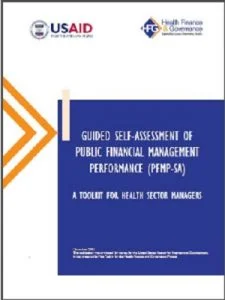
Guided Self-assessment of Public Financial Management Performance – A Toolkit for Health Sector Managers

This self-guided assessment adapts the public expenditure and financial Accountability assessment methodology – developed and implemented by a multi-donor partnership – to focus specifically on the health sector.
AUTHOR: USAID, Health Finance and Governance LANGUAGE: English FILE FORMAT: Web Link

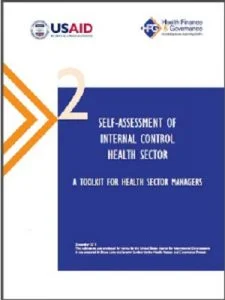
Self-assessment of Internal Control Health Sector, A Toolkit for Health Sector Managers

This tool is designed to help public health officials determine the areas of strength and weakness in how public funds are managed and spent.
AUTHOR: Health Finance and Governance (HFG) Project LANGUAGE: English FILE FORMAT: PDF

Improving Public Sector Financial Management in Developing Countries and Emerging Economies

ACCA, This paper explores how public financial management can be improved and capacity strengthened in developing countries and emerging economies.
AUTHOR: ACCA LANGUAGE: English FILE FORMAT: Web Link

Commission on Financial Management and Control Systems in the Health Service

Lenus – The Irish Health Repository, Dr. Stevens Library, Health Service Executive A detailed examination and review of the financial management and control systems in the Irish health service.
AUTHOR: Lenus: Research Repository / DOHC LANGUAGE: English FILE FORMAT: Web Link

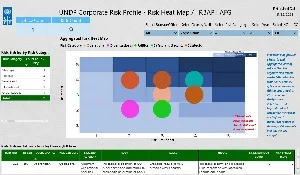
UNDP Corporate Risk Profile PowerBI Dashboard

United Nations Development Programme
AUTHOR: UNDP LANGUAGE: English FILE FORMAT: Web Link

UNDP Enterprise Risk Management (ERM) Toolkit

United Nations Development ProgrammeThis ERM space hosts the latest information on the ERM Policy, risk governance mechanisms, relevant guidance/tools
AUTHOR: UNDP LANGUAGE: English FILE FORMAT: Web Link

Planning

Purpose

Effective planning is key to ensuring clear, relevant organizational goals are established and achieved in the process of building resilient financial management systems.

Planning involves understanding and documenting the expected role of the finance function in contributing to the achievement of a government’s or organization’s goals. This includes appreciating the strategic role that the finance function can play in achieving broader health and development goals, as well as ensuring the recording and reporting of day-to-day transactions.

Having recognized the role of the finance function, planning involves ensuring that the expected outputs are reflected in the structure of the finance department and identifying the number of people and the skills needed to perform this function.

UNDP’s approach

Through a good understanding of countries’ national priorities, UNDP is able to work closely with governments and stakeholders to document clear goals that contribute to implementing and monitoring improvements in financial systems for health.

To facilitate the planning process, UNDP assists stakeholders of health programmes to conduct financial analyses. This process has helped to identify the optimal financial management structure for health programmes in Africa, Asia and the Caribbean.

Within this approach, UNDP:

  • leverages its experiences assisting countries and projects to plan health programmes and systems. It provides access to experiential knowledge, technical guidance and innovative tools/methodologies for financial management
  • utilizes existing capacity assessment tools that help to identify areas for capacity development in planning for health systems, in addition to the United Nations Harmonized Approach to Cash Transfers (HACT) framework described below.
  • works with government health systems as well as civil society organizations to establish development milestones and indicators, including training needs to measure improvements in financial planning.
Harmonized Approach to Cash Transfers

United Nations agencies have developed the risk-based, harmonized approach to cash transfers (HACT). This framework identifies implementing partner capacity needs and develops capacity with assistance from UNDP and other development partners, as core to managing risk.

Identification of and planning to address implementing partner capacity gaps is an important element of the HACT. The results of a HACT assessment help focus future capacity development activities on key thematic and mandated areas of development, and on developing the financial management capacity necessary for any implementing partner. The capacity development initiatives identified during the implementing partners microassessment process can be incorporated into the existing standard UNDP capacity development framework.

Suggested capacity development indicators

Suggested indicators to monitor improvements in financial planning include:

  • The approved organogram reflects the current and expected human resource needs of the finance department.
  • An approved strategic plan is available, and all staff are aware of its contents.
  • The percentage of staff required is in place.
  • There is a certain percentage of increase or decrease in financial management staff turnover per year.

Key Resources

The Finance Role in Sustainability and Transformation Plans

AUTHOR: Certified Institute of Public Finance and Accountancy LANGUAGE: English FILE FORMAT: Web Link

Budgeting

Purpose

Budgeting and forecasting enable resources to be allocated and tracked so as to achieve programmatic and financial objectives.

Budgeting is a process usually undertaken before the beginning of the financial year, to create a plan or estimate of the expected incomes and expenditures in the upcoming financial year. The budgeting process is usually collaborative, enabling budget assumptions to be agreed on and stated.

Budgeting processes can also provide an opportunity for stakeholders to agree on resource allocations, identify efficiencies and determine practical methods to manage and prioritize the strategic goals of the organization based on available resources.

Forecasting can assist in preparing forecasts of cash inflows and outflows as well as a “sensitivity analysis”, understanding the areas in which a small percentage change can have significant overall impact.

UNDP’s approach

UNDP has worked with several ministries of health to develop detailed operation and finance manuals and standard operating procedures, which detail the budgeting process and include the processes for approval and subsequent budget monitoring and modification.

UNDP has assisted health programmes to improve budgeting and forecasting systems in Africa, Asia and the Caribbean. In particular, UNDP:

  • works with ministries of health to improve national budget systems and procedures and support preparation of budgets for health programmes.
  • provides technical support to budget and cost national strategic plans, including identifying available resources and critical gaps.
  • supports countries to demonstrate a clear linkage between national health strategies, disease programmes and financial resources, budgets and forecasts.
  • works with civil society organizations and governments to design and implement robust budgeting systems supported by a systematic approach for cost allocation and cost recoveries.
  • develops manuals, guidelines and standard operating procedures to conduct a meaningful variance analysis and where appropriate, feed into remedial actions.
  • establishes clear policies for project-specific costs, including: salary scales and entitlements suitable for attracting and retaining critical project staff; travel and subsistence; standardized training costs; vehicle usage and costings; consulting fees and scale rates; and apportionment of overhead costs.
  • promotes innovative approaches to tailor existing information technology systems and technologies that interface with existing financial management systems for easy-to-use budget input and forecasting.
  • helps to identify areas for strengthening in budgeting and forecasting for health systems, using an established capacity assessment tool.
  • works with government health systems and projects and civil society organizations to establish development milestones and indicators, including training needs to measure improvements in effective budgeting and forecasting.
Budgeting considerations for programmes funded by the Global Fund

The Global Fund to Fight AIDS, Tuberculosis and Malaria (Global Fund) requires each grant to have a detailed budget in a prescribed format. UNDP has a core team with strong familiarity with the templates and which is fully conversant with the Global Fund budgeting guidelines. UNDP is able to mobilize a team of strong finance professionals to support the development of detailed grant budgets with the linkage to the performance framework and health product management template.

Suggested capacity development indicators

Suggested indicators to monitor improvements in budgeting include:

  • An approved budget is in place.
  • Adequate system controls are in place to prevent budget overruns.
  • Planning and budgeting processes are integrated.
  • Budgets are integrated with programmatic and financial results.
  • Budgeting guidelines and procedures are available in all head offices and in a certain percentage of regional finance departments.
  • A percentage of budgets are developed on an activity basis and adopt a bottom-up approach.
    Operational procedures for budget revisions are adhered to.
  • The budgeting cycle for the health system is aligned with wider government or institutional timelines.
  • Disbursement requests supported by cash forecasts are completed correctly and submitted timely.

Key Resources

OECD Budget Transparency Toolkit

This toolkit brings together standards and guidelines on budget transparency developed by a broad range of international bodies and networks.
AUTHOR: Organisation for Economic Co-operation and Development LANGUAGE: English FILE FORMAT: PDF

Revenue generation

Purpose

Revenue generation strategies identify resources to be mobilized to enhance sustainability. These approaches also help to build resilience.

Revenue generation in health systems focuses on developing detailed investment cases to advocate for additional funding, providing a detailed analysis of the imposition of a particular charge or tax. Funding could be from within countries’ own available funding or from external sources.

When a country is experiencing an economic downturn, a strong case may need to be made that budget cuts within other government departments are not applied with the same vigour in the health system. Revenue generation should also ensure that patients payments for medicines and other services are captured completely within the existing finance systems.

UNDP’s approach

To support revenue generation for health programmes, UNDP does the following:

  • It supports ministries of health to build political commitment to improve financial revenue generation for health programmes.
  • It works closely with the World Health Organization (WHO) and the Joint United Nations Programme on HIV/AIDS (UNAIDS) to support the development of investment for increased funding to the health sector, and specific disease programmes. This includes through the development of investment cases for non-communicable diseases and expanding innovative financing for HIV and health.
  • It works with in-country partners to consider the best “blend” of financing to deliver services and consider the options for government financing and partners, to make the optimal investment in national programmes.
  • It looks at existing and future sourcing for health finance, and together with partners, prepares detailed analyses of the impact of: health insurance; a disease-specific payroll tax; sugar and/or tobacco consumption taxes; and/or out of pocket charges as a deterrent to accessing services.
  • It works with governments and civil society organizations to develop systems and processes that increase the accountability and transparency within a health system or project. This can directly result in enhancing the ability to attract and work with donors and partners, to build the confidence of decision makers and parliamentarians and increase accountability to the general public and end users.
  • It develops capacities of national entities in fragile settings to sustainably manage domestic and international health financing and to deliver health programmes.

Suggested capacity development indicators

Suggested indicators to monitor activities to enhance revenue generation include:

  • A resource mobilization plan has been developed
  • Policies for new revenue streams have been developed and approved
  • A plan to ensure the sustainable funding of health reform is approved
  • Domestic financing for health increases by a certain percentage.

Examples

Health Investment Cases

Health investment cases empower governments with data-driven insights on the economic and social impact of diseases, while illustrating the financial and health benefits of investing in prevention and control measures. Developed through collaborative, country-led processes, these cases equip policymakers with the tools to implement cost-effective policies that enhance governance, financing, and health service delivery. By providing evidence-based data, they support policies that reduce inequalities, foster inclusive governance, and strengthen sustainable health systems.

Since 2015, UNDP, WHO, and partners have worked with national governments to develop 85 investment cases across 56 countries, driving 130 government actions as of 2024. These actions include Ghana’s 2023 tobacco tax reform, which increased taxes on tobacco, alcohol, and sugar-sweetened beverages; Uganda’s 2022 expansion of diabetic retinopathy treatment, ensuring access in all regional hospitals; and Colombia’s 2020 enhancement of tobacco warning policies, introducing stronger graphic health warnings on tobacco products. With 50 additional cases underway, these initiatives continue to mobilize multi-sectoral partnerships, shape health policies, and improve health outcomes, positioning health as a cornerstone of sustainable development. Learn more here.

Case Study: Mental Health Investment as a Key to Zimbabwe’s Well-Being and Economic Growth

Zimbabwe’s Mental Health Investment Case highlights the urgent need for increased investment in mental health services, demonstrating significant economic and social returns. The country faces a high burden of mental health conditions, with an annual economic loss of USD 163.6 million, 95% of which stems from lost productivity. By scaling up evidence-based, cost-effective mental health interventions, Zimbabwe could save over 11,000 lives, gain 500,000 healthy life years, and generate USD 689 million in economic benefits over 20 years. The case, developed with support from UNDP and WHO, underscores the cost-effectiveness of targeted investments in clinical services, policy reforms, and prevention initiatives such as school-based mental health programs and a pesticide ban to reduce suicides. Mental health investments offer high economic returns, with epilepsy treatment yielding USD 11.6 and depression care USD 3.3 for every dollar spent, underscoring the urgency of expanding access. These gains reduce productivity losses from absenteeism and premature death while strengthening long-term financial sustainability and national development. As Zimbabwe moves forward, aligning mental health funding with national health priorities will be essential to achieving universal health coverage and sustainable development goals (SDGs).

Learn more here.

Key Resources

Making the Case for Investment in Health

United Nations Development Programme
AUTHOR: UNDP LANGUAGE: English FILE FORMAT: Web Link

Earmarking for Health: From Theory to Practice

This checklist can guide when earmarking might be useful and how to structure an earmarking policy to ensure positive results and minimize distortions.
AUTHOR: World Health Organization LANGUAGE: English FILE FORMAT: PDF

Expenditure

Purpose

Financial management systems should ensure expenditures are incurred in a transparent manner and promptly recorded.

Expenditure systems and processes are an important part of budget execution. It is important to have policies, procedures and internal control systems for incurring expenditures that comply with approved work plans and budgets and optimize value for money. These systems should likewise enable the timely recording and safeguarding of records and supporting documents.

There should also be an internal control system that covers segregation of duties, so that the requisitioner is separate from the purchaser and the person who makes the payments.

UNDP’s approach

UNDP has assisted health programmes to improve expenditure systems by working with ministries of health to improve national systems and procedures to initiate, approve and report expenditure for health programmes. It uses a capacity assessment tool to help identify needs and measures to strengthen policies and procedures for expenditure management in health systems.

In particular, UNDP provides technical support to civil society organizations and governments to:

  • design and implement robust expenditure systems, including transparent recording of shared costs.
  • develop manuals, guidelines and standard operating procedures to authorize and approve expenditures.
  • develop codes of conduct to avoid occurrence or perceptions of conflicts of interest; methods for procurement and document thresholds; standard operating procedures for requests for tenders and procedures for bid evaluation; procedures that are transparent and competitive, and; mechanisms for accountability and tracking of contracts and commitments and ensuring specified goods and services are received.
  • ensure adherence to established policies for project specific costs
  • develop milestones and indicators, including training needs to measure improvements in the timely and accurate recording of expenditure.

Suggested capacity development indicators

Suggested indicators to monitor improvements in expenditure systems include:

  • A financial management system that accurately records and tracks expenditures is in place
  • Policies and procedures manuals are approved and available
  • Finance staff have been trained in standard operating procedures and use of the financial management system
  • Annual signed conflict of interest statements are available
  • There is a certain level of compliance with relevant accounting standards
  • Standardized bidding documents and templates are available and are used
  • Standardized contracting templates are available and are used
  • Expenditures are recorded on a timely basis and properly supported
  • Goods received are inspected in a timely manner (within specified timelines e.g. within three working days of arrival)
  • A list of goods and services ordered and not yet received is available

Monitoring and routine controls

Purpose

Monitoring and routine controls reduce the risk of losses through fraud and suboptimal decision-making. The controls also create an environment which discourages corruption and enables instances of fraud and the to be detected.

Routine controls are the detailed internal controls that are embedded within the operations of the organization. They consist of prevention and detection/monitoring controls. Prevention controls restrict an unintended activity from occurring. Detection controls aim to identify activities that have occurred but were not planned.

Controls can also be considered as organizational, physical and personnel based. Organization controls set the structure of the entity and ensure the adequate segregation of duties to minimize fraud and collusion. Physical controls ensure the safeguarding of assets, the authorization and approval of transactions and the presence of accounting controls. Personnel controls include ensuring the recruitment of suitably qualified personal, adequate supervision and management oversight.

UNDP’s approach

UNDP has assisted health programmes, including those funded by the Global Fund to Fight AIDS, Tuberculosis and Malaria (Global Fund), to improve monitoring and routine controls. This includes by:

  • sensitizing health personnel on the importance of monitoring and routine controls to reduce the risk of losses through fraud and bad decision-making
  • developing specific tools, methodologies and good practices in response to high corruption risks within the health sector (refer to the section on anti-corruption for health to learn more about UNDP’s approach to corruption prevention).
  • working with ministries of health to improve existing national systems and procedures with robust systems of monitoring and routine controls within health programmes
  • where weak controls are identified, working with national partners to develop an action plan and propose interim alternative arrangements, alongside the implementation of measures to support the long-term goal of strengthening overall financial controls
  • providing technical support to civil society organizations and governments to 1) design and implement cost-effective monitoring and controls systems ensuring compliance with national legislation as well as international best practice; and 2) develop manuals, guidelines and standard operating procedures to establish routine internal controls for inducting new staff and training existing staff members using a capacity-assessment tool to help identify areas for strengthening monitoring and internal controls within health systems
  • identifying capacity-development milestones and indicators, including training needs, to measure improvements in the internal control environment facilitating training sessions and workshops for finance and non-finance staff working within health programmes, including on donor requirements, systems and routine controls.

Guidance

Typical controls for financial management should include:

Controls over cash and bank

  • dedicated bank accounts (or sub-activities) where appropriate
  • physical controls over petty cash, including restricting the amount of petty cash held
  • at least two signatories required for payments
  • preparation of monthly bank reconciliations
  • review of bank reconciliations
  • regular petty cash counts

Controls over fixed assets

  • system for identifying fixed asset needs
  • systems to ensure physical security of assets
  • procedures to monitor use of assets, particular vehicles and computers and highly sensitive diagnostic equipment
  • insurance of assets in case of theft or damage
  • maintenance of fixed assets register
  • procedures for asset acquisition, transfer and disposal
  • periodic asset verification and reconciliation to fixed assets register

Segregation of duties

  • Segregation of duties should ensure that no single individual has sole responsibility for any single transaction from authorisation to completion and review.
  • While acknowledging that this may be challenging in small or rural settings, segregation of duties is an important tool for the deterrence and the detection of misuse of funds or assets.

Suggested capacity-development indicators

Suggested indicators to monitor improvements in monitoring and routine controls include:

  • Policies and procedures manuals are approved and available.
  • The policies and procedures are reviewed and updated every three to five years.
  • A certain percentage of staff confirm that they are aware of the whistle-blowing policy
  • The financial systems and procedures are reviewed by the external audits and assessed as good or satisfactory
  • A certain percentage of finance staff have been trained in standard operating procedures.
  • All bank accounts (including inactive accounts) are reconciled regularly and monthly bank reconciliations are available with evidence of review
  • A surprise petty cash count reveals no errors
  • Regular monitoring visits/spot checks are conducted
  • A certain percentage of fixed assets are insured
  • An inventory of fixed assets is available, and a physical verification has been undertaken in the last 12 months
  • New staff members are inducted within two weeks of arrival

Key Resources

Self-assessment of Internal Control Health Sector – A Toolkit for Health Sector Managers

The purpose of this toolkit is to provide guidance and checklists to facilitate the self-assessment of internal control systems and practices in the health sector.
AUTHOR: HFG Project LANGUAGE: English FILE FORMAT: PDF

UNDP Fighting Corruption in the Health Sector: Methods, Tools and Good Practices

This study presents tools and good practices to map corruption risks, develop strategies and sustain partnerships to address challenges and tackle corruption in the health sector.
AUTHOR: UNDP LANGUAGE: English FILE FORMAT: PDF

Anti-corruption, transparency and accountability in the health sector

For additional resources on anti-corruption, transparency, and accountability in the health sector, visit the Anti-corruption for health page of the UNDP Health Implementation Guidance Manual.
AUTHOR: UNDP LANGUAGE: English FILE FORMAT: Web Link

Reporting

Purpose

Timely, regular and accurate reporting results in better decision-making and improved regulatory compliance.

Reporting allows management to make good decisions based on up-to-date and relevant information. Reporting of expenditure against budget allows remedial action to be taken to address delays, budget overruns and reprogramming of activities.

Reporting to other government entities or donors not only ensures compliance with legal and regulatory obligations, but also provides accurate data that may attract additional funding.

UNDP’s approach

UNDP has assisted health programmes to improve reporting systems by working with ministries of health and civil society organizations to improve existing national systems and procedures and establish a system of timely and accurate reporting within health programmes. In particular, UNDP’s support includes:

  • assisting organizations to realize the benefits of timely and accurate reporting, not just to result in increased compliance with reporting deadlines, but to facilitate better decision-making.
  • leveraging innovative IT systems and technologies, which interface with existing systems, to provide easy-to-read financial reports.
Automating financial reporting in Sudan

In Sudan, UNDP worked with the Federal Ministry of Health to ensure that the newly implemented financial management system automated the production of reports for internal ministry use and produced quarterly reports for Gavi, the Vaccine Alliance (Gavi) and the Global Fund to Fight AIDS, Tuberculosis and Malaria (Global Fund). The soft ware was procured and installed at key Ministry of Health directorates and configured to pre-set parameters for standard reports. UNDP held a series of training sessions for federal and state finance staff on how to use the soft ware, and this was complemented by further medium-term technical support (six months) for UNDP to work closely with the Ministry of Health to assist with financial reporting, while providing on-the-job support and training to financial staff.

  • enhancing systems for real-time reporting to support accountability and transparency, as well as faster and more accurate decision-making.
  • working with finance and other senior management to design a chart of accounts (used for data users to better understand and articulate their data needs), as one of the essential pre-requisites for financial accounting and reporting to facilitate fast, flexible data analysis.
  • helping to design reports that are readily understood by all, including non-financial managers, exception reports, and detailed financial reports for use mainly by finance managers, as poorly designed financial reports often remain underused, with finance departments investing time in reports that do not fully meet the internal (management) and external (donors) needs.
  • assessing the main challenges to timely and accurate reporting, to identify practical solutions and measures to overcome bottlenecks.
Reporting in Global Fund programmes

The Global Fund to Fight AIDS, Tuberculosis and Malaria (Global Fund) requires each grant to report financial information on income, cash outflow, cash balance and commitments, and to provide information on expenditures, split by module and intervention, cost category/cost input and implementer. UNDP has developed reporting tools that expedite the reporting process and ensure data integrity is maintained. UNDP is able to mobilize a team of strong finance professionals to support development of financial reports meeting the requirements of the Global Fund.

Suggested capacity-development indicators

Suggested indicators to monitor improvements in financial reporting include:

  • Policies and procedures manuals are approved and available.
  • The Chart of Accounts is available and facilitates fast and flexible data analysis.
  • Financial transactions and reporting data are accurate and timely.
  • A certain percentage of departments/regions are using accounting and financial software systems.
  • A certain percentage of reports are submitted on time.
  • A certain percentage of reports are used for decision-making.
  • Submitted reports do not contain misstatements.

Audit

Purpose

Robust internal audit systems increase the reliability of financial systems and reports.

Internal auditing is an independent, objective assurance and consulting activity designed to add value and improve an organization’s operations. It helps an organization accomplish its objectives by bringing a systematic, disciplined approach to evaluate and improve the effectiveness of risk management, control and governance processes. An internal audit department considers systems and processes within and outside the finance department. In addition to compliance with established policies and procedures, they consider wider issues such as organization reputation, opportunities for growth and risk management.

An external audit adds credibility and reliability to financial reports by giving stakeholders an independent opinion of the financial statements for a given period.

An audit may be defined as an opinion by the auditor on whether the financial statements are prepared, in all material respects, in accordance with the relevant applicable financial reporting framework. Ideally, an audit should be conducted in line with International Standards on Auditing to enable the auditor to give their audit opinion. An unmodified audit opinion is often referred to as an unqualified opinion or clean opinion. This is where the audit report states that the financial statements present fairly in all material respects or give a true and fair view. A qualified opinion in the audit report is given when the auditor believes there is a material misstatement or is unable to obtain sufficient evidence on a particular matter or matters in a specific area.

UNDP’s approach

UNDP assists health programmes to improve audit and assurance processes by:

  • developing internal audit tools and terms of reference and strengthening audit committees to improve the transparency of audit and assurance systems
  • developing and implementing terms of reference for both external and internal audit work within health systems
  • drawing on global experience, tailored to the country context, to provide advice and good practices on internal audit processes (e.g. an internal audit person or department should report direct to a senior government official or chief executive officer of a civil society organization, to be sufficiently independent of the health system)
  • working with management to establish a plan to address the weaknesses and support successful implementation of audit recommendations.
Technical assistance in Indonesia

In Indonesia, UNDP was asked to provide finance management technical assistance to the Ministry of Health and a civil society organization. Included in the support provided was assistance to the entities to expedite the preparation of information for the external audit and ensure the prior year audit recommendations were thoroughly addressed.

Suggested capacity-development indicators

Suggested indicators to monitor improvements in internal audit systems include:

  • An internal audit person / department is in place
  • The internal audit department reports to a senior authority outside the finance function.
  • The internal audit department regularly issues internal audit reports.
  • The internal audit department reviews management responses and actions taken.
  • Terms of reference for the external auditors are available
  • Terms of reference for the external auditors are available.
  • An external audit report is available for the last financial year.
  • An approved plan is in place for management actions to address audit recommendations.
  • Senior management staff monitor the implementation of the external audit recommendations.
  • A certain percentage of recommendations is implemented.

Key Resources

Gavi Alliance Audit and Investigations Terms of Reference

AUTHOR: GAVI The Vaccine Alliance LANGUAGE: English FILE FORMAT: PDF

Guidelines for Annual Audit of Global Fund Grants

AUTHOR: The Global Fund LANGUAGE: English FILE FORMAT: Web Link

Case studies: support to financial management

Mentoring to strengthen financial systems in Zambia

In Zambia, UNDP assumed the role of interim Principal Recipient of grants of the Global Fund to Fight AIDS, Tuberculosis and Malaria (Global Fund) in 2010, with the aim of strengthening national capacity in key functional areas. This integrated capacity-development approach of resilient and sustainable systems for health included working closely with the Ministry of Health to strengthen programme management, health information systems and supply chain management and establish a new financial management system. It resulted in the Ministry of Health reassuming the Principal Recipient role again in 2015.

In 2016, the Ministry of Health decentralized the implementation of HIV, tuberculosis and malaria programmes by appointing all 10 provincial health offices to implement programme activities in their respective catchment areas directly. Based on the new Ministry of Health financial management system, UNDP and the Ministry of Health conducted a joint assessment and designed the decentralized roll-out to support the financial system in all provinces. The support included the installation of enterprise resource-planning software and risk management, training and development of procedures to ensure compliance with both financial and programmatic reporting. UNDP also worked with the Ministry of Health to introduce on-site mentorship to the provincial health offices, with a focus on addressing challenges experienced in finance, programmatic and operational issues. The multifaceted support helped to improve access to and sharing of health and financial data and manage risks, and ensures that the programmes continued to receive funds and were compliant with financial and programmatic reporting requirements.

In 2018, UNDP partnered with Gavi, the Vaccine Alliance (Gavi) to support the Ministry of Health to augment financial management capacities at the district level. In 2017–2018, several partners supported the Ministry of Health to roll out an automated accounting tool, Navision, in the districts, but did not provide further training on the use of the system, including donor reporting and asset management. As part of a Gavi health systems strengthening grant, UNDP therefore worked with the United Nations Children’s Fund (UNICEF) and the Ministry of Health to run a financial and programme mentorship programme for district health offices in seven districts supported by the grant. The programme resulted in improvements across all key functional areas of financial and programme management, contributing to better planned immunization programme activities and reduced delays in disbursement due to reporting gaps. UNDP is now working with the Ministry of Health and UNICEF to expand the mentorship programme to 11 district health offices.

Improving health sector financial management as a technical assistance partner of the Ministry of Health in Indonesia

The Global Fund to Fight AIDS, Tuberculosis and Malaria (Global Fund) has provided support to the national HIV, tuberculosis and malaria programmes in Indonesia since 2003. The Ministry of Health, through the Directorate-General of Disease Control, manages the programmes as the Principal Recipient of the grants. As a country consisting of 17,000 islands, Indonesia has unique implementation challenges, including issues of connectivity and linkages across islands. The Ministry of Health, as Principal Recipient, has oversight over 110 sub-recipients and over 200 sub-subrecipients, which includes district health officers and implementers at the grassroots level. It also must coordinate the activities of different functional units, including finance, programme, logistics and information and communications technology (ICT). Within this unique operating environment, grant management challenges arise from a number of risks associated with the highly decentralized health system, presence of many implementing partners and requirements for strict grant compliance and complex reporting. Risks pertaining to financial management in particular have wide-ranging consequences for the sustainability of the programmes and impact of investments.

Following on from its role as technical support partner of the Global Fund Country Coordinating Mechanism under the 2015–2017 Global Fund grant cycle, UNDP has continued to build its relationship with the Ministry of Health since 2017. Based on UNDP’s status as a trusted health and development partner, with expertise in strengthening financial management systems for health and managing Global Fund grants in similar country contexts, the Ministry of Health established an agreement with UNDP in July 2019 for it to provide technical assistance on financial management.

UNDP identified several key areas for support through close engagement with the Ministry of Health to jointly assess and determine good practices to address capacity gaps in financial processes. Currently, UNDP’s capacity-building support to the Ministry of Health focuses on strengthening financial reporting, establishing financial management policy implementation manuals that align government and donor requirements, and developing risk assessment tools to aid the Ministry of Health in subrecipient monitoring and oversight. UNDP is also supporting the implementation of a new financial management information system, helping to improve practices for records management and strengthening human resource capacities, including through on-the-job training.

UNDP continues to work closely with the Ministry of Health to expand the scope of support based on Ministry of Health priorities, including interventions to strengthen the internal audit and oversight functions of the Ministry of Health and institute public financial management reforms in support of the decentralized health units. Based on the effectiveness of UNDP’s support and the recognition of further capacity gaps, the Ministry of Health requested an extension of the initial three-month partnership agreement and has contributed more than $3 million for UNDP’s technical assistance.

Financial management technologies and risk management for health in Zimbabwe

The Government of Zimbabwe Public Financial Management System (PFMS) had been in limited use by government ministries and did not have the capability to manage donor funding. A new module for PFMS to track donor funding was critical for the resources to be channelled and tracked through the national financial system rather than parallel financial management and accounting systems.

With UNDP’s support, through funding from the Global Fund to Fight AIDS, Tuberculosis and Malaria (Global Fund), the Ministry of Health and Child Care (MoHCC) became the first ministry to roll out a grant management module for the PFMS in 2015–2016, starting with the configuration of Global Fund grants. When fully operational, the grant management module allows for data capture in near real-time for reporting to MoHCC and donors. MoHCC coordinated closely with the Ministry of Information and Communications Technology (ICT) and the Ministry of Finance and Economic Development. UNDP supported MoHCC to contract the required support from external parties related to ICT assessments, software configuration and procurement of hardware. It also supported the Ministry of Health to undertake training of trainers, resulting in a cumulative total of 800 health workers trained in the use of the module across eight provinces, along with district-level staff responsible for financial accounting and management.

Since the roll-out in 2016, some 90 grants have been configured into the PFMS grant management module, building on the example set forth by the Global Fund grant configuration. While implementation is ongoing, the introduction of the module and accompanying capacity-building activities have already yielded some initial enhancements in the financial management of health activities. These include improved timeliness and completeness of financial data to inform decision-making, reduced workload on staff responsible for data entry and reporting, and improved security and transparency. Further investment and support to fully operationalize the PFMS grant management module within the MoHCC down to the district level will help to ensure that it meets national and international requirements. Continuous improvement, effective leadership, greater integration and prioritized investments, including bandwidth, are needed to leverage and sustain the gains.

Effective financial management is inseparable from good governance. A robust internal audit system is key to enhancing governance, accountability and transparency in the management of health programmes, including public finances for health. Over the last decade, UNDP has supported MoHCC to strengthen its internal audit systems and processes, including the:

  • development of a comprehensive audit framework and sector-wide approach to risk management, including a revised internal audit charter, internal audit operating policy, and risk management policy, strategy and audit programme
  • set-up of MoHCC internal audit committees in provinces to provide oversight to risk management, internal audit and controls, and financial reporting
  • capacity-building for audit committees, risk officers and district health executives on risk management and follow-up to audit issues.

More information on the process and lessons from UNDP’s support to public financial management and internal audit in Zimbabwe can be found in the case study Case Study: UNDP and Global Fund support to strengthen financial and risk management for the delivery of health services in Zimbabwe.

Capacity Development for Health
https://beta-cd4health.org
Generated on December 13, 2025 at 3:43 PM