UNDP Logo
Global
Capacity Development
for Health

Capacity Development of key partners

Capacity Development for Health | Generated on December 15, 2025

Table of Contents

Strengthening the capacity of implementing partners

Purpose

Implementing partners of health programmes require support and oversight to execute, manage and monitor their assigned roles effectively. Capacity development in managing, monitoring and verifying the activities of implementing partners is crucial, particularly to ensure the sustainability of the health programme, as the majority of implementing partners tend to be national entities. National implementing partners often provide crucial knowledge and access to hard-to-reach beneficiaries and key populations. However, they may have capacity gaps or may have limited experience in working at scale, and therefore may require significant support to implement their assigned role effectively.

UNDP’s Approach

UNDP focuses on building capacity to select, assess and provide oversight for implementing partners to minimize risk and ensure a sustainable and integrated national response, including by:

  • supporting the development of standard operating procedures to select, contract, manage, monitor and provide oversight to implementing partners;
  • providing technical support to orientation workshops;
  • providing capacity assessment and plan development tools.
Global Fund-specific arrangements

In the context of the Global Fund to Fight AIDS, Tuberculosis and Malaria (The Global Fund) programmes, “implementing partners” refer to sub-recipients (SRs), which may be civil society organizations, government entities or other United Nations agencies that UNDP provides oversight and assistance to for the implementation of programme activities. Further to the processes outlined on this page, UNDP has processes in place to conduct the selection, capacity assessment, capacity development and monitoring processes for SRs, in line with the Global Fund guidelines. More guidance on UNDP’s process for SR management can be found in the UNDP-Global Fund Health Implementation Guidance Manual.

UNDP’s capacity development activities for the Global Fund-funded health programmes are conceived and conducted in close coordination with country coordinating mechanisms (CCMs). CCMs play a crucial role in driving local ownership and participatory decision-making throughout the grant life cycle. More information on UNDP’s work with CCMs and other operative parties can be found in the guidance manual here.

Guidance

Actions to support the capacity development of implementing partners should be integrated into all phases of their engagement, from the selection process to monitoring and oversight. Some considerations include:

  • Selection: the selection process for implementing partners should outline the minimum criteria required to ensure transparency (such as the ability to carry out specific project activities and financial management and reporting).
  • Contracting: template contracts should be developed outlining what happens if implementing partners are not performing as required, and what support will be given to them. Before signing the contract, the nominated partner should have a detailed work plan and budget attached to the contract.
  • Capacity assessment: Capacity assessment: the capacity of all implementing partners should be assessed before a contract is signed and before any funds are disbursed to the new partner. If the implementing partner does not possess the required capacity to carry out the planned activities, then a capacity development plan should be developed and a budget set. The results of the capacity assessment should be compiled in a report for review to assess progress later.
  • Implementation and ongoing capacity development: there should be an induction workshop for implementing partners, to outline the requirements and processes for financial and programmatic reporting, and to provide partners with reporting forms and templates and details of any supporting documentation required. The capacity development activities should be implemented as soon as possible at the beginning of implementation, but ongoing mentoring may carry on during the life cycle of the programme.
  • Oversight of implementing partners: there should be a documented programme for each year outlining all oversight visits to verify the financial and programmatic data reported. There should be standard operating procedures with supporting templates for monitoring the programme implementation, and for reviewing financial and programmatic reports for completeness and technical soundness. Oversight mechanisms should include processes for problem identification and mitigation, as well as actions to solve any issues identified.

The risk management of implementing partners is a continual process — risks should be assessed and plans should be carefully documented, with responsibilities for follow-up properly assigned and monitored. For example, one way of managing risk is to give implementing partners that have been assessed as having weak financial management capacity smaller instalments of funds more frequently to carry out specific activities.

Suggested capacity development indicators

  • Documented policies and procedures for selection of implementing partners in place
  • Up-to-date implementation of partners’ agreement forms and contracts
  • Number of implementing partners that have had a capacity assessment conducted
  • Processes and procedures for defining capacity development plans and providing capacity development support
  • Documented policies and procedures for managing and coordinating implementing partners
  • Frequency of implementing partners’ plan reviews and updates
  • Ability to capture and integrate implementing partners’ reports into management reporting
  • Number of internal and external audits of implementing partners conducted
Key Resources

Managing Community-based Sub-recipients Guide for Global Fund PRs

AUTHOR: AIDS Alliance LANGUAGE: English FILE FORMAT: Web Link

NGO Capacity Analysis Toolkit

AUTHOR: AIDS Alliance LANGUAGE: English FILE FORMAT: Web Link

CBO Capacity Analysis Toolkit

AUTHOR: AIDS Alliance LANGUAGE: English FILE FORMAT: Web Link

Capacity Development planning for national AIDS coordinating bodies

Purpose

The objective of capacity development planning with a national coordinating body, such as national AIDS commissions (NACs), is to design and implement a process to strengthen capacities in national coordination, communication, and monitoring and evaluation. The intended results are greater national ownership; resilient, accountable and transparent systems; and effective and efficient approaches for the monitoring and evaluation of national strategies by national entities.

National coordinating bodies capacities

The capacities required by NACs to effectively and efficiently act as the custodians of national strategic plans (NSPs) as part of a coordinated multisectoral approach include:

  1. Coordination: coordination among national and local government, civil society organizations, key populations and the private sector is central to the achievement of NSPs through a multisectoral approach. Coordination activities include the ability to carry out joint stakeholder planning, advocacy activities, sector meetings, mentoring and joint review visits.
  2. Communication: communication strategies and campaigns aligned to NSPs that have clear target audiences at local, regional and national levels, and relevant messages for identified key populations, are crucial to the response. NACs also need to have effective communication skills to negotiate with, motivate and represent the various sectors involved in HIV/AIDS.
  3. Legal framework: the national legal framework can hinder the full implementation of NSPs. NACs should have the capacity to carry out legal environmental assessments and to work with government to create an enabling environment for the implementation of the approach, in consultation with civil society organizations and key populations.
  4. Policy engagement: NACs need to work in collaboration with other key partners, including technical working groups, to review national policies and update these in line with current international best practice. Policy focus should include gender, human rights, discrimination and stigma, and support to people living with HIV and key populations.
  5. Resource mobilization: resource mobilization at international, national and provincial levels ensures the financial sustainability of NSPs. NACs need the ability to cost national plans, monitor all donor funding within the country and identify gaps and overlaps to maximize resources.
  6. Monitoring and evaluation: monitoring and evaluation (M&E) of the national strategy using one harmonized M&E framework is key to national responses. NACs need to be able to map all activities being implemented within the country and to source and analyse data from all implementing sectors. National strategic plans should be supported by a national M&E plan. NACs need capacity to update and harmonize the M&E plan and should have national M&E guidelines, a database to collect verified data from all sectors, systems for analysing the data and processes for evaluating the national strategy.
  7. Risk management: risk management is key to identifying the risks that may hinder full achievement of NSPs. NACs should possess the capacity to assess the environment and identify both programmatic and financial risks and ways to mitigate these.
  8. Governance: good governance includes being responsible and accountable as a national coordinating body to the other sectors within the country and developing robust, resilient and sustainable systems, with effective oversight.
  9. Financial management: although most NACs do not usually directly implement health activities, they do manage funds. As such, they need strong financial management and systems aimed at mitigating risk and ensuring that they are accountable to country stakeholders.
  10. Human resources: NACs need skilled human resources to reflect the roles that they play in coordination, communication and law, rights and policy engagement. Staff performance needs to be monitored through staff performance systems, and staff need clear roles and responsibilities.
  11. Programme management: capacity in programme management includes the ability to facilitate national and sectoral work planning, developing the capacity of civil society organizations or other groups working in the country, partner selection and contracting, and monitoring and reporting.
  12. Procurement: NACs need the capacity to carry out procurement for non-health products and to select and contract technical assistance. There is a need for procurement policies, procedures, oversight and procurement plans.

UNDP’s Approach

UNDP supports national AIDS coordinating bodies to establish and implement capacity development plans to provide a framework to:

  • ensure a clear vision and structure to coordinate, monitor and evaluate the national strategy
  • coordinate and represent all the key sectors operating within the country
  • strengthen policies and guidelines to meet the country’s needs, in line with the national strategy
  • develop good-quality products and services to respond to the needs of stakeholders and key populations.

Tools

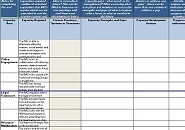
UNDP has developed and tested the Capacity Assessment and Planning Tool for NACs, which can be amended to suit the country context as required. UNDP provides guidance and support to participatory capacity-planning processes, which lead to a more country-led capacity development work plan. Strong coordination is key to an efficient and effective response and is required for the successful implementation of national strategies. Capacity development plans for national coordinating bodes should identify coordination challenges, both internally and at national and district levels, and should also identify the sectors working within the response, mapping these and monitoring and evaluating all partners and their roles.

Strengthening civil society responses

Purpose

Civil society groups in many countries have experienced a changing environment in terms of HIV and health care over the last few years, which has resulted in more centralized implementation by national ministries of health, stronger and different treatment approaches to HIV and other disease programmes, and a subsequent reduction in funding for civil society groups.

There is a need for civil society to review and redefine its role, both in response to HIV and to other emerging health priorities. For example, as people living with HIV live longer on treatment, they are more likely to develop a non-communicable disease such as cancer.

As governments provide the majority of treatment, civil society groups need to assess what their role is in supporting health programme implementation, such as adherence to treatment, supporting marginalized and key populations to enable access to both prevention and treatment, and advocating for policy change to reach universal health coverage (UHC) and ensure rights-based service delivery. There is a need to define and clarify civil society organizations’ new role in supporting the achievement of the goals of the Global AIDS Strategy 2021–2026, expand their role in the move to a more coordinated health and HIV approach, focus on the achievement of UHC, and develop the capacity of networks of civil society groups to strengthen their voice and advocacy role. There is also a need to assess the overall structure of civil society, asking if groups should consolidate or work more in networks to increase their power to advocate and consolidate operational costs.

UNDP’s approach

UNDP, in collaboration with the Joint United Nations Programme on HIV/AIDS (UNAIDS) and other United Nations agencies, supports civil society organizations (CSOs) to define their strategic direction within national HIV, tuberculosis and malaria responses and address capacity gaps that hinder their objectives. UNDP can, additionally, support countries to map the landscape of registered civil society and community-based organizations engaged in HIV/AIDS and other health responses in a country and support the development of cohesive networks. This might include activities to:

  • formulate a strategic direction by supporting the establishment of a civil society organization (CSO) strategic priority action plan or charter
  • bring visibility to registered and validated CSOs by developing an open-source website and database of HIV and health-related CSOs in a country
  • support dissemination of information on how CSOs can support the move to more comprehensive health programming, integrating HIV within the broader health agenda

Tools and examples

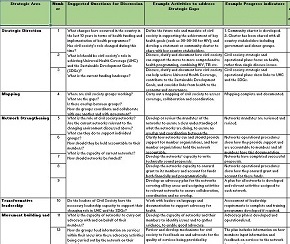
UNDP has developed and tested a tool to support civil society in carrying out in-depth discussions on what the role of civil society organizations has been and what changes have taken place in the health landscape. It offers guidance for discussion on how civil society organizations can assess what their new role should be, how this new role can be operationalized and what skills they need to carry out this role.

The tool includes:

  • a set of questions to guide discussions
  • example activities to support changes in strategic direction possible indicators to measure progress
  • a template to budget for these activities.

For additional resources on UNDP’s work to empower civil society organizations in national disease responses with public funding, visit the “Social contracting for effective service delivery under domestically funded health programmes” page.

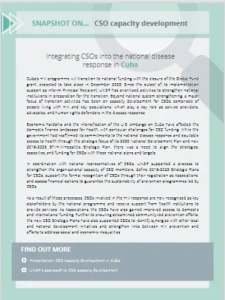
Cuba’s HIV programme was expected to transition to national funding with the closure of the Global Fund to Fight AIDS, Tuberculosis and Malaria (The Global Fund) grant in December 2020. Since the outset of its implementation of support as interim Principal Recipient of the HIV grant, UNDP has prioritized activities to strengthen national institutions in preparation for the eventual transition to government. A major focus of transition activities has been on capacity development for civil society organizations (CSOs) comprising people living with HIV and key populations. CSOs play a key role as service providers, advocates and human rights defenders in the disease response. There was a need in particular to align the strategies, capacities and funding for CSOs with existing national plans and targets in relation to HIV.

In coordination with national representatives of CSOs, UNDP supported a process to strengthen the organizational capacity of CSO members, define the 2019–2023 strategic plans for CSOs, facilitate the formal recognition of CSOs through their registration as associations and assess financial options to guarantee the sustainability of prevention programmes led by CSOs. As a result of these processes, CSOs involved in the HIV response are now recognized as key stakeholders by the national programme and receive support from health institutions to provide services. The CSO strategic plans have also supported CSOs to identify synergies with other local and national development initiatives and strengthen links between HIV prevention and efforts to address social and economic inequalities. While Cuba was eventually declared eligible again for another Global Fund allocation, and is not transitioning to domestic funding yet, the work completed to strengthen CSOs will help put Cuba in a good position to do so when the time comes.

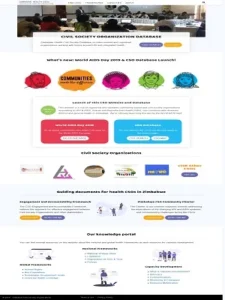
The evolution of the HIV epidemic and centralization of the response in Zimbabwe over the past decade has meant reduced funding availability for HIV and AIDS service community-based and civil society organizations (CSOs). As part of a comprehensive nationally owned capacity development strategy for 2018–2020 to strengthen systems for health, UNDP, the Joint United Nations Programme on HIV/AIDS (UNAIDS) and the United Nations joint team in Zimbabwe facilitated consultations with HIV-related CSOs in the country to clarify their roles in supporting the achievement of the 90–90–90 targets and gain an understanding of the capacities needed to expand their engagement. A major focus included the need to strengthen coordination across organizations as a means of enhancing their collective impact. Based on a CSO strategic priority action plan developed with the engagement of CSOs, a number of activities were prioritized to improve governance structures for the coordination of CSOs and to enhance their relevance and sustainability in contributing to the HIV response.

Key outcomes included the establishment of the CSO Community Charter launched in February 2019, the accompanying CSO Engagement and Accountability Framework, and training for 180 CSO members on these documents. UNDP also led a mapping exercise of all CSOs working in the health and HIV sectors in 2019, which resulted in the creation of a public database of 150 CSOs. The CSOs selected the Zimbabwe AIDS Network (ZAN) to serve as their umbrella organization, to be guided by a set of standard operating procedures currently under development. These efforts have contributed to greater coordination of CSOs under a unified framework, with a strategic direction for their role in the HIV and health response and a strong basis for resource mobilization efforts.

In partnership with the National Institute to Fight HIV/AIDS in Angola and the Global Fund to Fight AIDS, Tuberculosis and Malaria (The Global Fund), UNDP works with local networks and community groups to help reach more pregnant women living with HIV, with the overall goal of ensuring that all babies are born free of HIV. UNDP has worked with partners to support the development of the national plan for eliminating mother-to-child transmission of HIV, entitled Born Free to Shine, which is headed by Angola’s First Lady, Ana Dias Lourenço. Read more

Capacity Development for Health
https://beta-cd4health.org
Generated on December 15, 2025 at 8:04 PM