UNDP Logo
Global
Capacity Development
for Health

Digital and data solutions for health

Capacity Development for Health | Generated on December 15, 2025

Table of Contents

Leveraging human-centered data and digital transformation for better health

Potential of data and digital transformation

Digital technologies and improved health data provide promising opportunities for innovation and acceleration of progress towards the health-related SDGs and for building more resilient systems for health. But 3.5 billion people still lack access to the internet and the opportunities it provides, highlighting the importance of programming, policy and legal frameworks that facilitate equitable access, protect privacy, reduce disinformation and narrow the digital divide.

The achievement of universal health coverage of quality, accessible and affordable health services is primarily dependent on well-functioning and robust health systems of a country. In recent years, outbreaks of Ebola and the Covid-19 pandemic have exposed and stressed weaknesses and gaps in health systems thereby increasing inequities in health and development worldwide.

Each country needs accurate and reliable data to plan and deliver quality health services, from primary care in rural communities to addressing health crises and pandemics. Ministries of Health rely on data to plan, monitor and implement timely health interventions; inform decision-making; and collaborate across sectors and regions to better serve communities.

Digital transformation provides concrete opportunities to tackle health system challenges, with a potential to enhance availability, accuracy and timeliness of data, and the coverage and quality of health services, including those at the last mile, to help achieve the SDG-3 goals and targets. Digital health interventions may be used, for example, to enhance the capacity of health workers and give them more immediate access to clinical protocols, and allow more people to access medical services through telemedicine consultations. Digitized medical-commodity supply chains can optimise pipelines and procurement, leading to increased availability of medicines and vaccines, reducing waste and corruption risks, and yielding significant cost savings overall. Inexpensive, widely available digital platforms and social media can enhance outreach to key and vulnerable populations in contexts where widespread stigma and discrimination, violence and harassment, punitive laws, policies and practices, and criminalization of behaviours puts them at heightened risks and undermine their access to services.

The approach

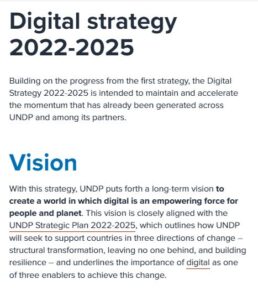
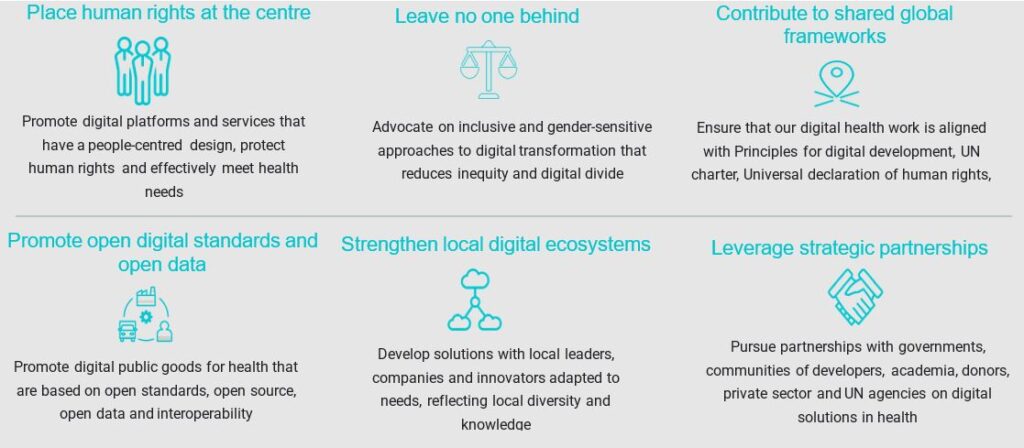
UNDP support to countries in building inclusive, ethical and sustainable digital societies is guided by its Strategic Plan 2022 – 2025 and Digital Strategy 2022 – 2025, which reiterate its commitment to support digital transitions using a rights-based approach. Central to UNDP’s mission are inclusion and the protection of human rights. In its pursuit of digital development, UNDP continues to advocate for and implement ‘intentionally inclusive’ methodologies that prioritize people-centered design.

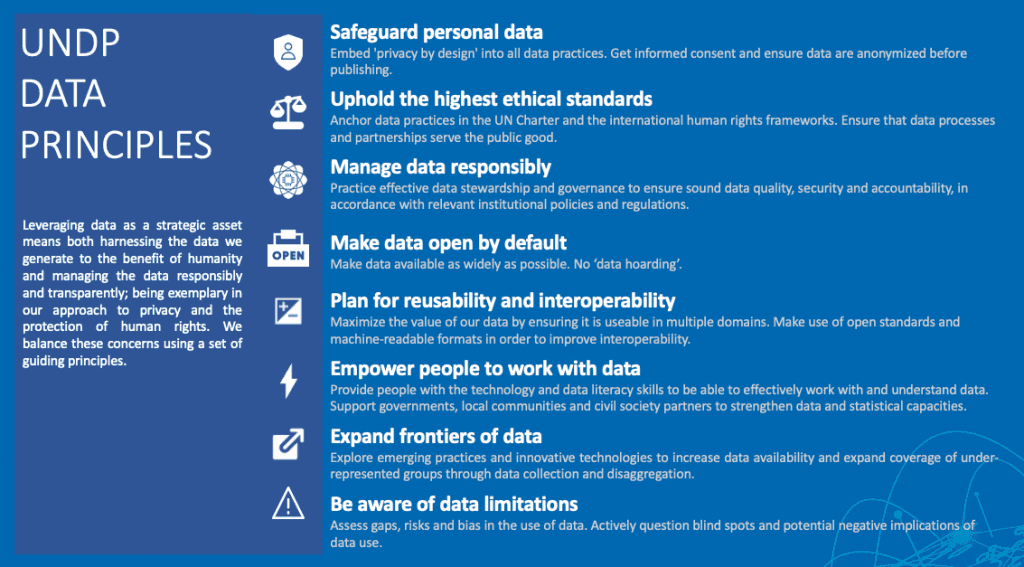
As digital technology rapidly evolves, UNDP’s approach to digital remains rooted in clear principles based on experience and international frameworks that put people and planet first. UNDP advocates for open digital standards to unlock scale, reusability and interoperability. Leveraging digital public goods can unlock transformative solutions and digital infrastructures to enable a more equitable and transparent future, with a strong emphasis on protecting rights and preventing misuse.

UNDP’s HIV and Health Strategy 2022-25 seeks to work towards reducing inequalities (to leave no one behind) by increasing access to services (to reduce digital divide and improve health outcomes). As part of our digital health initiatives, we support governments and partners to develop, scale and implement digital health policies and programmes to reduce inequalities and exclusion that affect health and drive epidemics, promote effective and inclusive governance and build resilient systems for health.

In line with these efforts, the UNDP Digital Health for Development Hub is a one-stop shop with technical, advisory and partnership support for scaling up digital health solutions. aims to assist countries to identify, adapt and scale up appropriate digital solutions that strengthen health systems, while supporting effective and inclusive governance for digital health and addressing the inequalities that fuel disease and pandemics. The Hub exemplifies UNDP’s strategic focus on transformative drivers for sustainable development.

UNDP Offer on Digital Health is aligned with principles of its Digital Strategy
In recent years, UNDP has successfully introduced and scaled up digital health innovations in countries around the world. UNDP supports the implementation of digital health initiatives across 62 countries, focusing on COVID vaccine delivery, medical supply chains, HIV, TB, maternal and child health as well as communicable and non-communicable disease service delivery.

The Global Dashboard for Vaccine Equity, launched by UNDP, WHO and the University of Oxford in 2021 combines the latest data on the global roll-out of COVID-19 vaccines with relevant socio-economic information, and provides actionable insights for policymakers to better understand the importance of vaccine equity for socioeconomic recovery.

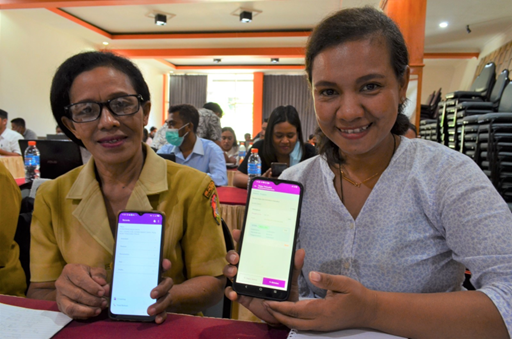
In Ghana, UNDP is working with the Food and Drugs Authority with the roll-out of the Med Safety mobile app to monitor drug safety designed to encourage reporting of harmful side effects of health products, including medicines and vaccines, by consumers, patients and health care professionals. In Burundi, Chad, Djibouti and Guinea-Bissau, the UNDP-Global Fund partnership in collaboration with governments have rolled out and scaled mobile technology to digitize HIV, tuberculosis and malaria data to map, track, prevent and treat health outbreaks in real-time. The national tuberculosis programme in Moldova, in partnership with UNDP, is scaling up a mobile application which allows tuberculosis patients to video record themselves taking medicines at a time of the day and location convenient for them.

In Colombia, the prep-Colombia.org platform is used for initial screening, setting up medical appointments, keeping records of follow-up appointments and sharing the results of laboratory tests. It also allows doctors to generate different metrics such as level of acceptance, initial continuation, prevalence of toxicity and HIV status. All this is combined with training on combination prevention strategies reaching more than 20,300 people. This innovative approach has made it possible to guarantee the continuous provision of services, obtain good adherence to treatment, and support individuals despite the challenges posed by the COVID-19 pandemic.

Joan Alfaro, a 22-year-old Colombian social leader. Photo: Francisco Villa

In India, UNDP has supported the government to develop and implement a digital platform called CoWIN that currently underpins one of the largest and more successful COVID vaccination program in the world. The system, which has over one billion beneficiaries registered, is designed to provide much flexibility and ‘ease-of-use’ to the users. For example, text resizing options have been included in CoWIN webpages to benefit people with visual challenges. People with disabilities or those who are unable to self-register (for any reason) can go directly to the immunization facilities and they are registered on-spot and provided vaccination accordingly. In rural areas, there are over 250,000 government common service centres across the country that help citizens to register on CoWIN (people with disabilities, people without any internet connection, etc). As a result, vaccination coverage in rural and hard-to-reach areas is higher than the national average.

Challenges and risks of data and digital health programmes

While the potential of data and digital transformation for health is widely recognized, the ‘digital divide’ across and within countries, particularly for the poor and most marginalized, threatens to reinforce exclusion. Data privacy protection is crucial in a world where more health data is being generated – and potentially commodified – every day. Already, millions of existing digital identities are vulnerable to fraud and public exposure of personal information because they are stored in unsecured systems. In addition, billions of people do not have a digital identity and are not represented in the electronic data systems used to augment service delivery and monitor and collect data. Currently, the ownership and use of many forms of data are governed only by default norms and rules, and many jurisdictions at many levels are working to ensure that advances in innovation are accompanied by data policies that protect users.

Various tools can help address the challenges and risks associated with the adoption of data and digital health solutions. This includes the health technology assessment (HTA), a multi-disciplinary process that evaluates the value of health technology at different points in its lifecycle, including the technology’s properties, effects and impacts. It aims to inform policymakers and influence decision-making in health care, with a focus on how best to allocate funding for health programmes and technologies. Components of an HTA include validation of technical aspects (i.e., accuracy of the product or system), clinical considerations (i.e. contribution towards improving or maintaining a specific health condition) and systems compatibility (i.e. connection and/or integration into health service provision and health systems, including medical records). HTAs can be applied to different types of interventions, such as piloting tests, medicines, vaccines, procedures and programmes.

Major challenges that implementation of data and digital transformation solutions need to tackle include:

Governance and policy – Many countries do not have any well-defined policies and strategic framework on digital health or more broadly on digital technologies and data management. There is an urgent need for countries to build an enabling legal environment and have guidelines on citizen data protection, open standards, interoperability of digital systems, AI, standards on electronic health records and laws on data privacy.

Regulating digital space – This is a major governance challenge as most of the innovations in the digital sector are taking place in the private sector while government regulatory systems are lagging behind in catching up on the latest trends. According to a survey done by the Global Digital Health Platform on existing digital policy frameworks, only a very small percentage of developers took approval from regulators prior to designing digital health tools.

Digital ecosystems are fragmented – Most of the technology development takes place in silos in the public and private sectors which often precludes the emergence good quality low-cost tools for healthcare. Most of the digital tools do not progress beyond the pilot phase in the absence of an integrated and well-coordinated digital health ecosystem that underpins national health policies. There is unequal levels of availability, affordability and access to digital tools and technologies, particularly in LMICs, leading to a digital divide.

Weak supporting infrastructure – In several parts of the world, e-health infrastructure is weak and unable to support the scale of digital health. Most of this infrastructure is not interoperable or connected, particularly the health information systems. Low internet penetration and speeds are critical limitations impacting people from benefitting despite increasing availability of smartphones.

Digital health technologies have impacted privacy in various ways. More people have access to patient information, including medical caregivers, researchers, and administrators in the health care system and, in many cases, employers and government agencies outside it. Patient information is more accessible because it is increasingly stored in digital form and so it can be transmitted more easily than in paper form. Patient information is held for very long periods of time, and the longer it remains in existence, the greater the opportunities for abuse. Privacy concerns are enhanced by the fact that the collected medical records provide a storehouse of information that can be used in a variety of ways other than those intended when the information was first collected. These records can also be used for the marketing of particular drugs, or for the denial of medical health insurance coverage.

Examples of risks associated with increased collection and digitalization of health data include:

  • Data breaches, violations in privacy and confidentiality for groups that are subject to punitive or criminal laws – leading to unjust detention, violence or death in some cases
  • ‘Function creep’ – use of data beyond the initially intended use
  • Artificial Intelligence reproducing and amplifying racial or other bias – when an algorithm is trained on biased data, it is likely to reinforce patterns from the dominant category of the data it was trained with. Vulnerable groups have a long history of being absent or misrepresented in existing datasets
  • Misinformation spread through social media

To address those risks and concerns when designing, implementing and monitoring digital health and data solutions, UNDP has issued ‘Guidance on the rights-based and ethical use of digital technologies in HIV and health programmes.’ The Guidance outlines key ethical, technical and human rights considerations for countries adopting digital technologies for HIV and health. It also presents a practical checklist and recommendations for governments, private sector companies and donor agencies to support countries in their decision-making on the adoption of digital technologies in HIV and health programmes.
Key Resources

Global Initiative on Digital Health

World Health Organization
AUTHOR: World Health Organization LANGUAGE: English FILE FORMAT: Web Link

UNDP Digital Health for Development Hub

United Nations Development Programme
AUTHOR: UNDP LANGUAGE: English FILE FORMAT: Web Link

UNDP Data Futures Platform

United Nations Development Programme
AUTHOR: UNDP LANGUAGE: English FILE FORMAT: Web Link

Beyond stereotypes, toward equality; digital transformation and gender

United Nations Development Programme
AUTHOR: UNDP LANGUAGE: English FILE FORMAT: Web Link

UN Global Pulse, Risks, Harms and Benefits Assessment Tool

UN Global Pulse
AUTHOR: UN Global Pulse LANGUAGE: English FILE FORMAT: Web Link

UNDP, Guidance on the rights-based and ethical use of digital technologies in HIV and health programmes

United Nations Development Programme
AUTHOR: UNDP LANGUAGE: English FILE FORMAT: PDF

UNDP Digital Strategy 2022-2025

United Nations Development Programme
AUTHOR: UNDP LANGUAGE: English FILE FORMAT: Web Link

Improving access to vaccines through digital technologies

UNDP supports governments to harness the power of technology to digitalize national logistic management information systems (eLMIS) for improved storage, delivery and access to vaccines, medicines and other health products.

In India, UNDP is supporting the Ministry of Health and Family Welfare to digitalize vaccine supply chains with mobile technology. India is transforming the way vaccines are delivered to people, including vulnerable and migrant populations, for COVID-19 and the world’s largest universal immunization programme.

Electronic Vaccine Intelligence Network (eVIN)

eVIN is a smartphone and cloud technology-based app that digitizes information on vaccine supplies across India. Developed with support from Gavi, the Vaccine Alliance, eVIN enables vaccine handlers to report on available stocks, consumption levels and movement. It also has a SIM-enabled temperature logger for remote monitoring of storage temperatures, which are kept lower to preserve vaccines.

Data is stored in a cloud server that provides web-based dashboards and data analytics for programme managers and policymakers to view the information in real-time. This end-to-end visibility of key supply chain data allows stakeholders to effectively manage supplies and make decisions that ensure quality vaccines reach people on time.

COVID-19 Vaccine Intelligence Network (CoWIN)

The success of eVIN enabled India’s government to rapidly deploy CoWIN during the height of the COVID-19 pandemic. CoWIN was the country’s digital COVID-19 platform, which enabled patients to book appointments for vaccination and receive their vaccine certificates. It also provided vaccinators with a platform to manage vaccination sessions, develop reports and monitor progress, while allowing programme managers to monitor vaccine utilization, coverage and wastage throughout the system.
UNDP provided technical and implementation support for CoWIN. CoWIN reached more than 950 million people and enabled the expansion of vaccine coverage, including adolescents between 15 and 17 years. It registered over 36 million new beneficiaries and has supported the provision of a third vaccine dose to people above the age of 60, health workers and frontline workers.

Electronic Immunization Registry (U-WIN)

After the success of eVIN and CoWIN, India turned to its universal immunization programme, which is the world’s largest. In 2023, the programme will reach 29 million pregnant women and 26 million newborns annually to protect against 12 vaccine-preventable diseases, including tetanus, diphtheria, polio and hepatitis B.

To reach millions of people, India’s government designed U-WIN, a digital platform to e-register and track the vaccination status of all expectant mothers and children across India. U-WIN provides a streamlined information source, including a database accessible to all states and Union Territories for decision-making. U-WIN will also enable people to receive vaccinations anywhere in the country, ensuring that migrants can access them. In addition, the system will allow people to schedule appointments and track their vaccination history.

eVIN, CoWIN and U-WIN demonstrate how digital technologies improve supply chains and vaccine delivery, both for pandemic response and a stronger and more resilient system for health in the future.

Technology

The software platform employed for electronic Vaccine Intelligence Network (eVIN) enables real-time data capture at every level of the supply chain for the vaccine cold chain and provides end-to-end visibility of the entire process from central level to point of use. Last-mile supply chain and cold chain handlers at the peripheral level (e.g. health facilities) are provided with smart phones that are equipped with the eVIN application, which allows for the digitization of vaccines inventories. Information is recorded in offline mode at times of network unavailability and gets saved and uploaded through automatic data synchronization on the cloud network when the Internet is available again. These data are sent to a cloud-based server and are visible on a web dashboard on computers at any level of the supply chain for informed decision-making. Through customizable dashboards viewable through the eVIN web interface as well as a mobile version, managers can see information on stock inventory and demand information from each store, supply at warehouses and supply in transit and the status of all cold chain equipment, among other data. The tool also provides actionable data analytics, including on stock abnormalities, optimal replenishments through consumption-based forecasting, trends on a range of data and human performance, including data quality and response times.

For the immunization cold chain, in addition to providing real-time information on vaccine stocks, the system helps to track the storage temperature of vaccines. Subscriber identity module (SIM)-enabled temperature loggers attached to the cold chain equipment capture temperature information through a digital sensor placed in the refrigerator. The temperature loggers installed on all vaccine-storing refrigerators activate alarms and send messages to relevant authorities if the temperature in the fridge exceeds the set temperature limits. In the eVIN approach used in India, the vaccine logistics management, temperature monitoring and cold chain management are integrated into one system.

Governance

The technology component of electronic Vaccine Intelligence Network (eVIN) is complemented by strengthening governance systems. This includes ensuring that proper procedures and guidance are in place to streamline and systematize the use of the new electronic logistics management information system (eLMIS) software. eVIN helps to systemize record-keeping, for example by facilitating the distribution and use of standardized stock and distribution registers.

An equally critical element of promoting strong governance is fostering accountability at all levels of the supply chain to facilitate compliance with these standards, based on a sense of ownership over the data quality and outcomes of the system. From the development of standard operating procedures to the establishment of review and coordination mechanisms for implementation of eVIN, the streamlining achieved through these governance processes allows the best use of the eVIN-generated data and the ability to identify and address gaps as it is rolled out. This framework ultimately helps to catalyse data-driven action for vaccine supply management across all levels.

Human resources

The implementation of eVIN requires capacity-building of government vaccine and cold chain managers at all levels of the supply chain. Training is required to enable cold chain managers to use the technology at the regional, district and block and village levels until the last storage point, based on the tasks to be performed at each level. Formal training and on-the-job training are required to enable the use of this technology and to further integrate it in good storage practices and standard operating procedures. Training curricula are tailored to the functions and responsibilities of the vaccine handlers at each level of the vaccine supply chain. Cold chain handlers at the health centre level, often nurses in charge of immunization, are trained to use electronic Vaccine Intelligence Network (eVIN) to record data on vaccines stocks, consumption and temperature, which, through a cloud-based server, will be available to all cold chain managers and health officials.

Cold chain managers at the district level use data to provide constant support to immunization and medical officers to estimate vaccine requirements and distribution, supervise vaccine handlers and coordinate intervention of cold chain technicians to maintain and repair cold chain equipment. Health officials at the regional and central levels use this information to plan and optimize distribution, review national strategies to strengthen the vaccine supply chain and collect data on vaccine consumption and stocks for estimating vaccine requirements for procurement. The introduction of a new electronic logistics management information system (eLMIS) system requires not only initial training sessions, but also arrangements that will ensure regular oversight and availability of technical support to users at the health facility, district and central levels.

In India, the ingenuity of eVIN was not merely introducing a new software for LMIS, but also introducing a new staffing structure to manage the functioning of the eLMIS, as well as to reinforce compliance with existing standard operating procedures. In this way, eVIN creates a strong human resource network, connecting health officials and health workers across the immunization programme and encouraging increased accountability and positive behavioural change. The change management approach and human resource architecture established alongside the technology allowed eVIN to achieve the scope and sustainability of capacity-building required to empower those who drive the system, while facilitating close interface between personnel with information technology (IT) expertise and health programme experts to ensure that relevant field requirements are built into the software.

Learn more about the project and its results by visiting the UNDP India: eVIN project page . For more information about other eLMIS solutions that UNDP supports based on country needs, visit the eLMIS page.

This is an eight-minute video that explains how eVIN works and how India has adopted this technology across the entire vaccine supply chain to strengthen the country’s immunization programme.

A Data Revolution for Medical Supply Chains in Indonesia

Indonesia has a large population spread across many islands, which makes delivering vaccines more challenging. During the COVID-19 pandemic, UNDP and the Ministry of Health strengthened vaccination drives using SMILE, which was piloted in 2018 with Government of Japan support. SMILE is a mobile and web-based application that provides real-time visibility on vaccine stocks and storage temperatures and enables programme managers to monitor deliveries down to the last mile. It supports health officials to overcome constraints of infrastructure, data management and human resources, which often result in overstocking and stock-outs of vaccines. By making data readily available, SMILE facilitates decisions on vaccine distribution to reduce waste and address inequities in vaccine coverage.

To date, SMILE has facilitated the distribution of 454 million doses of COVID-19 vaccines to over 12,000 health facilities nationwide. Additionally, temperature loggers installed at 5,000 health facilities have maintained vaccine efficacy, thanks to support from Gavi, the Vaccine Alliance. Vaccine stock-outs have been reduced by 36% and over-stocking by 56%. Vaccine stock wastage has been reduced by more than 90%.

Following its use for COVID-19 vaccines, SMILE is now supporting national vaccination campaigns to increase children’s routine immunization coverage, which declined during the pandemic.

From SMILE to ME-SMILE

UNDP’s SMILE Project has been working with the ministries of health and the environment and forestry on an internet based medical waste management information system. Piloted in three health facilities, ME-SMILE uses Internet of Things technologies to track the waste removal process, including collection, sorting and disposal. Dozens of health workers received training to input data, enabling real-time analysis during the waste management process.

The digital tracking system allows health facilities and authorities to identify current streams and determine total waste generated and help reduce carbon footprint. ME-SMILE reduced waste processing time from three hours to 30 minutes, while providing health facilities with more accurate data to plan future disposal capacity.

UNDP and the health ministry are scaling up ME-SMILE in 2023, initially involving 30 major hospitals in four provinces. The long-term goal is to implement ME-SMILE in all 3,000 hospitals by 2025, ensuring the safe management of approximately 3,000 tons of medical waste daily and reporting waste management data from all facilities to the national level.

Combatting Malaria with SMILE

UNDP and the MoH, in collaboration with the Access and Delivery Partnership and the Global Fund, are piloting the SMILE Malaria app. This initiative supports Indonesia’s goal to eradicate malaria by 2030. With over 90% of malaria cases concentrated in the eastern provinces of Papua, West Papua and East Nusa Tenggara, the app digitizes the recording, monitoring and reporting of malaria logistics. By improving supply chain management and preventing stock-outs of malaria drugs and diagnostic tools, the SMILE Malaria app will contribute to malaria elimination efforts. The success of SMILE in immunization and malaria programmes will enable its scalability for monitoring essential drugs nationwide.

Over the past four years, UNDP’s SMILE system has revolutionized Indonesia’s digital logistics monitoring, bridging the digital divide and promoting digital innovation. The commitment of frontline health workers in utilizing SMILE has played a crucial role in informing decision-makers with critical health data. By leveraging SMILE’s capabilities, Indonesia is bolstering its health system preparedness and resilience and taking significant steps toward achieving universal health coverage, ensuring the effective delivery of life-saving vaccines and essential logistics to all its citizens.

Digital technologies for real-time health data and decision-making

UNDP’s approach

Among the applications of digital technologies that UNDP promotes in the health sector are those aimed at strengthening real-time capture, monitoring, and use of data within national HIV, malaria, tuberculosis and other health programmes. This support ranges from the digitalization of national health information systems, such as through the roll-out of the electronic district health information system (DHIS-2), and the use of mobile technologies within disease surveillance and tracking systems. UNDP likewise helps countries to identify and adapt open-source digital tools suitable for resource constrained contexts, including those to support disease monitoring, prevention, diagnosis, and recovery efforts in COVID-19 and beyond. This page provides some examples of digital health technologies that have supported countries to leverage data to enhance the coverage and quality of disease prevention and treatment efforts. Visit the Health information systems section for more information on UNDP’s broader capacity development support to strengthen health management information systems.

UNDP’s support to data systems and tools in the health sector is informed by its digital strategy to harness the potential of digital transformation for development, as well as guided by core Principles for Digital Development. It is important to ensure that amidst the heightened interest in the potential benefits of digital health, all people enjoy the benefits of innovation and that digital technologies help to reduce inequalities. To achieve this, UNDP is committed to ensuring that efforts in utilizing digital technologies are anchored in the values and obligations defined by the United Nations Charter and the Universal Declaration of Human Rights.

Cross-border platform to prevent tuberculosis

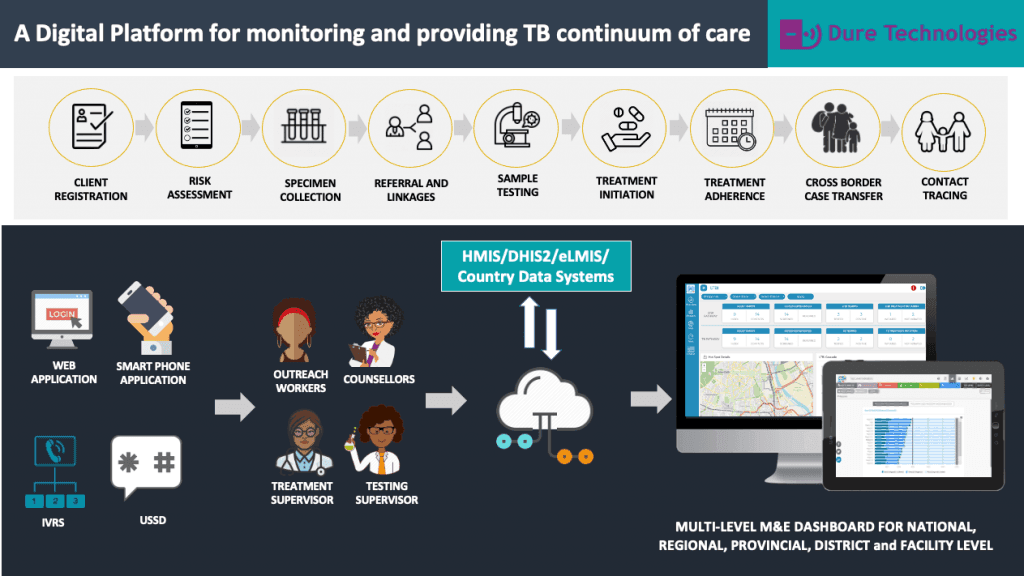
As part of the UNDP-managed Global Fund to fight AIDS, Tuberculosis and Malaria (Global Fund) multi-country tuberculosis grant for migrants, refugees and returnees in Afghanistan, Iran, and Pakistan, UNDP is working with Dure Technologies on a digital application (app) and dashboard to monitor and provide tuberculosis continuum of care. The app captures data on client registration, risk assessment, specimen collection, referral and linkages, sample testing, treatment initiation, treatment adherence, cross border case transfer, and contact tracing. It is able to support cross-border tracking of lost follow up cases through a quick response (QR) code.

Real-time monitoring of the malaria response in Guinea Bissau

In Guinea Bissau, where malaria is the leading cause of illness, the health information management system is weak and consequently, the data reported not only are of low quality but also arrives late at point of analysis and decision making at the regional and central levels. With financial support from the Global Fund to Fight AIDS, Tuberculosis and Malaria (Global Fund) and the World Bank, UNDP supported the government to introduce real-time monitoring using mobile tablets to digitize malaria data, track malaria outbreaks, and digitally map available medicines and bed-nets. Technological considerations in developing the technology focused on ensuring its linkage to the national health management information system database, the electronic district health information system DHIS2. UNDP received support from the University of Oslo to develop the application as an extension of DHIS2 and configure the tablets with DHIS2 capture, which captures aggregated routine health data, and a DHIS2 tracker, for individual-level patient data. The tool focuses on data related to case management and prevention, mosquito net distribution, availability of malaria medicines, and weekly surveillance for World Health Organization (WHO) notifiable diseases.

Through support of the Global Fund and the World Bank, UNDP has supported the government to operationalize some 300 tablets for digital data collection and reporting. It has likewise provided training to health personnel and data clerks at hospitals and health centres. By contributing to improved completeness, promptness, and quality of data for decision making and the number of times products are out of stock, the introduction of the new digitized reporting systems contributed to a 16 percent decrease in the number of malaria related deaths in Guinea-Bissau between 2017 and 2018.

UNDP has also helped to decentralize the tracker for data collection at the community level, at the point of service. Importantly, health facilities have assumed ownership over the tool, recognizing the value of real-time reporting, as they continue to self-finance the internet payments for the tablets to ensure their continued use.

Read more

Digital solutions for malaria prevention in Chad

UNDP supports Chad’s National Malaria Control Programme (NMCP) with malaria prevention for millions of people through a Global Fund grant. Key approaches include the routine and mass distribution of long-lasting insecticide-treated bed nets (LLINs) and seasonal malaria chemoprevention (SMC), a series of preventive medicines given to children under five years during the rainy season, when malaria transmission is highest.

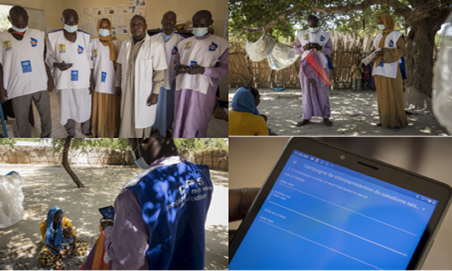
During the 2022 SMC campaign, UNDP and NMCP digitized data collection to more efficiently deliver preventive medicines to children. Before the use of digital tools, information on the number of eligible and treated children was recorded by hand, which can lead to data discrepancies. During the digitized SMC pilot, community health workers collected data using the District Health Information System (DHIS2) SMC Tracker installed on tablets, which enabled them to quickly track children’s treatments and ensure that every eligible child received the correct dose.

Data was then automatically transmitted to the national DHIS2, where discrepancies and trends can be spotted quickly. In total, UNDP and NMCP trained more than 1,300 community health workers across 13 health districts and 184 health facilities in the Lac and Batha regions on digital data collection in the first phase of implementation. The pilot reached 200,000 children and yielded valuable lessons, such as creating instant message groups to share tips and troubleshoot problems among health workers.

Community Health Workers use a tablet with an application to do malaria chemoprevention for children under 5 and pregnant women in the village of Matafo near Bol in Lac Chad province, Chad, 17 October 2022

Digital solutions extended to the mass LLIN campaign, which will reach more than 18 million people with 11.6 million LLINs by the end of 2023. Using KoboToolbox, community health workers recorded the number of LLINs delivered to each household. Each tablet came with Mobile Device Manager, a software programme that tracks their location and usage to prevent loss and promote accountability during the campaign.

Following collection, the data was uploaded to DHIS2 for national reporting. UNDP also entered the data into a dedicated dashboard, which was developed to visualize information on LLIN distributions, such as the number of households targeted and reached.

Digitization and digitalization significantly enhance data management, accountability and problem-solving to increase the effectiveness of malaria prevention in Chad. Real-time data helped identify areas that delayed LLIN distributions due to shortages, inaccessible roads or insecurity. In the town of Goré, Logone Oriental, programme managers adapted the campaign to resume distributions when safe conditions returned.

In May 2023, Chad’s NMCP received the Alliance for Malaria Prevention annual award for leadership. This award recognized its role in planning, coordinating and implementing a nationally led malaria prevention campaign, including the completion of the large-scale digitalization pilot and the first phase of full implementation on time.

Building on existing health information systems to monitor COVID-19

A well-functioning health information system is essential to understanding and responding to the COVID-19 pandemic. The circumstances of the current crises, however, pose significant challenges for data collection. It is therefore critical for countries to strengthen and adapt established health information systems to inform the trajectory of the epidemic.

UNDP has supported governments in Guinea Bissau, Zimbabwe, Burundi, and Djibouti to integrate COVID-19 trackers into their existing national health information systems that use the electronic district health information system 2 (DHIS2) software. Having previously worked with Oslo University to help numerous countries roll out DHIS2 to enhance routine health information, during the pandemic, UNDP provided technical assistance to help ministries of health adapt and install the DHIS2 COVID-19 module. This digital data package supports surveillance workflows and automated analysis for key components of routine and active surveillance including:

  • COVID-19 case-based surveillance
  • contact registration and follow-up programme
  • ports of entry screening and follow-up programme
  • COVID-19 surveillance event programme
  • COVID-19 aggregate surveillance

Many countries have been able to leverage previous investments from the Global Fund to Fight AIDS, Tuberculosis and Malaria (Global Fund) and UNDP technical assistance to develop mobile applications for the surveillance and reporting of disease outbreaks to adapt to the COVID-19 response. For example, in Zimbabwe, UNDP had helped the government to strengthen its weekly disease surveillance system by piloting Frontline SMS, in which data captured on cell phones are automatically sent to a computer database in real-time, transmitting the surveillance data from service delivery points to the district, provincial, and national levels. UNDP has also supported governments to harness mobile technology for sharing COVID-19 information with the public. For instance in Guinea Bissau, it partnered with WhatsApp and other agencies to establish the WhatsApp Coronavirus Information Hub, to improve communication during the crisis and establish a reliable platform for accurate information sharing.

In addition to this, UNDP’s marketplace for proven digital solutions, Digital X, exists to make scaling digital solutions across borders faster, easier, and safer. An emergent priority for UNDP is to scale up what already works, reduce duplication, and improve coordination across development actors. This is why Digital X supports scaling digital solutions from not only UNDP, but also from UN agencies, social enterprises, private sector, nonprofits, NGOs, universities, and more.

Key Resources

Principles for Digital Development: Resources

AUTHOR: UNDP LANGUAGE: English FILE FORMAT: Web Link

UNDP Digital Strategy (2022 – 2025)

AUTHOR: UNDP LANGUAGE: English FILE FORMAT: Web Link

UNDP COVID-19 Data Futures Platform

United Nations Development ProgrammeThe COVID-19 Data Futures Platform pulls together data from the UN system, nonprofit partners, academia, development partners and countries around the world. Interactive tools provide unique opportunities...
AUTHOR: UNDP LANGUAGE: English FILE FORMAT: Web Link

COVID-19 Open-Source Digital Toolkit

UNDP Singapore Global Centre for Technology, Innovation and Sustainable Development
AUTHOR: UNDP LANGUAGE: English FILE FORMAT: Web Link

Smart facilities for health

Harnessing technological innovation and green solutions for the health system infrastructure

Purpose

Inspired by the concept of smart cities, UNDP launched “Smart Facilities” in 2016 as an initiative to integrate technological innovation and renewable energy solutions into physical infrastructure. Smart Facilities applies solutions across four interdependent technology pillars to infrastructure such as office buildings, namely 1) energy and mobility; 2) big data and the internet of things; 3) information and communications technology (ICT), business intelligence and artificial intelligence; and 4) security.

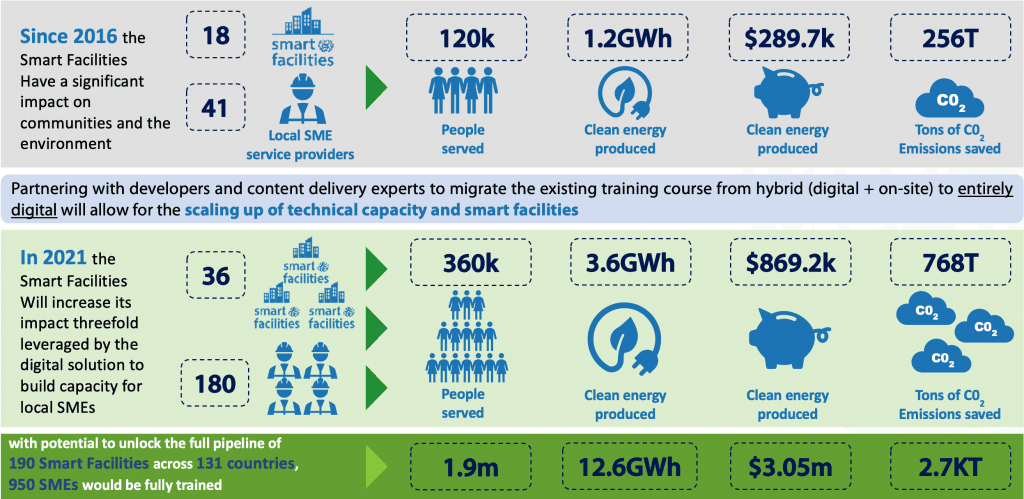
Solutions that Smart Facilities provide

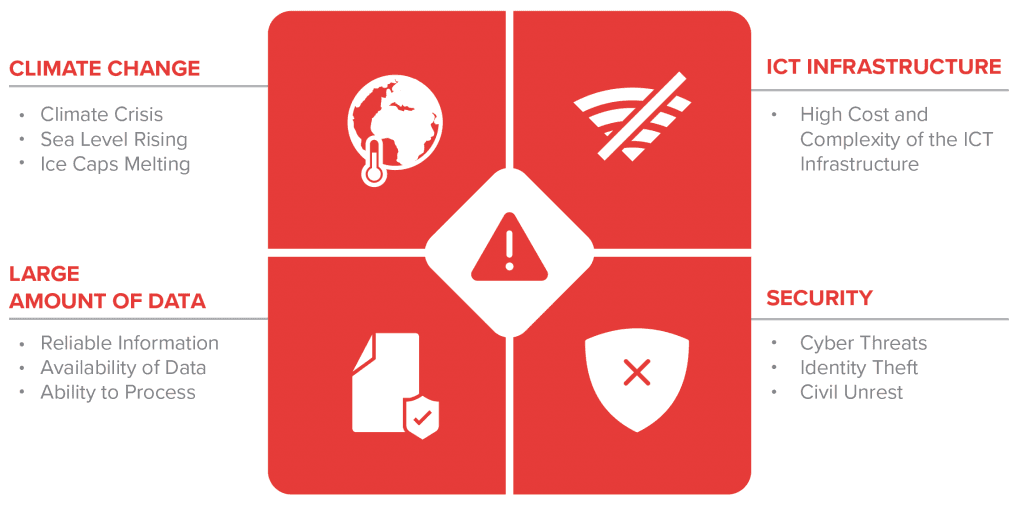
Issues that Smart Facilities seek to address

Building on lessons learned from operationalizing Smart Facilities within United Nations premises, UNDP is now working with governments, the private sector and other partners to apply the model to public sector infrastructure in a range of sectors, including health. Harnessing the power of smart technologies with the growing global need to be more energy efficient presents a key opportunity to contribute to the global decarbonization objectives of the 2030 Agenda.

The Smart Facilities model likewise offers a means to strengthen local economies. The initiative leverages local small and medium-sized enterprises for long-term sustainability of Smart Facilities and builds their technical capacities in the process. It aims to build a pipeline of local capacity to shape green, digital, new technology-driven infrastructure solutions, including a focus on youth apprenticeship.

UNDP’s approach

The implementation of Smart Facilities consists of a seven-step process that has been refined over the years:

This process ensures a comprehensive assessment of the site, a well-refined process for identifying local partners, a thorough technical review, a detailed installation plan and capacity building process, and continued monitoring and reporting to identify further business opportunities.

As part of its support to COVID-19 national vaccine deployment plans, UNDP offers a number of Smart Facility solutions to strengthen vaccine distribution efforts. These solutions cut across all stages of the cold chain to complement and reinforce existing components of vaccine storage, tracking, energy sources, monitoring, and security in both mobile and stationary infrastructure. They include, for example, vehicle grid integration, satellite communications, renewable energy, logistics management information system (LMIS) mobile applications for tracking and Internet of Things (IoT) sensors for temperature monitoring.

Smart Facilities for Health are based on a user-centered approach to design and capacity development, grounded in a recognition that innovation and digital solutions require co-creation and user ownership to be relevant and lasting. This includes a diverse community of engineers, local private sector service providers, facility managers, healthcare providers and patients.

By relying on partnerships with local small and medium-sizes enterprises, these Smart Facilities help to transform short-term vertical responses to acute crises into long-term solutions to buttress and extend health systems, including enabling digital health solutions and reaching underserved communities well into the future. As such, investment in local technical capacity lays the foundation for a new fourth Green Industrial Revolution.

UNDP continues to explore opportunities to scale Smart Facilities for health for COVID-19 response efforts and beyond.

With a focus on providing essential solutions for fixed infrastructure throughout health systems, such as health facilities, medical warehouses and laboratory and diagnostic settings, the Smart Facilities entail the application of interconnected renewable energy, internet connectivity, IoT and physical and cybersecurity elements. UNDP particularly seeks to leverage smart infrastructure solutions to build on its existing support to build more resilient and sustainable systems for health, including through its partnership with Global Fund to Fight AIDS, Tuberculosis and Malaria (Global Fund). Plans for Smart Facilities for health supported by the Global Fund are underway in Afghanistan, Djibouti, Guinea-Bissau, and South Sudan.

Key Resources

COVID-19 Private Sector Global Facility

AUTHOR: UNDP LANGUAGE: English FILE FORMAT: Web Link

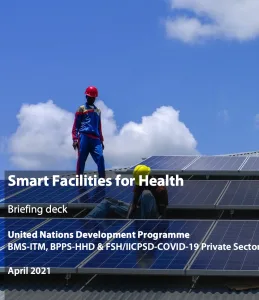
Smart Facilities for Health

United Nations Development Programme
AUTHOR: UNDP LANGUAGE: English FILE FORMAT: PDF

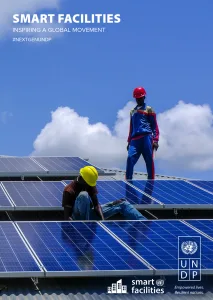
Smart Facilities: Inspiring a Global Movement

United Nations Development Programme, Smart Facilities
AUTHOR: UNDP LANGUAGE: English FILE FORMAT: PDF

Capacity Development for Health
https://beta-cd4health.org
Generated on December 15, 2025 at 8:15 PM